 Insurance Curator
The difference between paying more than you owe and maximizing your refund often comes down to a single habit: acting before December 31. Most taxpayers wait until April—when the only moves left are filing extensions or scrambling for receipts—to think about their tax situation. The smarter approach is to treat tax planning as a year-round budgeting exercise, not a frantic annual scramble.
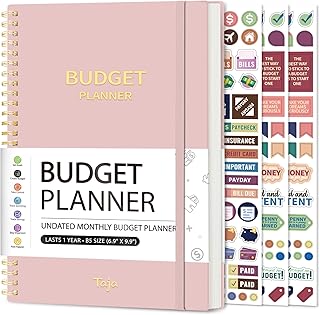
By integrating tax strategy into your monthly budget, you can make powerful moves that lower your bill, boost your refund, or avoid penalties. This guide walks you through every significant year-end tax planning tactic, with clear examples, expert insights, and budgeting tools to keep you on track. If you need a practical way to track your finances, the Budget Planner – Monthly Budget Book is an excellent starting point for aligning your spending with tax goals.
Why Year-End Tax Planning Matters More Than Filing Season
Tax season is filled with regret. “If only I had contributed more to my IRA in December… if only I had sold that losing stock before the new year…” These regrets have a cost—real dollars.
Year-end tax planning gives you control. You can adjust withholding, defer income, accelerate deductions, and make investments that reduce your taxable income while you still have time. Filing season only lets you report what already happened. The difference is immense:
- Strategic timing – You choose whether to recognize income or expenses this year or next.
- Avoid surprises – Underwithholding penalties and unexpected bills are prevented.
- Maximize deductions – Many deductions (like medical expenses) require you to exceed a threshold; you can bunch them into one year.
- Budget alignment – Your monthly budget can include estimated tax savings, turning tax planning into a proactive habit rather than a reactive one.
Treating tax planning as part of your budgeting routine is a game-changer. Use tools like the Budget Binder with Zipper Envelopes to allocate cash for tax-deductible expenses throughout the year.

1. Maximize Retirement Contributions Before the Deadline
One of the most powerful year-end moves is increasing contributions to tax-advantaged retirement accounts. Contributions to traditional IRAs and 401(k)s reduce your taxable income dollar-for-dollar.
- 401(k) limits (2025) – Up to $23,500 (plus $7,500 catch-up if 50+). You must change your deferral percentage before December 31.
- Traditional IRA (2024/2025) – Up to $7,000 ($8,000 if 50+). You have until April 15, 2025 to make prior-year contributions, but doing it by year-end makes budgeting easier.
- Solo 401(k) for freelancers – You can contribute up to $69,000 (2024) as both employee and employer.
Example: If you earn $100,000 and contribute $23,500 to a 401(k), your taxable income drops to $76,500. In a 22% tax bracket, you save $5,170.
Budgeting tip: Review your monthly budget now. Can you tighten discretionary spending for December to max out your contribution? The Budgeting 101 book offers strategies for reallocating funds toward retirement goals.
2. Harvest Tax Losses to Offset Gains (and Up to $3,000 of Ordinary Income)
Tax-loss harvesting involves selling investments that have declined in value to realize losses. These losses offset capital gains from other sales. If your losses exceed gains, you can deduct up to $3,000 against ordinary income ($1,500 if married filing separately). Any excess carries forward.
Example: You have $5,000 in short-term gains from selling a stock. You also hold a mutual fund that is down $6,000. Selling it before December 31 eliminates the $5,000 gain and leaves a $1,000 loss to reduce other income.
Important: Beware of the wash-sale rule. You cannot repurchase the same or substantially identical security within 30 days before or after the sale. Use the proceeds to buy a different fund (e.g., switch from S&P 500 ETF to total market ETF).
Budgeting angle: Keep a record of your unrealized gains and losses in your planner. A dedicated Budget Planner can help you track investment transactions alongside monthly expenses.
3. Adjust Withholding and Estimated Payments
If you owe too much or get too large a refund, your withholding is misaligned. The goal is to break even. Use the IRS’s Tax Withholding Estimator to check. If you need to increase or decrease withholding, submit a new Form W-4 to your employer before the last payroll in December.
For freelancers and side hustlers, estimated quarterly payments are due September 15 and January 15. If you realize you underpaid, you can increase your final payment slightly to minimize underpayment penalties.
Expert insight: Many taxpayers forget that bonuses, stock options, and side hustle income change withholding needs. If you received a year-end bonus, you might need to make a last-minute estimated payment.
Related reading: Freelancer and Gig Worker Taxes: What You Must Track All Year
4. Bunch Medical Expenses and Charitable Donations
The standard deduction for 2024 is $14,600 (single) or $29,200 (married filing jointly). Itemizing only makes sense if your total deductions exceed that. Bunching is a strategy where you concentrate two years’ worth of deductible expenses into one year.
- Medical expenses – Deductible only above 7.5% of AGI. Schedule elective procedures, dental work, or buy eyeglasses and contact lenses before year-end.
- Charitable contributions – You can make a lump-sum donation every other year. Use a donor-advised fund to contribute assets (like appreciated stock) and get the deduction now, even if you distribute later.
Example: If you typically donate $5,000/year and have $8,000 in medical expenses, bunching both in one year gives you $13,000 in itemized deductions, plus state taxes and mortgage interest, potentially exceeding the standard deduction.
Budget tip: Set up a separate savings envelope for charitable giving. The NICOOTH Budget Binder has dedicated cash envelopes for this purpose.
5. Prepay State and Local Taxes (but Watch the SALT Cap)
You can deduct property taxes and either state income taxes or sales taxes, but only up to $10,000 ($5,000 if married filing separately) due to the SALT cap. If you have already hit that cap, prepaying more won’t help. However, if you have room under the cap, pay your January 2025 property tax bill before December 31.
Caution: Under the Tax Cuts and Jobs Act, prepaying state income taxes for 2024 (via estimated payments) is generally allowed, but prepaying next year’s property taxes is sometimes challenged. Check with your CPA.
6. Consider a Roth Conversion if Your Income Is Low
If you are in a lower-than-usual tax bracket this year (e.g., due to job loss, a sabbatical, or business losses), converting part of your traditional IRA to a Roth IRA can make sense. You pay taxes on the converted amount now, but future withdrawals become tax-free.
Example: Convert $20,000 when you are in the 12% bracket. Cost = $2,400. If that money would be taxed at 22% in retirement, you save $2,000.
Key rule: There’s no income limit for Roth conversions, but the tax is due in the year of conversion. Plan accordingly.
Conventional wisdom: Do not convert if you need the money within five years (the Roth five-year rule on earnings).
7. Use a Health Savings Account (HSA) Triple Tax Advantage
If you have a high-deductible health plan (HDHP), contributing to an HSA is one of the best tax moves. For 2024, limits are $4,150 (self) or $8,300 (family), with an extra $1,000 catch-up if 55+.
- Deductible – Contributions reduce AGI.
- Tax-free growth – Earnings compound tax-free.
- Tax-free withdrawals – for qualified medical expenses.
Year-end move: If you haven’t maxed out, adjust your payroll deduction for the final month. You can also make a direct contribution even in December—but you have until April 15 to make prior-year HSA contributions.
Budgeting integration: Track HSA contributions in your monthly budget. A planner like the SKYDUE Budget Binder can help you allocate funds specifically for medical savings.
8. Take Advantage of Education Credits
Paying tuition or student loan interest before year-end can generate credits. The American Opportunity Tax Credit (AOTC) is worth up to $2,500 per student for the first four years of college. The Lifetime Learning Credit is up to $2,000 per return.
Strategy: If you are in the phaseout range (AGI between $80K–$90K single), consider accelerating tuition payments into December to lock in the credit. You can also pay for spring semester in December to get credit for the current year.
Related content: How Major Life Events—Marriage, Kids, Divorce, Homebuying—Affect Your Taxes
9. Defer Income (If Possible)
If you expect to be in a lower tax bracket next year (e.g., retiring, reduced hours), delay receiving income until after December 31. Invoicing clients in early January instead of late December can shift taxable income.
- Self-employed – Delay billing until January.
- Bonuses – Ask your employer to pay the bonus in January (if they agree).
- Capital gains – Wait to sell appreciated assets until January.
Contrast: If you expect a higher bracket next year, do the opposite—accelerate income into this year.
10. Review Your Withholding for the Next Year
Year-end is also the perfect time to plan for the upcoming tax year. Use the last month of the year to adjust your W-4 and estimated payment schedule for January. Many people assume their withholding is correct because it was fine last year, but life changes (marriage, new child, side hustle) can throw it off.
Table: Quick Year-End Tax Planning Checklist
| Action | Deadline | Benefit |
|---|---|---|
| Max out 401(k) contribution | Last payroll in Dec | Reduces taxable income |
| Sell losing investments | Dec 31 | Offsets gains, deduct up to $3,000 |
| Prepay property taxes | Dec 31 | Adds to SALT deduction (if under cap) |
| Make charitable donations | Dec 31 | Itemized deduction |
| Make HSA contribution | Dec 31 or Apr 15 | Triple tax advantage |
| Pay January tuition | Dec 31 | Earn education credit this year |
| Roth conversion | Dec 31 | Tax-free future growth |
| Adjust W-4 | Before final paycheck | Avoid underpayment penalty |
| Review estimated payments | Jan 15 for Q4 | Avoid last-minute surprises |
Budgeting for Tax Planning: Practical Tools
Effective tax planning requires visibility into your finances. Without a budget, you might miss opportunities to contribute more to retirement or fail to realize you have enough room to prepay deductions.
The Budgeting 101 book by Adams Media demystifies budgeting and shows how to align spending with tax-saving strategies. It covers the basics of tracking income and expenses, which is foundational for year-end tax moves.

For hands-on tracking, a budget binder with cash envelopes is ideal. The NICOOTH Budget Binder (purple, $6.28) has a 4.6 rating and includes zipper envelopes for categorizing spending—perfect for allocating funds for tax-deductible expenses.
How to use a budget binder for tax planning:
- Create an envelope for “Retirement Contributions” and add monthly amounts.
- Set up an envelope for “Charitable Donations” so you accumulate throughout the year and can decide to bunch in December.
- Use the expense tracker to record medical costs and investment gains/losses.
The SKYDUE Budget Binder (rated 4.7) comes with a zipper pouch, cash envelopes, and budget sheets. It’s excellent for those who want a comprehensive system.
Common Mistakes to Avoid
- Waiting until April – You lose the ability to make many moves (e.g., 401(k) contributions, tax-loss harvesting).
- Forgetting the wash-sale rule – Selling an asset for a loss and immediately buying a similar one disallows the loss.
- Ignoring AMT – Prepaying state taxes may trigger Alternative Minimum Tax.
- Overlooking required minimum distributions (RMDs) – If you’re 73+, you must take RMDs by Dec 31 (or face a 25% penalty).
- Not coordinating with your spouse – Married couples should review combined income and deductions.
Expert Insights on Year-End Planning
According to CPA and tax strategist Sarah Johnson, “The most underutilized year-end move is the Roth conversion for clients in a dip year. Many people don’t realize they can convert even if they have no earned income, as long as they have a traditional IRA balance.”
For freelancers, the biggest mistake is underpaying estimated taxes. “If your income fluctuates, do a quarterly projection using your budget. Adjust your final payment in January to match actual income.”
Deep dive: Understanding Capital Gains Taxes on Investments and Crypto – This is critical for tax-loss harvesting and year-end selling decisions.
Frequently Asked Questions
Below are common questions about year-end tax planning. The answers are designed to help you act quickly and confidently.
1. Can I still make an IRA contribution for this year after December 31?
Yes. You have until the tax filing deadline (usually April 15 of the following year) to contribute to a traditional or Roth IRA. However, for 401(k) contributions, the deadline is the last payroll of the year.
2. What is the difference between a traditional IRA and a Roth IRA for year-end planning?
A traditional IRA contribution reduces your current taxable income; a Roth IRA contribution does not. If you want to lower your tax bill for this year, choose traditional. If you expect to be in a higher bracket later, Roth may be better.
3. How much can I save if I max out my 401(k) for 2024?
If you max out at $23,000 (2024 limit, under 50) and are in the 22% bracket, you save $5,060 in federal taxes. You may also save state taxes (varies by state).
4. Is tax-loss harvesting worth it if I only have small gains?
Yes. Even if you have no capital gains, you can still deduct up to $3,000 of capital losses against ordinary income. That could save hundreds of dollars in taxes.
5. Should I prepay my property taxes in December?
Only if you are itemizing deductions and have room under the $10,000 SALT cap. Calculate your total state and local taxes first.
6. What if I don’t have enough cash to make a big retirement contribution now?
You can still prioritize contributions by adjusting your budget in the final months. Use a budget binder to reallocate funds from non-essential categories.
7. How does getting married affect year-end tax planning?
Marriage can change your tax bracket, deduction limits, and eligibility for credits. Consider adjusting withholding and possibly delaying or accelerating income.
8. Can I use a donor-advised fund to bunch charitable contributions?
Yes. This is a very effective strategy. You contribute assets (like appreciated stock) to a fund, receive the deduction now, and recommend grants to charities over multiple years.
9. What are the penalties for underpaying estimated taxes?
The IRS may charge a penalty of about 0.5% per month on the unpaid amount. You can avoid this if your total withholding and estimated payments are at least 90% of your current year tax or 100% of your prior year tax (110% if AGI > $150,000).
10. When is the last day to sell a stock for a loss in 2024?
To recognize the loss for the 2024 tax year, you must sell by December 31, 2024. Note that trade settlement typically takes two business days, but the tax year recognizes the trade date.
Final Thoughts on Year-End Tax Planning
The best time to start planning for next year’s taxes is right now, not when you sit down to file. By integrating tax strategy into your monthly budget, you can make year-end moves that save you thousands—without the stress of a last-minute scramble.
Remember to:
- Review your budget and reallocate funds toward retirement, HSAs, and charitable giving.
- Use tools like the Budget Planner or Budget Binder to stay organized.
- Consult a tax professional if your situation is complex (e.g., real estate, crypto, multiple businesses).
For further reading, check out Common Tax Filing Mistakes That Trigger Delays or Audits and How Retirement Accounts Can Reduce Your Taxes Today and Tomorrow.