 Insurance Curator
Time is the only asset you can’t earn back. Yet most of us trade hours for dollars, then wonder why financial freedom feels out of reach. The shift from active income — think 9-to-5 paychecks, freelance gigs, or side hustles that demand constant attention — to passive income is not about luck. It’s about building automated systems that generate revenue while you sleep.
Budgeting plays a silent but crucial role here. Without a clear handle on your cash flow, you’ll pour active earnings into tools that never compound. This guide bridges the gap between automation tools and passive income, with a focus on budgeting strategies that keep your systems profitable. We’ll cover real-world examples, the best automation software, and the exact steps to transform your earned money into assets that pay you repeatedly.
The Active-to-Passive Shift Starts with Budgeting
Many people jump into passive income ideas — affiliate marketing, digital products, rental properties — without first organizing their finances. That’s like building a house on sand. Active income is predictable: you work, you get paid. Passive income, especially in the early stages, requires upfront capital or time investment. If your budget is a mess, you’ll either starve the new system or overspend on tools that don’t deliver.
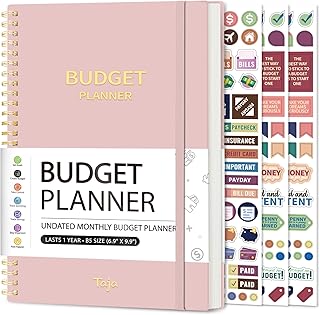
A solid budget planner is the foundation. Consider the Budget Planner – Monthly Budget Book with Expense Tracker Notebook — it helps you track every dollar so you know exactly how much active income you can redirect toward automation tools. Without this clarity, your passive income journey will be guesswork.
What Is Active Income vs. Passive Income? A Quick Refresher
Before diving into automation, let’s define terms. Active income requires your time and effort — salary, consulting, freelance writing. Passive income continues to flow with minimal ongoing effort — royalties, dividend stocks, rental income, or automated digital sales.
The bridge between them is automation. You take a process that normally needs your hands-on involvement (like sending invoices, managing ads, or publishing content) and hand it to software. The result: you earn from work you did once, often with a small recurring maintenance cost.
Why Budgeting Is the Unsung Hero of Passive Income Automation
Most people fail at passive income because they underestimate setup costs and overestimate immediate returns. A budget prevents that. By tracking expenses, you can allocate a specific percentage of your active income each month to build automated systems.
For instance, if you want to create an online course, you’ll need hosting, a payment processor, and maybe email marketing software. Without a budget, you might overspend on fancy tools before the course generates a cent. With a budget, you test cheap or free automation first, then scale.
Top Budgeting Tools That Complement Automation
While we focus on physical planners in this article, digital tools are equally important. But many people still prefer a tangible system to see their money flow. Here are highly-rated products that make budgeting visual and actionable:
- NICOOTH Budget Binder Cash Envelopes A6 — perfect for the envelope method, a classic way to control spending.
- SKYDUE Budget Binder with Zipper Envelopes — includes expense sheets for tracking.
- Budgeting 101: From Getting Out of Debt to Building Savings — a book that teaches the mindset behind budgeting, which is essential before automating.

Automation Tools That Turn Active Income into Passive Income
Now let’s get to the core: specific automation tools that transform your active earnings into passive streams. Each tool pairs with a budgeting strategy to ensure you don’t overspend.
1. Automated Savings and Investment Apps
The simplest form of passive income is letting your money grow. Platforms like Acorns, Betterment, or Qapital automatically round up purchases and invest the difference. But you need a budget to know how much you can afford to save.
Pair these apps with a physical budget binder like the SKYDUE Budget Binder to track the exact amount you’re automating. Over a year, those micro-savings turn into a portfolio that earns dividends without you lifting a finger.
2. Content Repurposing Automation
If you create blog posts, videos, or podcasts, you’re trading active time for content. Tools like Repurpose.io automatically turn a YouTube video into a TikTok, Instagram Reel, and podcast episode. This turns one piece of content into multiple passive assets.
Budget your time: spend one day recording a batch of content, then let automation syndicate it. The recurring views and affiliate commissions become passive income. For deeper knowledge, see Creating Digital Products for Passive Income: Step-by-step Overview.
3. Email Marketing Automation
Email lists are goldmines for passive income — if you automate them. Tools like ConvertKit or Mailchimp let you set up sequences that sell digital products on autopilot. But growing a list requires active lead magnets and ads, which need a budget.
Use your budget to allocate a fixed monthly spend for Facebook ads or lead magnets. Once the automated sequence is live, you earn commissions 24/7. Learn more at Semi-passive Income: Systems That Need Some Work but Pay You for Years.
4. Dropshipping and Print-on-Demand Automation
E-commerce platforms like Shopify integrate with Oberlo or Printful to handle inventory, printing, and shipping. Your active work is designing products and marketing. Automation handles fulfillment.
Budget your marketing spend per product, and use a tool like Tidio or ManyChat to automate customer service. The result: you earn while you sleep. But beware of common pitfalls — read Passive Income Pitfalls: Red Flags, Scams, and Overhyped Promises to Avoid.
5. Rental Property Management Automation
Real estate is often called passive, but it’s far from hands-off without automation. Tools like Cozy (now Apartments.com) automate rent collection, and SmartThings automates repairs (sensors alert you to leaks). Budget for these tools instead of hiring a property manager.
Pair property investment with a disciplined budget from Budgeting 101 to ensure your rental income truly becomes passive. For a deeper dive, see Rental Properties as Passive Income: How Passive Is It Really?.
Step-by-Step Guide: How to Automate Your First Passive Income Stream
Step 1: Audit your active income. Use a budget binder like the Budget Planner – Black to track expenses for one month. Identify $50–$100 you can redirect without pain.
Step 2: Choose one automation tool. Start small. If you blog, pick a content repurposing tool. If you have savings, set up an automated investment account.
Step 3: Set up the automation. Follow the tool’s setup guide. Most have free trials — use them. Add the monthly cost to your budget.
Step 4: Monitor and optimize. Check the system weekly for the first month. Adjust if needed. Once it runs smoothly, check monthly.
Step 5: Scale. Reinvest a portion of the passive income into more automation tools. Compound your systems.
![Clickable Amazon ad – example] The black version of the budget planner is equally reliable: Budget Planner – Black.
Real-World Example: From Freelance Writer to Passive Income Automator
Meet Lisa, a freelance writer earning $3,000/month actively. She wanted passive income. Her first step: budgeting. She used the SKYDUE Budget Binder to track expenses and found she could save $150/month.
She invested $100 in an automated email sequence for a digital course about writing. She used ConvertKit to set up a lead magnet (free checklist). Traffic came from repurposed blog posts (automated via Repurpose.io). Within six months, the course earned $400/month passive — more than her active side hustle.
Key lesson: she budgeted for the setup and didn’t overspend. She also read Beginner-friendly Passive Income Ideas That Don’t Require Huge Capital for inspiration.
Budgeting Mistakes That Kill Passive Income Automation
Even with the best automation, poor budgeting can sabotage your efforts:
- Underestimating subscription costs. A $10 tool here, a $30 tool there — suddenly you’re spending $200/month. Always tally all automation costs in your budget.
- Over-investing in unproven systems. Test with free trials or minimal spend. Don’t dump $500 into a tool until you see results.
- Ignoring maintenance time. Some automation still needs occasional checks. Budget 1–2 hours per week for each system.
The NICOOTH Budget Binder helps you categorize these costs so they don’t surprise you.
Comparison of Top Budget Planners for Automation-Focused Finances
| Product | Price | Rating | Best For |
|---|---|---|---|
| Budget Planner – Pink | $8.99 | 4.6 | Monthly tracking with expense tracker |
| NICOOTH Budget Binder | $6.28 | 4.6 | Cash envelope system for tight budgets |
| SKYDUE Budget Binder | $8.98 | 4.7 | Complete kit with expense sheets |
| Budget Planner – Black | $8.99 | 4.6 | Classic, durable option |
| Budgeting 101 book | $9.69 | 4.6 | Learning the principles behind budgeting |
The Role of Dividends, Index Funds, and Automation
Passive income through investments is highly automatable. Dividend stocks and index funds drip cash into your account quarterly or monthly. But you need to automate the purchase.
Set up a recurring transfer from your checking account to a brokerage account that buys an ETF like VOO or SCHD. Budget for this transfer as a fixed expense. Within years, the dividends become a meaningful passive income stream.
For a thorough strategy, read How to Use Dividend Stocks for Long-term Passive Income? and Building Passive Income Streams with Index Funds and Etfs.
Automation Tools by Passive Income Type (Detailed Table)
| Passive Income Type | Automation Tool | Budget Consideration | Monthly Cost (approx) |
|---|---|---|---|
| E-commerce (dropshipping) | Oberlo, Printful | Product cost + ads | $30–$200 |
| Digital products | Gumroad, SendOwl | Hosting + payment fees | $10–$50 |
| Affiliate marketing | ThirstyAffiliates, Pretty Links | Link management | $10–$30 |
| Rental properties | Cozy, SmartThings | App subscription + sensors | $10–$50 |
| Content creation | Repurpose.io, Buffer | Social media scheduling | $20–$50 |
| Email marketing | ConvertKit, Mailchimp | List size dependent | $0–$150 |
How to Design a Passive Income Portfolio with Automation and Budgeting
Think of your passive income as a portfolio of automated systems, each requiring an initial active investment (time or money) and a small recurring budget. Diversify across:
- Automated investments (low risk, low effort)
- Digital products (medium risk, high effort upfront)
- Affiliate sites (medium risk, ongoing content)
Budget for the setup costs of each. Use a planner like the Budget Planner – Black to track both active income (your day job) and the operational expenses of each system.
For more on risk alignment, check Designing a Passive Income Portfolio That Matches Your Risk Tolerance.
Common Questions About Automation and Passive Income (FAQ)
Q: Can I create passive income with zero money?
A: Yes, by using free automation tools (e.g., Mailchimp free tier, Buffer free) and investing only your time. But budgeting your time is just as important.
Q: How much active time do I need initially?
A: Typically 20–50 hours to set up one automated system. Then 1–2 hours per month for maintenance.
Q: What’s the biggest risk of automation?
A: Over-automating without monitoring can lead to systems that break or underperform. Always test and review periodically.
Q: Do I need a separate budget for passive income expenses?
A: Yes, treat it like a business. Use a dedicated expense tracker or a budget binder to separate personal and passive income costs.
Q: Can budgeting apps replace physical planners?
A: They can complement, but many people find a physical tracker more tangible for impulse control. The NICOOTH Budget Binder is a great hybrid.
Final Thoughts: The Automation-Budgeting Feedback Loop
Turning active income into passive income isn’t a one-time trick — it’s a feedback loop. Budget → Save → Automate → Earn → Reinvest. Each successful automation frees up more of your active income, which you can then budget toward bigger systems.
Start today. Pick one budget planner and one automation tool. Track for 30 days, then build your first passive stream. Within a year, you’ll have multiple systems paying you while you focus on what truly matters — whether that’s more active work, family, or just enjoying life.
For more on the fundamentals, revisit What Is Passive Income? Realistic Ways to Earn Money While You Sleep?. Your journey from active to passive starts with a budget — and the right automation tools.
