 Insurance Curator
Inflation is the silent thief that creeps into your wallet. While your bank balance may stay the same, the real value of every dollar shrinks as prices rise. In 2023 alone, the U.S. experienced inflation rates that erased nearly 3% of purchasing power, and the trend isn’t slowing. The question isn’t whether you’ll be affected—it’s how you’ll defend your hard-earned cash.
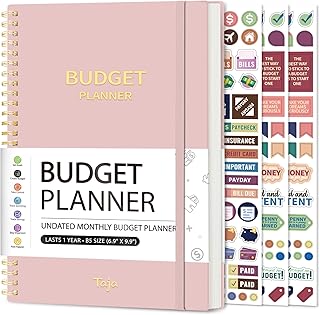
Budgeting is your first line of defense. By tracking expenses and prioritizing savings, you can blunt the impact of rising costs. Tools like the Budget Planner – Monthly Budget Book with Expense Tracker Notebook, Undated Bill Organizer & Finance Planner to Take Control of Your Money, Account Book to Manage Your Finances-Pink help you stay on track. But budgeting alone isn’t enough. You need active saving strategies that grow your money faster than inflation eats it. This deep dive explores every tactic you need—from high-yield accounts to behavioral hacks—so your cash keeps its buying power.
Why Inflation Destroys Cash—And What You Can Do About It
Inflation measures how much prices increase over time. When the annual inflation rate is 5%, your $100 bill buys only $95 worth of goods after a year. That’s a direct loss of purchasing power. Savings accounts that pay 0.5% interest are actually losing you money after inflation.
Your primary weapon is a diversified saving strategy. You need a mix of high-yield savings accounts, inflation-protected securities, and disciplined budgeting. Without a plan, cash under the mattress or in a checking account becomes a shrinking asset.
The Budgeting Foundation: Control Your Cash Flow
Before you can save, you must know where your money goes. Budgeting isn’t about restriction—it’s about intention. When inflation rises, every expense category becomes more volatile. Groceries, utilities, and rent can spike without warning. A solid budget gives you visibility and control.
Track Every Dollar with a Physical Budget Planner
Digital tools are great, but many people stick better with pen and paper. The SKYDUE Budget Binder, Money Saving Binder with Zipper Envelopes, Cash Envelopes and Expense Budget Sheets for Budgeting combines structure with portability. Rated 4.7 stars, it includes cash envelopes for the proven envelope method—perfect for curbing overspending during inflationary periods.

When you physically see cash leaving an envelope, you feel the loss more acutely. That psychological friction helps you make better spending decisions. During inflation, that awareness is critical.
Use a Budget Book to Set Savings Goals
A structured book like the Budget Planner – Monthly Budget Book with Expense Tracker Notebook, Undated Bill Organizer & Finance Planner to Take Control of Your Money, Account Book to Manage Your Finances-Black helps you allocate money toward savings before you spend. The “pay yourself first” principle is central to beating inflation. Automate a transfer to a savings account as soon as you get paid, then budget the rest.

High-Yield Savings Accounts: The 2024 Inflation Shield
A high-yield savings account (HYSA) offers interest rates that compete with inflation. As of early 2025, top HYSAs pay 4-5% APY—far above the 0.5% of traditional banks. That difference alone can preserve your cash’s value.
How to Choose the Right HYSA
Look for accounts with no monthly fees, no minimum balance, and FDIC insurance. Online banks often offer better rates because they have lower overhead. Compare rates weekly—they change with the federal funds rate.
Pair HYSA with a Budget Binder for Maximum Impact
Use the NICOOTHBudget Binder Cash Envelopes A6 Money Saving Binder with Zipper envelopes (Purple) to track your HYSA contributions. This binder, rated 4.6, includes zipper envelopes for organizing cash categories while you build your digital savings.

For deeper insight into making HYSA work for you, read How to Use High-yield Savings Accounts as Part of Your Saving Strategy?.
I-Bonds and TIPS: Government-Backed Inflation Protection
For money you can lock away for a year or more, Series I Savings Bonds offer a composite rate that adjusts with inflation. As of early 2025, the fixed rate is 1.2%, plus a variable inflation component. That means your principal grows with rising prices.
- I-Bonds: Purchase up to $10,000 per year online via TreasuryDirect. Hold for at least 1 year; penalty of 3 months interest if redeemed before 5 years.
- TIPS (Treasury Inflation-Protected Securities): Adjust principal based on CPI. Available in 5, 10, and 30-year terms. Interest payments vary with adjusted principal.
Both are nearly risk-free and backed by the U.S. government. They’re ideal for emergency funds or medium-term savings you can’t afford to lose value.
The Envelope System: Cash-Based Budgeting for Inflation
When prices rise, impulse spending hurts more. The envelope system forces you to allocate cash for each category. Once the envelope is empty, you stop spending. That discipline is gold during inflationary periods.
The SKYDUE Budget Binder comes with cash envelopes and expense sheets. Label envelopes for groceries, gas, entertainment, etc. At the start of each month, fill them with your budgeted amount. When the grocery envelope runs out, you either adjust next month or find cheaper alternatives.
Example: Grocery Budgeting During Inflation
Say your monthly grocery budget is $400. With inflation, that same basket of food cost $420 last year. Your envelope system helps you see the gap. You can then decide to cut non-essentials or increase the envelope by trimming another category. It’s a real-time feedback loop that digital apps often miss.
Behavioral Saving Strategies: Psychology Hacks to Beat Inflation
Your brain is wired to spend now and save later. Inflation amplifies that urgency because you feel prices rising. Behavioral techniques counteract this.
- Automate savings: Set up automatic transfers to a HYSA on payday. You can’t spend what you don’t see.
- Use visual tracking: A budget binder like the Budget Planner – Monthly Budget Book with Expense Tracker Notebook, Undated Bill Organizer & Finance Planner to Take Control of Your Money, Account Book to Manage Your Finances-Pink lets you see progress. Color in charts or mark milestones. That visual reward triggers dopamine, reinforcing the saving habit.
- Implement a 24-hour rule: Before any non-essential purchase over $50, wait 24 hours. Inflation fear often leads to panic buying. The pause gives you perspective.
Learn more about these techniques in Behavioral Saving Strategies: Psychology Tricks to Help You Save More.
Short-Term vs. Long-Term Saving Strategies: Organize Your Inflation Response
Not all savings should be treated the same. Your time horizon determines the best inflation-fighting tool.
| Time Horizon | Strategy | Example |
|---|---|---|
| 0–1 year | High-yield savings account | Emergency fund in HYSA at 4.5% |
| 1–5 years | I-Bonds, short-term CDs | $10,000 in I-Bonds for a down payment |
| 5+ years | Stock market index funds, TIPS | S&P 500 historically outruns inflation |
A clear organization prevents you from locking up money you might need. For a deeper breakdown, read Short-term vs. Long-term Saving Strategies: How to Organize Your Goals.
Automate Your Saving Strategy with Modern Money Apps
Manual saving works, but automation makes it effortless. Use apps like Qapital, Digit, or simple automatic transfers from checking to savings. Even better, pair them with a physical budgeting system.
The NICOOTHBudget Binder Cash Envelopes A6 Money Saving Binder with Zipper envelopes (Purple) can track your automated savings. Write down your monthly transfer amounts and check them off. It merges the accountability of paper with the efficiency of digital.
For a full guide, see How to Automate Your Saving Strategy Using Modern Money Apps?.
Seasonal Saving Strategies: Plan for Holidays and Big Purchases
Inflation makes holiday spending and vacations even more expensive. Without a plan, you’ll rely on credit cards and rack up interest that compounds the damage.
- Set a holiday sinking fund: Save $50 per month starting in January. By December, you have $600 for gifts.
- Book vacations early: Prices rise faster during inflation. Booking flights and hotels six months in advance locks in lower rates.
- Use cash envelopes for seasonal categories: Label one envelope “Holiday” and another “Travel.” Contribute monthly.
This approach prevents last-minute splurges. For comprehensive tips, read Seasonal Saving Strategies: How to Plan for Holidays, Vacations, and Big Purchases.
Saving Strategies for Parents: Build Funds for Kids Without Sacrificing Retirement
Inflation hits families hardest. Childcare, education, and food costs climb relentlessly. Yet parents often prioritize children’s future over their own retirement. That’s a mistake.
- Start a 529 plan for college: Contributions grow tax-free. Some states offer tax deductions.
- Use a custodial Roth IRA for children’s earned income: It can be used for education or retirement.
- Don’t pause your own retirement contributions: You can borrow for college, but not for retirement.
Pair these with a family budget binder. The SKYDUE Budget Binder has multiple envelopes to separate “College Fund,” “Emergency,” and “Daily Expenses.” It keeps everyone aligned.
For more, explore Saving Strategies for Parents: Building Funds for Kids Without Sacrificing Retirement.
Pay Yourself First: The Saving Strategy That Makes Saving Automatic
The “pay yourself first” method flips traditional budgeting. Instead of paying bills then saving what’s left, you save first—then spend the rest. Inflation makes this even more critical because the “leftover” often disappears.
Calculate your savings rate as a percentage of income. For example, if you earn $4,000 monthly, set 20% ($800) as your first payment. Split that across HYSA, I-Bonds, and investments. Then use tools like the Budget Planner – Monthly Budget Book with Expense Tracker Notebook, Undated Bill Organizer & Finance Planner to Take Control of Your Money, Account Book to Manage Your Finances-Black to track those contributions monthly.
Dive deeper into this approach: Pay Yourself First: the Saving Strategy That Makes Saving Automatic.
Smart Saving Strategies to Grow Your Money on Any Income
You don’t need a six-figure salary to protect your cash. Small consistent actions compound over time.
- Cut subscription creep: Review all streaming, gym, and app subscriptions. Cancel unused ones. Put that money in savings.
- Use cashback apps: Ibotta, Rakuten, and Dosh give you 1-10% back on purchases. Deposit that cash directly into your HYSA.
- Practice the 1% rule: Increase your savings rate by 1% every month. It’s painless but adds up.
Read the full guide: Smart Saving Strategies to Grow Your Money on Any Income.
Beginners: How to Start Saving Consistently for the First Time
If you’ve never saved before, inflation can feel defeating. Start small. A single dollar saved today is worth more than a dollar saved next year.
- Open a savings account (even a basic one) – then upgrade to HYSA.
- Set a micro-goal: Save $500. Break it into $20 per week.
- Use a physical tracker: The Budgeting 101: From Getting Out of Debt and Tracking Expenses to Setting Financial Goals and Building Your Savings, Your Essential Guide to Budgeting (Adams 101 Series) is an excellent book to learn the fundamentals. Rated 4.6, it walks you through every step.

For a step-by-step blueprint, see Saving Strategies for Beginners Who’ve Never Saved Consistently before.
Putting It All Together: Your Inflation-Proof Savings Plan
Inflation isn’t going away, but your cash doesn’t have to suffer. Combine budgeting, high-yield accounts, inflation-protected bonds, and behavioral tactics to maintain—and even grow—your purchasing power.
Start with one change today. Buy a budget planner or binder to visualize your cash flow. Automate a savings transfer. Read one of the internal guides linked above. Each action builds a stronger financial foundation.
Your money works for you, not against you. With the right strategies, you can thrive in any economic environment.
Frequently Asked Questions
How much should I save during high inflation?
Aim for at least 20% of your income. If that’s impossible, start with 10% and increase by 1% monthly. Prioritize an emergency fund of 3–6 months of expenses in a high-yield savings account.
Are CDs a good inflation hedge?
Short-term CDs (6–12 months) can offer decent rates, but they lock your money. I-Bonds and TIPS are better for inflation protection because their returns adjust with CPI.
Should I pay off debt or save during inflation?
It depends on interest rates. If your debt (like credit cards) has an APR above 20%, pay it down first. Low-interest debt (mortgage at 3%) can be stretched while you save at 4-5% in HYSA.
What is the best budget method for inflation?
The envelope system combined with a structured planner like the Budget Planner – Monthly Budget Book with Expense Tracker Notebook, Undated Bill Organizer & Finance Planner to Take Control of Your Money, Account Book to Manage Your Finances-Pink works well. It gives you physical control over spending.
Can I use I-Bonds for an emergency fund?
Yes, but only after the first year. I-Bonds cannot be redeemed within 12 months. After that, you can withdraw with a 3-month interest penalty if held less than 5 years. They’re best for medium-term savings, not immediate emergencies.