 Insurance Curator
Retirement may feel far away, but the math starts now. Most people guess they’ll need 70–80% of their pre-retirement income. That rule of thumb works for some—but not for you if you travel heavily, have health issues, or plan to move. The real number depends on your lifestyle, inflation, healthcare, and how long you live.
This guide will walk you through every factor that shapes your retirement nest egg. You’ll learn how to calculate a personalized target, why budgeting matters today, and which tools can keep you on track.
Why the 80% Rule Falls Short
The classic replacement rate (80% of your final salary) assumes your spending drops after retirement. No more commuting, work clothes, or 401(k) contributions. But many retirees spend more in the first decade—on travel, hobbies, and grandchildren.
Example: Sarah earns $100,000 and saves 15% of her income. Her monthly expenses are $6,000. In retirement, she wants to travel three months a year and pay for two knee replacements. That 80% target ($80,000) might be too low.
The smarter approach: estimate your actual retirement spending, then work backward.
Step 1: Estimate Your Annual Retirement Expenses
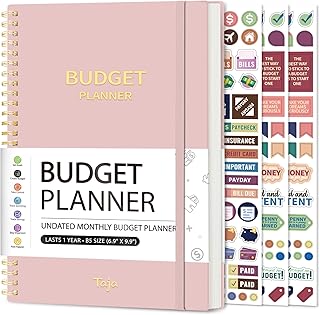
Start with today’s budget. Track every dollar for three months using a Budget Planner – Monthly Budget Book with Expense Tracker Notebook to see exactly where your money goes.
Categories to Adjust
| Category | While Working | In Retirement |
|---|---|---|
| Housing | Mortgage + taxes | Possibly paid off, but higher maintenance |
| Transportation | Commuting + car | Lower mileage, but new car every 10 years |
| Healthcare | Employer‑subsidized | Medicare + supplemental + copays |
| Food | Lunch out, groceries | More home cooking, maybe dining out |
| Discretionary | Vacations, hobbies | More time = more travel & hobbies |
Key takeaway: Some costs fall, but others rise. Healthcare alone can add $5,000–$10,000 per year per person.
The Retirement Spending Formula
Retirement annual expense = (Current essential expenses × 0.85) + (Current discretionary expenses × 1.2) + Healthcare gap
- Essential expenses (housing, food, utilities) usually drop 10–15%.
- Discretionary spending often increases 20–30% because you have more free time.
- Healthcare costs need a separate calculation (see step 4).
Step 2: Factor in Inflation
Inflation eats away at purchasing power. At 3% average inflation, $50,000 today equals only $22,000 in 30 years.
The 4% Rule says you can withdraw 4% of your portfolio in year one, then adjust for inflation. A $1 million portfolio gives you $40,000 in year one. If you need $60,000 today, you’ll need a portfolio of $1.5 million—or more with inflation.
Use an online retirement calculator to inflate your expenses by 3% annually until your target retirement age. Then apply the 4% rule to find your required nest egg.
Step 3: Estimate Your Retirement Timeline
How long will you need the money? A 65‑year‑old today has a 50% chance of living to 90. That’s 25 years of income. If you retire at 55, it’s 35 years.
Rule of thumb: Plan to age 95 unless you have strong family history of shorter lifespan. The longer you live, the more your portfolio must withstand market downturns.
Your time horizon directly affects your spending rate. Someone retiring at 55 may need a 3.5% withdrawal rate instead of 4% to avoid running out.
Step 4: Account for Healthcare Costs — The Biggest Wildcard
Medicare covers about 80% of medical costs. The rest—deductibles, copays, dental, vision, hearing—can easily reach $6,000–$12,000 per person per year.
Additionally, long‑term care (nursing home, assisted living) costs $50,000–$100,000+ annually. Medicare doesn’t cover it.
Better budgeting: Open a Health Savings Account (HSA) while working. Contributions are tax‑deductible, and withdrawals for qualified medical expenses are tax‑free. Maximize it every year.
For context, see our guide on Planning for Healthcare Costs in Retirement: HSAs, Medicare, and Beyond.
Step 5: Project Your Income Sources
Fill the gap between your expenses and your guaranteed income.
| Income Source | Typical Amount | Notes |
|---|---|---|
| Social Security | $1,000–$3,000/month (per spouse) | Use SSA’s online calculator |
| Pension (if any) | Varies | Often a fixed monthly amount |
| Part‑time work | $500–$2,000/month | Many retirees work 10–15 hours/week |
| Rental income | Varies | Subtract maintenance and vacancies |
| Required Minimum Distributions (RMDs) | Not a source—a tax event | Start at age 73 |
Example: John and Mary need $75,000/year after inflation. They expect $30,000 from Social Security and $10,000 from Mary’s pension. Their investment portfolio must produce $35,000/year. At a 4% withdrawal rate, they need $875,000 in savings.
If they only have $500,000, they’ll need to cut expenses, delay retirement, or work part‑time.
Step 6: Calculate Your Required Savings
Formula: Retirement savings needed = (Annual expenses – guaranteed income) ÷ withdrawal rate
- Withdrawal rate of 4% → divide by 0.04 (multiply by 25)
- Withdrawal rate of 3.5% → divide by 0.035 (multiply by 28.6)
Example with 4%: $35,000 gap / 0.04 = $875,000.
Add a buffer for unexpected costs: home repairs, long‑term care, helping family. A 10–20% cushion is smart.
How Budgeting Today Builds Your Retirement
You can’t save what you don’t track. A detailed budget reveals spending leaks and shows exactly how much you can contribute to retirement accounts.
One of the most effective tools is a cash‑envelope system. The NICOOTH Budget Binder Cash Envelopes helps you physically separate money for groceries, dining, entertainment, and more.

Budgeting Principles for Retirement Savers
- Automate savings first. Set up automatic transfers to your 401(k), IRA, and taxable accounts.
- Use a zero‑based budget. Every dollar has a job—savings, expenses, or debt.
- Review subscriptions quarterly. You’ll be surprised how many $5‑$10 subscriptions you rarely use.
- Plan for irregular expenses. Car repairs, insurance premiums, and holiday gifts need sinking funds.
The SKYDUE Budget Binder includes expense tracking sheets and cash envelopes, making it easy to manage variable spending without overshooting your savings goal.

Where to Invest Your Savings
Once you know your target, choose accounts that maximize tax efficiency.
- 401(k) or 403(b) – Employer match is free money. Contribute enough to get the full match first.
- Traditional IRA – Contributions may be tax‑deductible. Good if you expect lower income in retirement.
- Roth IRA – No deduction now, but tax‑free growth and withdrawals. Perfect for young savers.
Confused about the differences? Read our guide on 401(K) vs. IRA vs. Roth IRA: Choosing the Right Retirement Accounts.
Asset allocation matters. A portfolio with 70% stocks and 30% bonds has historically returned 7–9% annually over 20+ years. As retirement approaches, shift to a more conservative mix to protect gains.
Real‑World Example: Meet the Harrisons
Tom, 45, earns $85,000. He saves 10% in his 401(k) ($8,500/year). His wife, Jen, earns $45,000 and saves 8% ($3,600/year). They have $150,000 in retirement accounts.
Step 1: Their current monthly expenses are $5,000. They estimate retirement expenses at $5,500/month (in today’s dollars) because they want to travel more.
Step 2: They plan to retire at 65. With 3% inflation, that $5,500 becomes roughly $10,000/month in 20 years ($120,000/year).
Step 3: They expect Social Security to cover $40,000/year. They need $80,000 from investments.
Step 4: At a 4% withdrawal rate, they need $2 million ($80,000 ÷ 0.04).
Step 5: They currently have $150,000 and contribute $12,100/year. With 7% growth, they’ll accumulate $1.1 million by 65—well short of $2 million.
Solution: Increase savings to 20% of combined income ($26,000/year), delaying retirement by three years, or working part‑time in retirement.
Common Mistakes That Derail Your Target
Even a well‑calculated number can fail if you ignore these pitfalls.
- Underestimating taxes. Withdrawals from traditional accounts are taxed as ordinary income. You might owe 15–25% in retirement.
- Not planning for sequence‑of‑return risk. A market crash early in retirement can devastate a portfolio.
- Ignoring Social Security strategies. Delaying benefits until age 70 increases your monthly check by 8% per year.
- Neglecting long‑term care insurance. A policy bought in your 50s can protect millions of dollars.
For a thorough review of common errors, see Avoiding Common Retirement Planning Mistakes That Cost You Hundreds of Thousands.
Adjusting the Plan for Late Starters
If you’re in your 40s or 50s with little saved, you can still catch up. The key is aggressive savings and smart budgeting.
- Contribute to a Roth IRA for tax‑free growth. You can also make catch‑up contributions ($1,000 extra/year after 50).
- Downsize your home. Free up equity and lower monthly costs.
- Consider a part‑time job in retirement. Even 10 hours a week can cover basic expenses and let your portfolio grow.
Read more in Retirement Planning for Late Starters in Their 40s and 50s.
Tools to Keep Your Budget and Plan Aligned
A physical budget binder or planner helps you stay consistent. The Budget Planner – Black offers the same features as the pink version but with a professional look.

For a comprehensive education on budgeting, the book Budgeting 101 walks you through debt reduction, expense tracking, and setting financial goals.

Putting It All Together: Your Retirement Budget Blueprint
- Track spending for three months using a planner like the SKYDUE Budget Binder.
- Estimate retirement expenses using the formula above.
- Inflate to retirement age (3% per year).
- Subtract guaranteed income (Social Security, pensions).
- Divide by 0.04 to find your savings target.
- Calculate your current savings gap and the annual contribution needed.
- Build a budget that prioritizes that contribution.
If the gap feels too large, adjust: work longer, save more, reduce retirement spending, or a combination.
Frequently Asked Questions
1. How much do I really need to retire comfortably?
Most people need at least 10–12 times their final salary. For a household earning $80,000, that’s $800,000–$960,000. But your personal number depends on expenses, healthcare, and lifespan.
2. Should I include Social Security in my calculation?
Absolutely. Create a my Social Security account to get your estimated benefits. Most experts recommend planning for 75% of the stated benefit to account for possible future cuts.
3. How often should I re‑estimate my retirement number?
Once a year, and after major life events (marriage, divorce, job change, health diagnosis). Inflation and market returns also change your trajectory.
4. Is it too late to start saving at 40?
Not at all. You can still build a solid nest egg by saving aggressively (15–20% of income) and investing for growth. Use catch‑up contributions after 50.
5. What is the 4% rule, and is it still valid?
The 4% rule suggests withdrawing 4% of your portfolio in year one, then adjusting for inflation. Many experts now recommend 3.5%–4% due to lower bond yields and longer life expectancies. Always stress‑test your plan.
Estimating your retirement needs isn’t a one‑time exercise. It’s a living number that changes with your life, markets, and goals. Start with a realistic budget today, use reliable tools to stay disciplined, and revisit your plan annually. The earlier you begin, the more flexibility you’ll have—and the closer you’ll get to that comfortable, worry‑free retirement.
For more strategies, explore our related articles on How Much Should You Be Investing for Retirement at Every Age? and Tax‑Efficient Retirement Planning Strategies Most People Overlook.