 Insurance Curator
 When you compare term vs whole life insurance, the debate usually centers on cost or cash value. But for high-net-worth individuals, business owners, and savvy families, the real difference lies in tax implications and estate planning. Choose wrong, and your beneficiaries could lose a significant chunk of your legacy to taxes. Choose right, and life insurance becomes one of the most powerful wealth-transfer tools available.
This deep-dive examines how each policy type interacts with income tax, estate tax, and generational wealth strategies. We’ll cover the nuances of tax-free death benefits, cash value growth, policy loans, and irrevocable life insurance trusts (ILITs). By the end, you’ll know exactly which product fits your estate planning goals — and why term life insurance often wins for pure protection, while whole life can shine in sophisticated tax strategies.

The Tax Foundation: Death Benefits Are (Usually) Income Tax-Free
Both term and whole life policies share one critical tax advantage: the death benefit is generally received federal income tax-free by beneficiaries under IRC Section 101(a)(1). This makes life insurance the single most efficient way to pass wealth to heirs.
However, the estate tax treatment differs dramatically. If you own the policy at death, the death benefit is included in your taxable estate. For 2025, the federal estate tax exemption is $13.99 million per individual (adjusted for inflation). If your total estate exceeds that threshold, the excess is taxed at 40% — and life insurance proceeds can push you over the edge.
Term life insurance has no cash value, so the only estate inclusion issue is the death benefit. Whole life insurance, with its growing cash value account, adds another layer: the cash value itself is part of your estate while you’re alive, and the death benefit includes that cash value payout.
Term Life Insurance Tax Implications: Simplicity and Limitations
Term life insurance provides pure protection for a specified period (10, 20, or 30 years). The tax implications are straightforward:
- Premiums are not tax-deductible (personal use).
- Death benefits are income tax-free to beneficiaries.
- No cash value means no annual tax reporting or gains.
Estate Planning with Term Life
Term policies are ideal for covering temporary needs like mortgage debt, income replacement for young children, or business buy-sell funding. But because term has no permanent cash value, it cannot be used for wealth accumulation or tax-deferred growth.
If you buy a term policy and die during the coverage period, the death benefit goes to your beneficiaries income tax-free. If you outlive the term, the coverage ends with no value — and no tax consequence either.
Best use case: Protecting a 20-year mortgage while your kids are in school. Once the mortgage is paid and kids are independent, the term policy expires with no residual tax issue.
Pitfall: The “Return of Premium” Rider
Some term policies offer a return-of-premium (ROP) rider. If you outlive the term, you get all your premiums back. The IRS treats that refund as tax-free return of basis — you get back the money you paid, but no gain. This avoids a tax event, but the opportunity cost of tying up those premiums often outweighs the benefit.
Whole Life Insurance Tax Implications: The Cash Value Engine
Whole life insurance builds cash value on a tax-deferred basis. This is the centerpiece of sophisticated estate planning strategies. Here’s how the tax rules work:
Tax-Deferred Cash Value Growth
The cash value grows inside the policy without you paying taxes each year on the gains. This is similar to a Roth IRA but without contribution limits (subject to MEC rules). The insurance company invests the premiums (after mortality and expense charges) into a general account, and the cash value increases according to a guaranteed schedule plus dividends (for mutual companies).
Policy Loans: Tax-Free Access (If Done Right)
You can borrow against the cash value through policy loans. The IRS treats these as loans, not income, so they are tax-free as long as the policy stays in force. You never pay income tax on the borrowed amount.
But here’s the trap: if the policy lapses or is surrendered with an outstanding loan, the loan amount above your cost basis becomes taxable income. This can trigger a surprising tax bill. The same applies if you take cash value withdrawals above your basis (the total premiums paid). Withdrawals up to your basis are tax-free; withdrawals beyond that are taxable as ordinary income.
Estate Tax Inclusion: The Double-Edged Sword
If you own a whole life policy at death, the full death benefit is included in your taxable estate. For a $5 million policy owned by an individual with a $14 million estate, only $1 million of the policy is technically “excess” — but the entire $5 million counts toward the exemption. This can push you well over the threshold.
Solution: Use an Irrevocable Life Insurance Trust (ILIT) to own the policy. That removes the death benefit from your estate entirely. However, you lose control over the policy — a trade-off wealthy families must weigh.

Estate Planning Strategies by Policy Type
Term Life + ILIT = Simple Estate Protection
You can still use an ILIT with a term policy. The trust owns the term policy, pays premiums using annual gifts (covers the Crummey notices), and receives the death benefit outside of your taxable estate. This is inexpensive and efficient for covering large temporary exposures like a 10-year business loan.
Whole Life + ILIT = Permanent Funding
For estate taxes due at death — which can be 40% — whole life in an ILIT provides liquidity. The trust receives the death benefit tax-free and can buy assets from your estate at fair market value, providing cash to pay the tax bill without forcing a fire sale of your business or real estate.
Expert Insight: Many estate planners recommend combining term and whole life. Use term to cover the risk during your working years, and use whole life inside an ILIT to cover the permanent estate tax liability.
Pros and Cons Comparison Table
Below is a detailed comparison of two highly rated resources that will help you master the tax and estate planning aspects of life insurance. Both books are essential reading for agents, advisors, and consumers who want to go beyond the basics.
| Feature | Life Insurance Made Simple | Life Insurance 101: The Basics of Life Insurance Explained |
|---|---|---|
| Price | $34.99 | $14.95 |
| Rating | 4.8 (34 reviews) | 4.1 (8 reviews) |
| Focus | Practical guide for every stage of life, including tax and estate planning | Foundational knowledge covering term vs whole life, tax implications |
| Best for | Consumers and new agents wanting actionable strategies | Beginners who need clarity on core concepts |
| Pages/Format | Paperback | Paperback |
| Buy at Amazon | 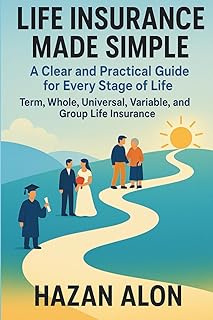 |
|
Both resources explain how life insurance interacts with the tax code. For a deeper dive into cash value strategies, consider Money, Wealth, Life Insurance (rated 4.6, $8.95) — it shows how the wealthy use life insurance as a tax-free personal bank.
Advanced Tax Planning: The Modified Endowment Contract (MEC) Trap
When funding a whole life policy for estate planning, you must avoid turning it into a Modified Endowment Contract (MEC) . This happens if you pay premiums that exceed the maximum allowed under the “7-pay test.” Once a policy is a MEC:
- Policy loans and withdrawals are taxed as income first (last in, first out).
- A 10% penalty applies on gains withdrawn before age 59½.
- The death benefit remains income tax-free, but the cash value access loses its tax advantage.
How to avoid it: Work with a licensed agent to model premium payments. Most whole life policies are designed to stay under the MEC threshold, but aggressive funding (e.g., using “single premium” whole life) often triggers MEC status.
Using Life Insurance for Business Succession and Estate Tax Liquidity
Business owners frequently use term vs whole life insurance to fund buy-sell agreements. If you own a business with a partner, a cross-purchase agreement funded by life insurance ensures the surviving partner can buy the deceased’s shares — and the death benefit passes income tax-free.
But the estate tax aspect is critical. If the business is your primary asset and its value exceeds the estate tax exemption, your heirs may have to sell the company to pay taxes. A whole life policy inside an ILIT provides immediate, tax-free cash. This strategy is known as estate tax liquidity planning.
Real-World Example
John, age 55, owns a successful manufacturing company worth $20 million. He and his wife have a $3 million home and $2 million in investments. Total estate: $25 million. At 40% estate tax, the tax bill could be $10 million (assuming $15M exemption in 2026 after sunset).
Solution: John buys a $10 million whole life policy inside an ILIT. He pays $250,000/year in premiums for 10 years. At death, the ILIT receives $10 million income tax-free, then uses that cash to buy company stock from John’s estate, providing the liquidity to pay estate taxes. The business stays in the family.
Tax Implications of Policy Surrenders and Exchanges
Surrendering a Term Policy
No tax consequence. Term policies have no cash value, so you simply lose coverage with zero tax impact.
Surrendering a Whole Life Policy
You receive the cash value minus any surrender charges. The taxable portion is the cash value above your cost basis (total premiums paid). For example:
- Total premiums paid: $100,000
- Cash value at surrender: $140,000
- Taxable gain: $40,000 (ordinary income)
This can be a nasty surprise if you surrender a policy you’ve owned for decades. The gain is treated as ordinary income, not capital gains, so it is taxed at your marginal rate — potentially 37%.
1035 Exchange: Tax-Free Rollover
You can exchange a whole life policy for another life insurance or annuity contract tax-free under Section 1035. This allows you to move from a high-fee policy to a better one without triggering a taxable event. The new policy keeps the same cost basis.
Note: Term policies cannot be exchanged because they have no cash value. You would need to convert your term to a permanent policy first (if the contract allows) to execute a 1035 exchange.
Key Takeaways for Estate Planners
- Term life insurance is simple, inexpensive, and ideal for temporary needs. Its tax treatment is straightforward: premiums not deductible, death benefit income tax-free, but included in estate if you own the policy.
- Whole life insurance offers tax-deferred growth, tax-free loans (if managed carefully), and permanent coverage. It can fund estate tax liabilities, but requires careful ownership structuring (ILIT) to avoid estate inclusion.
- Always consider the MEC rules when funding whole life. Avoid single-premium designs unless you fully understand the tax consequences.
- The interaction between life insurance and estate tax exemption (which is set to drop sharply in 2026 under current law) makes ILIT planning urgent for high-net-worth families.
Pro Tip: If your estate is likely to exceed the exemption (currently $13.99M per person, but slated to halve in 2026), purchase a whole life policy inside an ILIT today. Delaying could cost your heirs hundreds of thousands in unnecessary taxes.
Frequently Asked Questions
1. Is term life insurance death benefit taxable to the beneficiary?
No. Under IRC Section 101(a)(1), the death benefit is generally federal income tax-free. However, it can be subject to estate tax if you own the policy at death.
2. Can I deduct life insurance premiums on my taxes?
Not for personal life insurance. Premiums paid by employers for group term life (up to $50,000 coverage) may be excludable from your income, but you cannot deduct them personally.
3. What is the tax treatment of whole life insurance cash value loans?
Loans are not considered income, so they are tax-free as long as the policy remains in force. If the policy lapses with an outstanding loan, the loan amount above cost basis becomes taxable.
4. How does a 1035 exchange work for life insurance?
It allows you to exchange one life insurance policy for another (or an annuity) without triggering a taxable gain. The cost basis carries over to the new contract.
5. Should I use an ILIT for my term life insurance?
Yes, if your estate might exceed the exemption. An ILIT removes the death benefit from your estate and can provide liquidity to your heirs without the burden of estate tax.
6. What happens to cash value when I die?
In a whole life policy, the death benefit is the sum of the face amount and the cash value (or the face amount only, depending on the policy design). The cash value is absorbed into the death benefit and passes income tax-free to beneficiaries.
7. Can I avoid estate tax on life insurance by naming my spouse as beneficiary?
Only partially. The marital deduction allows tax-free transfers between spouses, but upon the surviving spouse’s death, the full proceeds are included in their estate. An ILIT is the only way to keep the death benefit out of both estates.
Final Verdict: Term vs Whole Life for Tax and Estate Planning
There is no one-size-fits-all answer. For most families, term life insurance provides the simplest, most cost-effective way to protect against temporary risks — with clean tax treatment. For high-net-worth individuals focused on legacy planning, whole life insurance inside an ILIT offers unparalleled estate tax efficiency and cash value growth.
If you’re still deciding, study the basics with Life Insurance 101 and then dive into advanced strategies with Life Insurance Made Simple. The tax code is complex, but your plan doesn’t have to be — start with the right foundation.
For more insight, explore our guides on Term vs Whole Life Insurance: Which Offers Better Cash Value Growth? and Pros and Cons of Term vs Whole Life Insurance for Young Families.