 Insurance Curator
 If you’re shopping for term life insurance, you’re trusting that the company you choose will still be around decades from now to pay your beneficiaries. That trust is built on a massive, multi-layered regulatory framework. The regulation of life insurance companies in USA isn’t just bureaucratic red tape — it’s the safety net that protects policyholders, ensures fair pricing, and maintains the stability of the entire industry.
Understanding how life insurers are regulated helps you make smarter decisions, whether you’re a consumer buying term life or an agent entering the field. Let’s dive into the key players, rules, and protections that govern every policy sold in America.
Why Life Insurance Regulation Matters for Term Life Insurance
Term life insurance is the simplest and most affordable type of coverage, but it still carries long-term promises. A 20-year term policy means the insurer must be financially sound for two decades. Without strict regulation, companies could mismanage funds, underprice policies, or deny claims unfairly.
Regulation ensures that premiums are adequate to cover future claims, reserves are maintained, and consumers are treated honestly. In short, it’s why you can buy a term policy today and trust it will pay out 30 years from now.
The State-Based Regulatory System
Life insurance in the USA is regulated primarily at the state level, not by the federal government. This system was cemented by the McCarran-Ferguson Act of 1945, which gave states the authority to oversee insurance.
Each state has its own insurance department led by an elected or appointed commissioner. These departments are responsible for licensing companies, approving policy forms, reviewing rates, and conducting financial exams.
The National Association of Insurance Commissioners (NAIC) coordinates among states to create model laws and standards. While states can adopt or modify these models, NAIC’s framework promotes consistency across the country without a central federal regulator.
Key Regulatory Bodies and Their Roles
| Body | Role |
|---|---|
| State Insurance Departments | License, examine, and enforce laws. |
| NAIC | Develops model regulations, conducts financial analysis, and maintains databases. |
| State Guaranty Associations | Protect policyholders if an insurer fails. |
| Federal Insurance Office (FIO) | Monitors industry but has limited regulatory power. |
| Consumer Financial Protection Bureau (CFPB) | Oversees consumer financial products, though insurance is mostly excluded. |
The regulation of life insurance companies in USA involves a layered approach. For term life, the most impactful bodies are state departments and the NAIC, which set solvency and market conduct standards.
Solvency Regulation: Protecting Policyholders
Solvency regulation ensures life insurers have enough money to pay future claims. This is critical for term life because the deferred payout can be decades away.
Risk-Based Capital (RBC) Requirements
Insurers must hold capital proportional to their risk. The NAIC’s RBC formula considers investment risk, underwriting risk, and operational risk. Companies with low RBC ratios face regulatory action.
Reserve Requirements
Term life policies require insurers to set aside reserves equal to the present value of expected claims. Actuarial formulas, governed by state law and NAIC models, determine these amounts.
Annual Financial Exams
Every state requires insurers to submit detailed financial statements. States also conduct on-site exams every 3–5 years. For example, a term life insurer writing large volumes must prove its reserves are sufficient through rigorous testing.
If you want to check the financial strength of any life insurance company, you can refer to resources like Life Insurance Companies in Usa: Financial Strength Ratings, which break down ratings from A.M. Best, Moody’s, and others.
Market Conduct Regulation: Fair Treatment of Consumers
Beyond solvency, regulators police how insurers treat customers. This is especially important for term life insurance, where misrepresentation or unfair sales tactics can harm consumers.
Unfair Trade Practices
States prohibit deceptive advertising, misrepresentation of policy terms, and high-pressure sales. For instance, a company cannot claim a term policy is “investment” without proper disclosure.
Suitability Requirements
When an agent recommends replacing an existing term policy with a new one, most states require a suitability analysis. The agent must prove the replacement benefits the consumer.
Free-Look Period
Every term life policy includes a free-look period (usually 10–30 days) during which you can cancel for a full refund. This is mandated by state law.
Advertising Rules
The NAIC’s Life Insurance Advertising Model Regulation ensures advertisements are clear and not misleading. For example, ads must state that term life has no cash value.
Rate Regulation and Term Life Insurance Premiums
Unlike health insurance, term life rates are not heavily regulated. Most states use a file-and-use system: insurers file rates with the state but can start using them immediately. However, states can challenge rates that are excessive, inadequate, or unfairly discriminatory.
This openness encourages competition, which keeps term life premiums low. But it also means consumers must shop around. Regulation of life insurance companies in USA focuses more on solvency and market conduct than on price controls.
Guaranty Associations: Your Safety Net
Even with strong solvency oversight, an insurer can fail. That’s where state guaranty associations step in. Every state has one, funded by assessments on healthy insurers.
Coverage Limits
Guaranty associations typically cover:
- Up to $300,000 in death benefits per policy
- Up to $100,000 in cash surrender values
These limits apply to individual term life policies. If your insurer goes under, the guaranty association will continue paying claims or transfer your policy to another carrier.
You can learn which companies are most financially stable by exploring How Many Life Insurance Companies in Usa? Market Overview?, which also discusses the role of guaranty funds.
How Regulation Shapes Term Life Insurance Products
State laws dictate the standard provisions found in every term policy. These include:
- Grace period – Usually 30 or 31 days to pay a late premium.
- Incontestability clause – After two years, the insurer cannot void the policy for misstatements (except fraud).
- Conversion rights – Many term policies allow conversion to permanent coverage without new underwriting, often required by state law.
- Nonforfeiture benefits – Not applicable to term, but states mandate them for permanent policies.
These protections mean that when you buy a term policy, you receive a contract with consistent, consumer-friendly terms across all companies.
Resources to Deepen Your Understanding of Life Insurance Regulation
Whether you’re a consumer or an agent, several books and study materials can help you grasp the intricacies of regulation. Below are some top-rated resources available on Amazon.

Life Insurance Made Simple: A Clear and Practical Guide for Every Stage of Life – Rating 4.8, $34.99. This guide covers everything from term to permanent, including how regulations affect your coverage decisions.

Life Insurance 101: The Basics of Life Insurance Explained – Rating 4.1, $14.95. A quick primer on policy types, regulations, and buying tips.

Life and Health Insurance License Study Cards – Rating 4.3, $43.99. Full-color flashcards to prep for the licensing exam that covers state regulations.
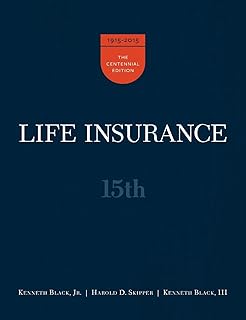
Life Insurance, 15th Ed. – $150.00, Rating 4.2. The definitive textbook used in university and professional courses; includes deep dives into regulation, actuarial science, and company operations.
Comparison Table – Best Resources on Life Insurance Regulation
| Product | Price | Rating | Best For | Buy at Amazon |
|---|---|---|---|---|
|
$34.99 | 4.8 | Consumers who want a clear, practical overview | Buy Now |
|
$14.95 | 4.1 | Quick, budget-friendly intro | Buy Now |
|
$43.99 | 4.3 | Exam prep and memorization | Buy Now |
|
$150.00 | 4.2 | Advanced study and professional reference | Buy Now |
These resources can help you navigate the regulation of life insurance companies in USA, whether you’re buying term life or studying for your license.
Frequently Asked Questions About Life Insurance Regulation
Who regulates life insurance companies in the USA?
Life insurers are regulated primarily by state insurance departments under the McCarran-Ferguson Act. The NAIC coordinates state efforts, but there is no single federal regulator.
Are term life insurance rates regulated?
Rates are not heavily regulated. States use a file-and-use system to ensure rates are not excessive or discriminatory, but competition largely sets the market price.
What happens if my life insurance company goes bankrupt?
State guaranty associations protect you. They typically cover up to $300,000 in death benefits for term life. Your policy will be transferred or claims will be paid by the association.
Can an insurance company deny my term life claim after I die?
Only if the policy was fraudulently obtained or if the suicide exclusion applies (usually two years). After the contestability period (two years), the insurer cannot deny a claim based on misstatements.
Do all states have the same regulations?
No. Each state can adopt its own laws, though most follow NAIC models. This is why a term policy sold in New York may have slightly different provisions than one in Texas.
How can I check the financial strength of a life insurer?
You can check independent ratings from A.M. Best, Moody’s, Standard & Poor’s, or Fitch. The article Life Insurance Companies in Usa: Financial Strength Ratings provides a detailed breakdown.
What is the NAIC’s role in regulating term life insurance?
The NAIC develops model laws and conducts financial analysis. While it has no direct enforcement power, its standards are widely adopted, ensuring consistency in solvency and consumer protections.
Conclusion
The regulation of life insurance companies in USA is a complex but essential system that protects everyone from policyholders to insurers. For term life insurance buyers, understanding these rules gives you confidence that your beneficiaries will receive the death benefit you promised.
From state solvency exams to guaranty associations and market conduct standards, every layer exists to ensure fairness and reliability. If you want to explore even more, check out List of Life Insurance Companies in Usa: Complete Directory and Life Insurance Companies in Usa: Types and Services Explained to see how different carriers operate within the regulatory framework.
And if you’re just starting your life insurance journey, the resources above — especially Life Insurance Made Simple and Life Insurance 101 — can make the regulation of life insurance companies in USA easy to understand.