 Insurance Curator
 Life insurance is a critical safety net, but the traditional application process often involves needles, blood tests, and hours of waiting. If you’ve ever delayed coverage because you dread the medical exam, whole life insurance no medical exam might be the perfect solution. This type of policy provides lifelong protection and cash value accumulation—all without a paramedical visit.
In this comprehensive guide, we’ll walk you through exactly how to apply for whole life insurance no medical exam, compare it with term life insurance, and show you the best resources (including top-rated books) to master the process. Whether you’re a senior, someone with a health condition, or just busy, this deep dive covers everything you need to know.
What Is Whole Life Insurance No Medical Exam?
Whole life insurance no medical exam is a permanent life insurance policy that does not require a traditional medical examination (blood draw, urine sample, or physical). Instead, insurers use a simplified underwriting process that relies on answers to health questions and electronic databases like prescription records or MIB reports.
How Is It Different from Term Life Insurance?
| Feature | Whole Life Insurance (No Exam) | Term Life Insurance |
|---|---|---|
| Coverage length | Lifetime (to age 100 or 121) | 10–30 years; expires |
| Premium | Fixed, higher | Lower, fixed for term |
| Cash value | Yes, tax-deferred growth | None |
| Medical exam | Usually not required | Often required for best rates |
| Age limits | Up to 80–85 | Up to 70–75 |
The biggest difference is that whole life no exam offers permanent coverage and a savings component, while term life is pure protection for a set period. If you need coverage beyond a term, or you want to build cash value, no-exam whole life is a compelling option.
Who Should Consider It?
- Seniors who need final expense coverage but want to avoid medical tests. Learn more about Best No Medical Exam Whole Life Insurance for Seniors.
- People with chronic health conditions (diabetes, heart disease) who might struggle to pass a full exam.
- Anyone who wants fast, convenient coverage without scheduling appointments.
How to Apply for Whole Life Insurance No Medical Exam: Step-by-Step
Applying for a whole life insurance no medical exam policy is simpler than a traditional policy, but you still need to follow a structured approach. Here’s your seven-step roadmap.
Step 1: Determine Your Coverage Needs
Start by asking: What do I want this policy to accomplish?
- Final expenses: Funeral costs, medical bills, debts.
- Income replacement: If you have dependents, calculate 10–15 years of salary.
- Cash value goals: Want to use the policy as a tax-advantaged savings tool? Read Money. Wealth. Life Insurance.: How the Wealthy Use Life Insurance as a Tax-Free Personal Bank to Supercharge Their Savings – a 4.6-rated book that dives deep into this strategy.
Step 2: Compare Insurers and Policies
Not all no-exam whole life policies are created equal. Some offer simplified issue (health questions but no exam), while others are guaranteed issue (no health questions but often a two-year graded death benefit).
- Look at financial strength ratings (A.M. Best, S&P).
- Compare premiums, cash value growth rates, and riders (e.g., accelerated death benefit, waiver of premium).
- Check age limits and maximum coverage amounts.
Step 3: Gather Basic Information
Unlike a traditional application, you won’t need medical records. You will typically need:
- Your Social Security number (for prescription database check).
- Driver’s license (for identity verification).
- Bank account details (for premium payments).
- Beneficiary information (name, relationship, percentage).
Step 4: Complete the Application
Most insurers offer online applications that take 10–20 minutes. You’ll answer a few health questions like:
- Have you been diagnosed with cancer, heart disease, or diabetes in the last 2–5 years?
- Are you currently hospitalized or receiving hospice care?
- Do you smoke or use tobacco?
Be honest. Insurers can deny claims if they find you misrepresented your health.
Step 5: Answer Health Questions Honestly (If Any)
Simplified issue policies ask 5–10 yes/no questions. Guaranteed issue policies ask none. But if you lie, the policy may not pay out during the contestability period (usually two years).
Step 6: Pay the Initial Premium
You’ll need to pay your first month’s premium (or annual premium) to bind the coverage. Most insurers accept credit/debit cards or ACH transfers.
Step 7: Receive Your Policy and Review It
After approval (often same day or within 24 hours), you’ll get a digital policy document. Review the declarations page for:
- Face amount.
- Premium amount and frequency.
- Cash value projections.
- Riders and exclusions.
You typically have a free look period (10–30 days) to cancel for a full refund.
What to Expect During the Underwriting Process
Even without a medical exam, insurers still underwrite your application. They use:
- Prescription drug history (via the MIB or LexisNexis).
- Motor vehicle records (for high coverage amounts).
- Credit-based insurance scores (to predict lapse risk).
- Medical databases (to confirm answers).
If you have a serious medical condition, you may be offered a graded death benefit (full coverage only after 2–3 years) or a lower face amount.
Graded vs. Level Benefits
| Type | Death Benefit | Typical Use |
|---|---|---|
| Level | Full benefit from day 1 | Simplified issue |
| Graded | 30–100% in year 1, 50–70% in year 2, 100% after year 2 | Guaranteed issue |
| Modified | Return of premiums plus interest in early years | Rare, high-risk |
Always ask if the policy has a waiting period. For guaranteed issue policies, the two-year waiting period is standard.
Cost Comparison: No Exam Whole Life vs Term Life Insurance
While whole life insurance no medical exam has higher premiums than term life, it provides permanent coverage and cash value. Here’s a typical cost comparison for a healthy 45-year-old male, non-smoker, $100,000 coverage:
| Policy | Monthly Premium | Coverage Duration | Cash Value | Medical Exam |
|---|---|---|---|---|
| Term Life (20-year) | $30–$40 | 20 years | None | Often required |
| No Exam Whole Life | $100–$150 | Lifetime | Yes, builds slowly | No exam |
| Traditional Whole Life | $90–$140 | Lifetime | Yes, builds faster | Exam required |
Bottom line: If you have health issues that make traditional term life expensive or unavailable, no exam whole life can be a great alternative. But for pure temporary coverage, term is cheaper.
Top Resources to Learn More (Amazon Products)
To truly master the application process and understand the nuances of whole life insurance no medical exam, we’ve handpicked three outstanding books. These are written by industry experts and rated highly by readers.
1. Life Insurance Made Simple: A Clear and Practical Guide for Every Stage of Life
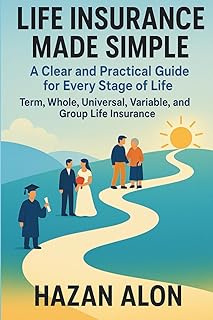
This book covers both term and permanent insurance with crystal-clear explanations. It’s perfect for beginners who want to understand how whole life insurance no medical exam fits into a broader financial plan. Rating: 4.8/5 (34 reviews). Price: $34.99.
2. Life Insurance 101: The Basics of Life Insurance Explained

A straightforward, no-nonsense guide that breaks down policy types, underwriting, and application tips. Ideal for visual learners. Rating: 4.1/5. Price: $14.95.
3. Life Insurance, 15th Ed.
This is the gold standard for professionals. It dives into actuarial science, cash value mechanics, and advanced strategies. Rating: 4.2/5. Price: $150.00.
Comparison Table
| Product | Price | Rating | Best For | Buy at Amazon |
|---|---|---|---|---|
|
$34.99 | 4.8 | Beginners, clear overview | Buy Now |
|
$14.95 | 4.1 | Budget-friendly, quick read | Buy Now |
|
$150.00 | 4.2 | Advanced, professional | Buy Now |
Common Mistakes When Applying for No Exam Whole Life Insurance
Avoid these pitfalls to ensure your application goes smoothly:
- Assuming all no-exam policies are the same. Compare guaranteed issue vs. simplified issue. The latter often has better rates and immediate full coverage.
- Not reading the fine print on graded benefits. Some policies pay only a percentage of the death benefit in the first year or two. This can be a shock to beneficiaries.
- Overinsuring. Just because you can get $100,000 doesn’t mean you should. Evaluate your actual needs (funeral, debts, income replacement).
- Skipping the free look period. You have 10–30 days to cancel and get a full refund. Use that time to compare.
- Not considering term life first. For many people, term life is more cost-effective. Only switch to whole life insurance no medical exam if you need permanent coverage or have health issues.
Frequently Asked Questions
1. Can I get whole life insurance with no medical exam if I have a serious illness?
Yes, but you’ll likely be offered a guaranteed issue policy. These policies have no health questions, but they include a two-year waiting period. If you die within those two years, your beneficiaries get only a refund of premiums plus interest (usually 10–15%). For more details, see our guide: “Is No Exam Whole Life Insurance Worth It? Pros and Cons?”.
2. How much coverage can I get without a medical exam?
Coverage amounts vary by insurer and age. Typically, you can get $10,000 to $50,000 with guaranteed issue, and up to $500,000 with simplified issue (if you’re under 50 and healthy). For higher amounts, you might need a full exam.
3. Is whole life insurance no medical exam more expensive than term life?
Yes. No-exam whole life premiums are 2–4 times higher than term life premiums for the same face amount. However, the premiums stay level for life, and you build cash value. Compare plans side-by-side using our guide to “Top Whole Life Insurance Policies Without a Medical Exam in 2025.”.
4. Do I need to take a phone interview?
Some insurers require a brief phone interview (10–15 minutes) to verify your answers. It’s less intrusive than a paramedical exam. Others approve entirely online. Always check the application process before you start.
5. Can I convert my term life insurance to a no-exam whole life policy?
Some term policies include a conversion rider that lets you convert to a permanent policy without a medical exam. This is a great feature if your health has declined. Ask your agent about this option when buying term.
Final Thoughts: Is No Exam Whole Life Insurance Right for You?
Applying for whole life insurance no medical exam is fast, convenient, and accessible for many people who would otherwise struggle to get coverage. The key is understanding the trade-offs: higher premiums, possible waiting periods, and lower maximum coverage amounts.
If you’re a senior looking for a final expense plan, or someone with health issues who wants guaranteed acceptance, this product is a smart choice. But if you’re young and healthy, term life insurance likely offers better value for your dollar.
Take the time to compare at least three insurers, read the fine print, and educate yourself with resources like Life Insurance Made Simple. Your family’s financial future is worth the effort.
For deeper insights, explore our related guides:
- No Medical Exam Whole Life Insurance: How It Works and Who Qualifies
- Best No Medical Exam Whole Life Insurance for Seniors
- Is No Exam Whole Life Insurance Worth It? Pros and Cons?
Start your application today—no needles required.