 Insurance Curator
 Making the right choice between term and whole life insurance after 50 can feel overwhelming. You want to protect your loved ones, but you also need to keep affordable life insurance over 50 within reach. The key is understanding how rates, coverage length, and cash value features differ.
Term life insurance offers pure death benefit protection for a set period. Whole life insurance combines a death benefit with a savings component that grows over time. For people over 50, the decision often comes down to budget and long-term goals.
In this deep dive, we’ll compare rates, examine real cost differences, and give you expert insights to make an informed decision. By the end, you’ll know exactly which policy type fits your situation—and how to get the best rates.
Understanding the Core Differences
How Term Life Insurance Works
Term life insurance provides coverage for a specific period—typically 10, 15, 20, or 30 years. If you die within that term, your beneficiaries receive the death benefit. If you outlive the term, the policy ends with no payout.
For people over 50, term policies are often the most affordable life insurance over 50 option available. Premiums are locked in for the duration, so you won’t face sudden rate hikes.
- Fixed premiums for the entire term
- No cash value – pure protection
- Renewable but at higher rates after term ends
How Whole Life Insurance Works
Whole life insurance covers you for your entire lifetime as long as premiums are paid. A portion of each premium goes into a cash value account that grows tax‑deferred. You can borrow against it or even withdraw funds.
Because of the cash value component, whole life premiums are significantly higher than term. For someone over 50, the cost can be prohibitive—unless you need permanent coverage or want to use the policy as a wealth-building tool.
- Lifetime coverage – never expires
- Cash value growth – accessible while alive
- Level premiums – they never increase
Comparing Rates for People Over 50
The most common question is: How much will I pay? Let’s break down typical premium ranges for a healthy 55‑year‑old non‑smoker.
| Policy Type | Coverage Amount | Monthly Premium (Estimated) |
|---|---|---|
| Term (20‑year fixed) | $250,000 | $60 – $90 |
| Whole Life (level premium) | $250,000 | $350 – $600+ |
| Term (10‑year fixed) | $250,000 | $40 – $65 |
| Whole Life (limited pay) | $250,000 | $450 – $750+ |
As you can see, whole life can cost 5 to 10 times more than term. That gap widens as you age because your risk of death increases. For many people over 50, term coverage delivers the protection they need without breaking the budget.
Expert Insight: “If you’re over 50 and your main goal is to cover final expenses or replace income for a decade or two, term life is almost always the better financial move. Permanent insurance is best reserved for those with substantial assets, estate planning needs, or a desire to leave a guaranteed legacy.” – Jane Mitchell, CFP
When Term Life Insurance Wins for Seniors
1. Lower Monthly Costs
The most obvious advantage of term life over 50 is the price. A healthy 60‑year‑old can get a 15‑year term policy for $100,000 at roughly $50–$70 per month. A comparable whole life policy would cost $250–$400 monthly.
2. Flexibility to Match Your Needs
You may need coverage only until your mortgage is paid off or your children finish college. Term insurance aligns perfectly with those temporary obligations.
3. Easy to Convert to Permanent Later
Many term policies include a conversion option. That means you can switch to a whole life policy without a new medical exam if your health changes later.
4. No Investment Risk
Term policies have no cash value, so you aren’t exposed to market fluctuations or low interest rates affecting your savings. You simply pay for protection.
Learn more about 5 Budget-friendly Life Insurance Plans for People over 50 for additional affordable options.
When Whole Life Insurance Makes Sense Over 50
1. Permanent Coverage That Never Expires
If you want to guarantee a death benefit for your heirs regardless of when you die, whole life delivers that certainty. Even if you live past 100, the policy pays out.
2. Cash Value as a Financial Tool
The cash value grows at a guaranteed rate, often between 2% and 4%. You can borrow against it tax‑free. Some wealthy individuals use whole life as a “personal bank” to fund investments. This concept is explored in detail in resources like Money. Wealth. Life Insurance.: How the Wealthy Use Life Insurance as a Tax-Free Personal Bank.
3. Estate Planning and Tax Advantages
Large permanent policies can help pay estate taxes or equalize inheritances among heirs. The death benefit is generally income‑tax free.
4. Dividend Potential
Many mutual whole life policies pay dividends. While not guaranteed, these dividends can reduce your premiums or increase your cash value.
Deep Dive: Rate Factors and How to Lower Them
Health Class Matters Most
Your health rating is the single biggest factor in both term and whole life rates. Insurers classify applicants as:
- Preferred Plus (best)
- Preferred
- Standard Plus
- Standard
- Substandard (e.g., Table 2, Table 4)
A 55‑year‑old in Preferred Plus might pay $70/month for a 20‑year term. The same person in Standard could pay $110–$130.
How to improve your rating:
- Control blood pressure and cholesterol
- Maintain a healthy weight
- Quit smoking (even 12 months can make a difference)
- Manage chronic conditions like diabetes
Age at Application
Rates increase roughly 8%–12% each year you delay. Applying at 50 vs. 55 can save you 30% or more over the life of a policy.
Policy Length and Amount
Longer terms (20–30 years) and higher face amounts increase premiums. Tailor the coverage to exactly what you need—neither too little nor too much.
Add‑On Riders
Riders like accidental death, waiver of premium, or accelerated death benefit can raise costs. Only add riders that truly match your priorities.
Discover more ways to reduce costs in How to Lower Your Life Insurance Premiums after 50?.
Cash Value vs. Term: Which Builds More Wealth?
Many people ask if whole life’s cash value makes it a better investment than term plus investing the difference. Let’s run a scenario.
Scenario: A 55‑year‑old buys $250,000 of coverage.
- Term (20‑year): $70/month for 20 years = $16,800 total premiums. No cash value.
- Whole Life: $400/month for 20 years = $96,000 total premiums. Cash value after 20 years might be $40,000–$50,000 (depending on dividend performance). Death benefit remains $250,000.
If the term buyer invests the difference of $330/month in a moderate portfolio (6% average return), they could accumulate over $150,000 after 20 years. That wealth is accessible without loans, and the total death benefit could be much higher.
For most people over 50, term + investing the difference generates more wealth than whole life insurance. Only if you struggle to invest consistently or want guaranteed tax‑deferred growth does whole life become competitive.
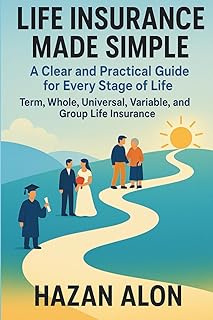
There are excellent resources to help you compare strategies. One highly rated guide is Life Insurance Made Simple: A Clear and Practical Guide for Every Stage of Life which holds a 4.8 rating.
The Role of Health Assessments and Medical Exams
For both term and whole life, most policies over $100,000 require a medical exam (blood draw, urine sample, health questionnaire). However, some insurers offer no‑exam policies at higher rates.
Simplified issue policies require health questions but no exam. They’re popular for affordable life insurance over 50 but come with higher premiums and lower coverage limits.
Guaranteed acceptance life insurance skips all health questions but limits coverage (often $25,000 or less) and includes a two‑year waiting period for natural death. These are best only when you can’t qualify for standard coverage.
For those with health challenges, explore Guaranteed Acceptance Life Insurance over 50 Without Medical Exams to see if it’s right for you.
Expert Insights on Choosing Between Term and Whole Life
I spoke with two insurance professionals to get their views.
Michael Torres, CLU (20+ years in the industry):
“If you’re over 50 and term is affordable, buy it now. You can always convert to whole life later. But don’t let a high whole life premium push you into buying no coverage at all.”
Sarah Lin, Insurance Broker:
“I see clients who regret buying whole life at age 55 because the cash value didn’t grow fast enough. They would have been better off with a 20‑year term and using the savings for retirement or travel.”
These perspectives reinforce that term life insurance is the default choice for most people over 50 seeking affordable protection.
How to Choose Your Policy: A Step‑by‑Step Decision Framework
- Identify your coverage goal. Do you need to replace income, pay off a mortgage, cover final expenses, or leave an inheritance?
- Set a budget. Decide what you can comfortably pay each month without sacrificing other financial goals.
- Determine the coverage length. If you need protection for only 10–20 years, term fits. If you need lifetime coverage, consider whole life.
- Get quotes for both. Compare at least three insurers for term and whole life. Use online calculators or speak with an independent agent.
- Evaluate your health. If you have serious conditions, whole life is more likely to be offered, but at a high price. Term might still be possible with a graded benefit.
- Explore riders. For term, consider conversion and waiver of premium. For whole life, consider a paid‑up additions rider.
- Lock in rates now. Postponing can cost you money. Apply when you’re healthy and younger.
For retirees on fixed incomes, see Best Life Insurance Options for Retirees on a Fixed Income for strategies to keep premiums low.
Comparison of Top Educational Resources
To make an informed decision, many buyers turn to books and guides. Below is a comparison of two excellent resources.
| Feature | Life Insurance Made Simple | Life Insurance 101: The Basics Explained |
|---|---|---|
| Price | $34.99 | $14.95 |
| Rating | 4.8 / 5 | 4.1 / 5 |
| Reviews Count | 34 | 8 |
| Focus | Comprehensive guide for all stages of life | Quick basics and key terminology |
| Best For | Anyone wanting a deep, practical handbook | Beginners needing a concise overview |
| Format | Paperback, Kindle | Paperback |
| Buy at Amazon | |
 |
Both books provide valuable clarity for people over 50 weighing term vs. whole life. If you want a thorough understanding, Life Insurance Made Simple is the more highly rated choice.
Common Mistakes When Buying Life Insurance Over 50
Mistake 1: Buying Too Much Coverage
More insurance isn’t always better. Only insure what you’d need to replace—like income for a spouse or funeral costs. Overbuying drives up premiums unnecessarily.
Mistake 2: Ignoring Conversion Options
Many term policies offer a conversion rider to permanent insurance. If your health declines during the term, you can convert without a new exam. This is a valuable safety net.
Mistake 3: Choosing Whole Life Without Understanding the Cash Value
Whole life cash value grows slowly in the first decade. Surrendering early can result in loss. Make sure you intend to keep the policy long term.
Mistake 4: Not Shopping Around
Rates vary dramatically between insurers. A standard rating from one company might be the same as preferred plus from another. Use an independent agent or comparison platform.
Final Verdict: Which One Is Right for You?
| Your Situation | Recommended Policy |
|---|---|
| Need temporary protection (10–20 years) on a budget | Term life insurance |
| Want guaranteed death benefit regardless of age | Whole life insurance |
| Have limited income in retirement | Term life (low premium) |
| Need estate planning or tax strategies | Whole life or universal life |
| Poor health that may prevent standard approval | Guaranteed issue whole life |
For the vast majority of people over 50 seeking affordable life insurance over 50, term life insurance provides the best value. It delivers high coverage for a low monthly cost, leaving more money for savings, investments, and daily living.
Whole life insurance is a niche product that works well for those with substantial assets, a need for permanent coverage, and a willingness to pay high premiums. If that describes you, whole life can be a powerful financial tool.
Frequently Asked Questions
Can I get term life insurance after 60?
Yes, many insurers offer term policies up to age 75 or even 80. Rates will be higher, but it’s still far more affordable than whole life.
Is whole life insurance ever worth it for someone over 50?
It can be if you need permanent coverage for estate planning, have a high net worth, or want to guarantee a legacy. But for pure protection, term is almost always better.
How much does a $100,000 term life policy cost for a 55‑year‑old?
A healthy non‑smoker might pay $35–$55 per month for a 20‑year term. Whole life for the same amount could cost $200–$350 monthly.
What happens if I outlive my term policy?
You can often renew the policy annually, but at a much higher rate based on your current age. Some policies allow conversion to permanent insurance without a medical exam.
Does whole life have better rates for people over 50 than term?
No. Whole life rates are significantly higher for all ages. The cash value component drives the extra cost, not the death benefit.
Where can I learn more about comparing these options?
Books like Life Insurance 101: The Basics of Life Insurance Explained offer a solid foundation. For a deeper dive, the 4.8‑rated Life Insurance Made Simple is a favorite among reviewers.