 Insurance Curator
 If you’ve spent any time in r/personalfinance or r/insurance, you know the crowd has strong opinions about whole life insurance. The phrase “whole life insurance Reddit” often appears in threads where users warn others to “run away” from policies pushed by agents. But is that advice always right? This article sifts through hundreds of Reddit discussions to answer the most common questions about whole life insurance, compare it with term life insurance, and provide expert-backed resources to help you decide.
We’ll also recommend some of the best books and guides that Redditors and professionals alike turn to when they want to go beyond forum opinions. Check out Life Insurance Made Simple: A Clear and Practical Guide for Every Stage of Life – a top‑rated resource that cuts through the jargon. And if you’re just starting your research, Life Insurance 101: The Basics of Life Insurance Explained is a budget‑friendly primer that many Redditors recommend.
Why Reddit Is the Go‑To Place for Honest Life Insurance Advice
Reddit’s anonymous format encourages raw, unfiltered opinions. When someone asks “whole life insurance Reddit: worth it?” they often get dozens of replies from people who have been burned by high premiums, confusing cash‑value projections, or aggressive sales tactics. At the same time, a minority of users – often in r/fatFIRE or r/wealth – share how they use whole life as a tax‑advantaged savings tool.
The key takeaway? Reddit is great for hearing real stories, but you still need to understand the numbers. That’s where books like Life Insurance, 15th Ed. come in – an academic text that gives you the actuarial foundation behind the policies. We’ll reference these resources throughout the article.
What Is Whole Life Insurance? (And How Redditors Define It)
Whole life insurance is a permanent policy that covers you for your entire life, as long as premiums are paid. It builds cash value at a guaranteed rate, and the premiums are level (they never increase). Redditors often describe it as “life insurance with a savings account attached,” but many warn that the “savings” grow very slowly in the early years.
A typical Reddit definition: “Whole life is expensive insurance with a mediocre investment component. You’re better off buying term and investing the difference.” That’s the dominant view, but it’s not the only one. Some users on r/InfiniteBanking argue that whole life’s cash value can be used like a private bank – borrowing against it for any purpose.
Key Features Highlighted by Redditors
- Guaranteed death benefit – your beneficiaries get the money tax‑free.
- Cash value accumulation – grows at a fixed or dividend‑based rate.
- Level premiums – never rise, unlike term policies that increase at renewal.
- Loan provisions – you can borrow from the cash value (but interest applies).
Term vs. Whole Life: The Great Reddit Debate
The classic Reddit comparison threads ask: “I’m 30, healthy, and want to protect my family. Should I buy term or whole life?” The overwhelming answer is term life insurance, and here’s why.
Term Life Insurance: The Reddit Favorite
- Low cost – a 20‑year term policy for $500,000 might cost $25/month.
- Clean coverage – pure death protection, no cash value.
- Invest the difference – put the money you save into a low‑cost index fund.
Whole Life Insurance: When Redditors Say It Makes Sense
- Estate planning – high‑net‑worth individuals use it to pay estate taxes.
- Special needs dependents – permanent coverage ensures lifelong care.
- Tax‑free borrowing – business owners sometimes prefer policy loans over bank loans.
Most Redditors agree: for 90% of people, term life insurance + investing the difference beats whole life. However, a well‑structured whole life policy from a mutual company (like New York Life or MassMutual) can be a useful tool in specific situations.
Reddit wisdom: “Buy term and invest the rest. Whole life is sold, not bought.”
Is Whole Life Insurance a Scam? Reddit’s Verdict
A search for “whole life insurance Reddit scam” returns hundreds of threads. Many users feel misled by agents who promised high cash‑value growth that never materialized. Common complaints include:
- Surrender charges – if you cancel early, you lose most of your money.
- Low returns – cash value grows at 2%–4% (tax‑deferred), but fees eat into it.
- Complex illustrations – agents show projections that assume dividends will stay high, but they can drop.
That said, the majority of Redditors don’t call it a scam – they call it a bad product for most people. A few defend it as a tool for “the wealthy” or for those who max out other tax‑advantaged accounts.
What the Numbers Say
According to a 2023 study by the Insurance Information Institute, only about 25% of whole life policies are still in force after 20 years. Many lapse because people can’t afford the premiums. Redditors use this stat to reinforce their “term + invest” mantra.
How Does Cash Value Work? Reddit Explanations
One of the most confusing parts of whole life insurance is the cash value. Redditors often explain it like a bucket:
- Your premium goes into the policy.
- The insurance company takes out fees (cost of insurance, administration, commissions).
- The remaining money goes into the cash value account.
- That cash earns interest (or dividends) at a rate set by the insurer.
Real Reddit Example
“I had a $100,000 whole life policy for 10 years. I paid $3,000/year. Cash value after 10 years? $18,000. I would have had $30,000 in an S&P index fund. Total loss.”
The math usually favors investing, but cash value has advantages:
- Tax‑deferred growth – no capital gains taxes until you withdraw.
- Loans are tax‑free – you borrow against the cash value, not withdraw it.
- Guaranteed minimum – even in a bad market, the cash value grows.
For a deeper dive, check out Life Insurance Made Simple – it includes clear chapters on how cash value really works.
Can You Use Whole Life Insurance as an Investment? Reddit Opinions
This is a hot‑button topic. On r/investing, you’ll see replies like “Whole life is not an investment. It’s an expensive insurance product.” On r/InfiniteBanking, users argue that whole life can outperform bonds and provide liquidity that stocks don’t.
The Case For Whole Life as an Investment
- Guaranteed returns – 3%–4% tax‑deferred is better than a CD or savings account.
- Low volatility – cash value doesn’t drop in a bear market.
- Living benefits – you can use the cash value for retirement income, college funding, or emergency expenses.
The Case Against
- Low returns – historically, whole life dividends average around 4%–5%, while the S&P 500 averages 10%.
- Illiquidity – it takes years to build meaningful cash value.
- Fees – commissions and administrative costs eat up the first few years of premiums.
Reddit’s bottom line: If you’ve maxed out your 401(k), IRA, and HSA, and you want a fixed‑income allocation, whole life could be part of your portfolio. But for most people, it’s a distraction.
Reddit Recommendations: Best Whole Life Insurance Policies
When Redditors do recommend whole life, they almost always name mutual insurance companies that pay dividends. The top three mentioned are:
| Company | Why Reddit Likes It |
|---|---|
| New York Life | Highest dividend scale, strong financial ratings |
| MassMutual | Good dividends, flexible policy options |
| Guardian Life | Competitive premiums, excellent customer service |
Redditors advise never buying whole life from a publicly traded company like Prudential or MetLife. Mutual companies are owned by policyholders and distribute profits as dividends.
What to Look for in a Policy
- Guaranteed cash value growth – avoid policies with speculative projections.
- Low expenses – ask for a detailed illustration showing all fees.
- Dividend history – check that the company has paid dividends for 50+ years.
Common Reddit Mistakes When Buying Whole Life Insurance
Many Redditors share horror stories of policies they bought without understanding the fine print. Here are the most common mistakes:
- Buying too much coverage – whole life is expensive; only buy what you need for permanent needs.
- Ignoring surrender charges – if you cancel in the first 10–15 years, you lose money.
- Believing the illustrated returns – dividends are not guaranteed; always ask for “guaranteed” numbers.
- Mixing insurance and investment – it’s often better to separate them (buy term + invest).
- Not shopping around – rates and dividends vary considerably between companies.
Reddit’s Advice for New Buyers
- Max out your retirement accounts first.
- Buy term life insurance for income replacement.
- If you still want permanent coverage, get quotes from 3 mutual companies.
- Read your policy’s contract, not the marketing brochure.
For a step‑by‑step guide, pick up Life Insurance 101: The Basics of Life Insurance Explained – it’s only $14.95 and covers everything from underwriting to claims.
Expert Resources to Deepen Your Understanding
Beyond Reddit, several books and study guides can help you master the topic. Here are our top picks from the resources available:
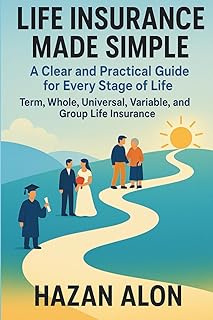
Life Insurance Made Simple: A Clear and Practical Guide for Every Stage of Life – $34.99, Rating 4.8/5. This book breaks down whole life, term, and everything in between with real‑life examples. Perfect for consumers who want unbiased advice.

Life Insurance 101: The Basics of Life Insurance Explained – $14.95, Rating 4.1/5. A concise introductory read that covers policy types, riders, and common pitfalls. Great for beginners.
Life Insurance, 15th Ed. – $150.00, Rating 4.2/5. This is the definitive textbook for professionals. If you want to go deep into actuarial science, policy design, and advanced estate planning, this is your resource.

Life and Health Insurance License Study Cards – $43.99, Rating 4.3/5. Perfect for agents‑to‑be who want to study on the go. Includes practice test questions covering whole life and term.
Comparison Table of Top Resources
| Resource | Price | Rating | Key Focus | Buy Link |
|---|---|---|---|---|
| Life Insurance Made Simple | $34.99 | 4.8 | Consumer‑friendly guide for all stages | Buy at Amazon |
| Life Insurance 101 | $14.95 | 4.1 | Basics and decision‑making | Buy at Amazon |
| Life Insurance, 15th Ed. | $150.00 | 4.2 | Advanced professional text | Buy at Amazon |
| License Study Cards | $43.99 | 4.3 | Exam prep for agents | Buy at Amazon |
Frequently Asked Questions (FAQ)
What do Redditors say about whole life insurance?
The majority of Redditors advise against whole life insurance for the average person. They recommend buying term life insurance and investing the difference. However, some acknowledge its usefulness for high‑net‑worth individuals, estate planning, or tax‑advantaged savings.
Is term life insurance better than whole life?
For most people, yes. Term life insurance is significantly cheaper and provides the same death benefit. The money saved can be invested in low‑cost index funds, which historically outperform whole life cash value growth. Reddit’s mantra is “buy term and invest the difference.”
Why do financial gurus hate whole life insurance?
Experts like Dave Ramsey and Clark Howard argue that whole life insurance is overpriced, opaque, and seldom performs as illustrated. They point to high commissions, low returns, and high lapse rates. Reddit echoes these criticisms.
Can you cash out whole life insurance?
Yes, you can surrender the policy for its cash surrender value. However, early surrender usually incurs hefty fees. Many Redditors warn that cashing out after just a few years results in a net loss. It’s better to hold for decades or use policy loans.
How much does whole life insurance cost?
A $500,000 whole life policy for a healthy 35‑year‑old might cost $300–$700 per month, compared to $30–$50 for a 20‑year term policy. The cost depends on age, health, and the insurer’s dividend scale.
For more community insights, check out these related articles:
- What Reddit Users Say About Whole Life Insurance: Honest Opinions?
- Pros and Cons of Whole Life Insurance Discussed on Reddit
- Reddit Recommendations for the Best Whole Life Insurance Policies
- Reddit’s Take: Is Whole Life Insurance Worth the Cost?