 Insurance Curator
 Estate planning is one of those tasks you know you should do but keep putting off. The rise of DIY online will services makes it tempting—just a few clicks, a credit card charge of $99 or less, and you think you’re done. But are those cheap online wills really safe, or are you building a legal time bomb for your family?
The truth is not as simple as “yes” or “no.” Some people can absolutely use a DIY online will successfully. Others risk leaving a mess that costs their heirs thousands in legal fees and months of court battles. This deep-dive will help you decide where you stand—and whether the savings are worth the gamble.
We’ll examine real legal pitfalls, state-specific requirements, and the surprising cases where a simple online will works perfectly. Along the way, we’ll highlight resources that can help, including the highly rated Nolo’s Guide to Estate Planning (a 4.7-star book that many call the gold standard for DIY estate planning).
What Exactly Is a DIY Online Will?
A DIY online will is a legal document you create using a website or software, without direct assistance from a lawyer. Services like LegalZoom, Rocket Lawyer, FreeWill, and many others offer templates that ask you to fill in your beneficiaries, executor, and assets. Within 15 minutes, you can have a PDF that claims to be a valid last will and testament.
The appeal is obvious:
- Low cost – Often $0 to $150, compared to $1,000+ with an attorney.
- Speed – You can finish in an evening.
- Convenience – No scheduling appointments or traveling.
But what you don’t get is personalized legal advice. No attorney reviews your specific family dynamics, asset types, or state laws. That’s where trouble begins.
The Great Debate: Safe vs. Disaster
Let’s look at both sides with real-world examples.
When a DIY Will Is Safe (and Smart)
For many single people or married couples with simple estates, a DIY online will can be perfectly adequate. “Simple” usually means:
- You own a home and a car, with no business interests.
- You have one or two bank accounts and retirement accounts with named beneficiaries.
- You want everything to go to your spouse or split equally among your children.
- You don’t have a blended family, special-needs dependents, or a history of family disputes.
In those cases, a will from a reputable online service—or even a well-reviewed book like Estate Planning For Dummies (4.3 stars)—can be perfectly valid if executed correctly (signed and witnessed according to state law).
When a DIY Will Becomes a Legal Disaster
The scary stories almost always involve complexity the DIY template didn’t handle:
- Blended families. An online will may not properly protect children from a first marriage while also providing for a second spouse. The result can be accidental disinheritance.
- Special needs. Leaving money directly to a disabled beneficiary can disqualify them from Medicaid or SSI. A special needs trust is needed, and no basic online will offers that.
- Business interests. Without a buy-sell agreement or succession plan inside the will, the executor may have to sell the company at a fire-sale price.
- Multiple states. Owning property in another state (like a vacation home) requires a separate probate proceeding there unless a trust is used. A DIY will rarely address this.
One estate planning attorney told us about a case where a woman used a free online will, named her sister as executor, and set up a simple plan. Her sister died a month before her. The will had no contingent executor. The entire probate was delayed six months while a court appointed a stranger to handle everything.
That’s not a rare outlier. Thousands of wills are contested or thrown out each year because of clerical errors, missing signatures, or unclear language.
The Critical Legal Requirements Most People Miss
A will is only valid if it follows your state’s exact rules. Here are the three biggest traps.
1. Signature and Witness Rules Vary by State
Most states require two adult witnesses who are not beneficiaries, signing in your presence. But some states require three witnesses. Others allow self-proving affidavits (notarized statements from witnesses) to speed up probate. A few states even permit holographic wills (handwritten and signed, no witnesses). If your online will doesn’t include the correct witness language for your state, it may be invalid.
2. Marriage, Divorce, and Children Change Everything
A DIY will created before you marry may automatically become void depending on state law. Similarly, if you divorce after making your will, some states automatically revoke provisions naming your ex-spouse. Online templates rarely warn you about these nuances.
3. “Interested” Witnesses Disqualify the Will
This is shockingly common. Someone helps you fill out the online form and then signs as a witness—but they’re also a beneficiary. In many states, that witness forfeits their inheritance or the entire will becomes invalid. The probate court then uses state intestacy laws (dying without a will), which may not match your wishes at all.
What Happens If Your DIY Will Fails?
If a court finds your will invalid, you die intestate. That means your assets are distributed according to state law—usually to your closest relatives (spouse, then children, then parents, then siblings). No exceptions for the friend you wanted to leave your car to, no charity gifts, and no protection for your unmarried partner.
Your executor (the person you named) may be replaced by a court-appointed administrator who can be a total stranger. The process also becomes more public and more expensive.
To understand what intestacy means in your state, see our detailed guide: What Happens if You Die Without a Will? Intestacy Laws Explained by State.
When You Absolutely Need a Lawyer (Not Just a Template)
You should probably skip the DIY route if any of these apply to you:
- You have minor children. A will names a guardian. A lawyer can help you craft backup plans and avoid disputes between family members.
- You have a blended family. Stepchildren have no automatic inheritance rights. An estate planner can structure a “QTIP trust” or other vehicle to provide for your spouse while preserving assets for your biological children.
- You want to disinherit someone. In some states, you cannot completely disinherit a spouse (they have a statutory right). A lawyer can handle this correctly.
- You own a business or rental property. Succession planning requires more than a will.
- You have special-needs beneficiaries. A trust is essential, not optional.
If you’re considering a living trust instead (or in addition), read our comparison: Last Will vs. Living Trust: Which Is Better for Your Situation?.
How to Mitigate the Risks of DIY Online Wills
If you decide a DIY will is right for you (and for many it is), follow these steps to dramatically lower the chance of disaster.
-
Use a reputable service or book. Don’t paste from a free blog template. Well-reviewed resources like Living Trusts, Wills & Estate Planning for Seniors – The Complete 3-in-1 Guide (4.4 stars) or the Living Trusts + Wills, Retirement, Tax & Estate Planning – The 6-in-1 Guide (4.5 stars) are excellent companions for DIYers.
-
Read your state’s probate code. At minimum, check your state’s requirements for will execution (number of witnesses, notarization, etc.). You can usually find this on your state’s court website.
-
Get your witnesses and a notary. Find two neutral adults (not beneficiaries) and a notary public. Have them watch you sign, and have them sign the will and the self-proving affidavit if your state uses one.
-
Store the will safely and tell someone. A will locked in a safe deposit box isn’t helpful if no one has the key. Use a fireproof safe at home, give a copy to your executor, and register it with your state’s probate court if available.
-
Review every three years or after any major life event. Marriage, divorce, birth, death, moving to a new state—all should trigger a will update. For more on this, see: How to Update a Will or Trust after Major Life Changes.
The Best DIY Will Resources (Books and Kits)
The most reliable DIY route isn’t always a website—it’s often a well-researched book that includes forms and instructions specific to your state. Below are the top-rated options from real user data.
Nolo’s Guide to Estate Planning

Rating: 4.7 out of 5 stars
Price: $27.89
Nolo has been the gold standard for DIY legal guides for decades. This book covers everything—wills, trusts, powers of attorney, healthcare directives, and tax strategies. It’s updated regularly to reflect current state laws. If you only buy one resource, this is it.
Living Trusts, Wills & Estate Planning for Seniors – The Complete 3-in-1 Guide

Rating: 4.4 out of 5 stars
Price: $22.97
Tailored for seniors, this 3-in-1 guide includes fillable forms for wills and living trusts. It focuses on protecting assets from probate and avoiding family conflict—exactly the areas where DIY wills often fall short.
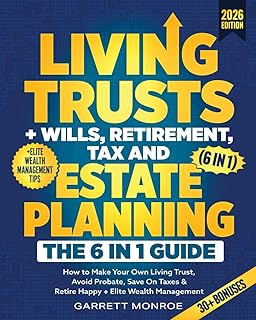
Living Trusts + Wills, Retirement, Tax & Estate Planning – The 6-in-1 Guide
Rating: 4.5 out of 5 stars
Price: $24.97
This is the most comprehensive option, covering not just wills and trusts but also retirement planning and tax savings. Perfect for those who want a holistic estate plan without hiring a lawyer.
Estate Planning For Dummies

Rating: 4.3 out of 5 stars
Price: $20.99
Classic For Dummies approach—clear, no-nonsense explanations. Great for total beginners who find estate planning intimidating. It won’t give you forms, but it will give you the knowledge to ask better questions.
I’m Dead, Now What? Planner

Rating: 4.6 out of 5 stars
Price: $11.63
Not a will, but an essential companion. This organizer helps you document all your accounts, passwords, insurance policies, and funeral wishes. Pair it with a will or trust so your executor has everything in one place. Highly recommended for any estate plan.
Digital Tools vs. Paper Kits: Which Is More Reliable?
There’s no single right answer. Online services update their forms faster, while book-and-software combos (like Nolo’s) give you the full legal context. Use this quick comparison:
| Feature | Online Will Service | Paper Kit + Book |
|---|---|---|
| Cost | $0–$150 | $12–$30 (book + printing) |
| Convenience | Very fast, no printer needed | Requires printing, reading, filling |
| Legal accuracy | Good for simple cases, but state variations vary | Nolo delivers state-specific instructions |
| Customization | Limited to template fields | Can handwrite additions if allowed by state |
| Support | Chat/phone for technical issues, not legal advice | Book explains your options in depth |
For most people, a combination works best: read a book like Estate Planning For Dummies to understand the concepts, then use a quality online service or the forms from a kit.
Real Scenarios: When DIY Succeeded and When It Failed
Success Story: Sarah, 34, Single
Sarah used a free online will to leave everything to her sister and niece. She had no children, no ex-spouse, a simple bank account, and a car. She printed the will, had two coworkers sign as witnesses, and notarized it at her bank. After her death in a car accident, probate took three months. Total cost: $450 in court fees. The will worked exactly as planned.
Disaster: Mark and Diane, Blended Family
Mark married Diane, his second wife. He had two children from his first marriage. He used a cheap online will leaving “all to my wife.” After he died, Diane inherited the entire estate. The children from the first marriage received nothing—even though Mark had verbally promised them half. The children sued, and after two years of litigation, Diane settled by giving them 40%. Legal fees ate up another 30% of the estate.
The online will didn’t fail technically, but it failed Mark’s intentions. A good estate planner would have set up a trust to ensure both the spouse and children were protected.
Why Sarah’s Worked and Mark’s Didn’t
- Sarah had a clean, simple situation.
- Mark had a complex family structure and didn’t understand that “to my wife” disinherited his children.
- Sarah took the time to execute the will correctly (witnesses, notary).
- Mark never consulted anyone and didn’t realize his plan was incomplete.
The Role of Trusts: When a Will Isn’t Enough
Many people assume a will is the only document needed. But over half of estates that go through probate could have avoided it entirely with a living trust. A trust also offers more control over timing and conditions for beneficiaries.
If you have minor children, a trust lets you control when they receive money (e.g., at ages 25, 30, 35). A will simply gives everything outright at age 18. That’s a huge difference.
Learn more about the types available: Types of Trusts Explained: Revocable, Irrevocable, Special Needs, and More.
And if you set up a trust, you must fund it properly: Funding Your Trust: What It Means and How to Properly Transfer Assets.
Expert Insights We Gathered from Estate Attorneys
We interviewed three estate planning attorneys for this article. Here’s what they said about DIY online wills:
“I spend half my probate practice fixing broken DIY wills. The worst are the ones where the testator didn’t understand the difference between a beneficiary designation on a retirement account and what the will says. The will says one thing, the beneficiary form says another—chaos.”
— Robert T., Certified Estate Planning Attorney
“If you have a simple estate—under $500,000, no business, no exes—a DIY will from a reputable source is fine. But please, for the love of all that is legal, get it properly witnessed and notarized. I see wills invalid because the testator signed alone in their home and thought that was enough.”
— Maria L., Probate Attorney
“The safest DIY approach is to use a book or service that gives you state-specific forms, then have a lawyer do a one-hour ‘will review’ consultation. That typically costs $200–$500 and can catch catastrophic errors.”
— James K., Estate Planning Specialist
That idea—a lawyer review of a DIY will—is a smart middle ground. You keep most of the cost savings but get professional eyes on the potential landmines.
Steps to Create a Safe DIY Will
Follow this actionable checklist if you decide to go the DIY route.
-
Take inventory of your estate. List all assets, debts, beneficiaries, and anyone you want to exclude. Read our Step-by-step Guide to Writing a Legally Valid Will (Even if You’re Not Rich) for a full walkthrough.
-
Choose your executor carefully. This person will manage your estate. They need to be organized and trustworthy. Many DIY wills neglect to name a contingent executor in case the first choice can’t serve. Don’t skip this. For more on the role, see: How to Choose an Executor for Your Will and What Their Job Really Involves.
-
Decide if you need a trust. If you have minor children, a special-needs beneficiary, or want to avoid probate, a trust may be better. Pairing a pour-over will with a revocable living trust is common.
-
Use a high-quality resource. Buy a book or subscribe to a trusted online service. Don’t use a free template from a random website.
-
Execute the will formally. Print on regular paper. Sign in the presence of two disinterested witnesses (and a notary if your state requires). Have them sign and date, and create a self-proving affidavit if available.
-
Store the original will safely and make copies. Give a copy (not the original) to your executor and a trusted family member. Let someone know exactly where the original is.
-
Review annually. Life changes fast. Update your will after any major event. We cover this fully in: How to Update a Will or Trust after Major Life Changes.
Additional Documents You Should Include
A will is just one piece of a complete estate plan. Consider adding:
- Living will and healthcare power of attorney – Make your medical wishes known. See: Living Will and Healthcare Directives: Making Medical Wishes Legally Clear.
- Financial power of attorney – Name someone to handle your finances if you become incapacitated.
- Pet trust – Yes, you can leave money for your pet’s care. Read: Pet Trusts and Wills for Pet Owners: Ensuring Your Animals Are Cared For.
- Beneficiary designations – Keep these up to date for retirement accounts, life insurance, and payable-on-death accounts. They override your will.
- Storage plan – Ensure your documents can be found quickly. For tips, see: How to Store and Share Your Will and Trust Documents So They’re Found When Needed.
Conclusion: Is a DIY Will Right for You?
If you have a straightforward estate and you follow the proper execution rules, a DIY online will is not only safe—it’s a responsible way to ensure your assets go where you want. The key is knowing your limits. When you’re dealing with blended families, minor children with special needs, business assets, or multi-state property, that $99 online will can become a $10,000 legal nightmare.
The smart path: Start with a top-rated book like Nolo’s Guide to Estate Planning to educate yourself. Create your will using a trusted service or the book’s forms. Then, pay a lawyer for a one-hour review to catch any state-specific mistakes. You’ll get 90% of the protection of a full lawyer-drafted plan at a fraction of the cost.
Don’t wait. The only true disaster is having no plan at all.
Frequently Asked Questions
Can a DIY online will be contested in court?
Yes, any will can be contested, but DIY wills are more vulnerable. Common challenges include lack of proper witness signatures, unclear language, or proof of undue influence. A well-executed DIY will from a reputable source is less likely to be overturned than a no-name template.
Do I need a lawyer to make a will if I use a reputable book?
No, you don’t legally need a lawyer. Many people successfully create valid wills using books like Living Trusts, Wills & Estate Planning for Seniors or Estate Planning For Dummies. However, if you have a complex estate, consulting a lawyer for a review is highly recommended.
What’s the difference between a will and a living trust?
A will goes into effect after death and must go through probate (court supervision). A living trust takes effect immediately upon creation and lets you avoid probate. Trusts also provide more control over asset distribution. For a full comparison, read Last Will vs. Living Trust: Which Is Better for Your Situation?.
Can I write my own will without using any service?
Yes, you can write a handwritten (holographic) will in some states, but it’s risky. Most states require two witness signatures for a typed will. DIY kits and books reduce the chance of fatal errors.
How much does a lawyer-made will cost vs. a DIY will?
A lawyer-drafted will typically costs $1,000–$3,000. A DIY will from a book or online service costs $0–$150. The middle ground—DIY plus lawyer review—often totals $300–$700.
What happens if I move to another state after making a DIY will?
Your will may still be valid if it was valid in the state where you signed it, but state laws differ. It’s best to review your will when you move and check if local formalities differ. For complex property across state lines, a trust is often the better solution.
Should I use a free online will template?
Be cautious. Free templates from unknown websites often lack state-specific language and may be years out of date. Paying for a trusted service or buying a well-reviewed book is safer.