 Insurance Curator
If you’ve ever wondered where to park your emergency fund or short-term savings without locking your money away, a money market account (MMA) might be the perfect fit. These hybrid accounts blend the liquidity of a checking account with a higher interest rate typically reserved for savings products. But are they right for your budget?
Let’s break down exactly what money market accounts are, how they work, and—most importantly—who should (and shouldn’t) use them. We’ll also explore how pairing an MMA with smart budgeting tools can help you take full control of your finances.
What Is a Money Market Account?
A money market account is a deposit account offered by banks and credit unions that pays interest based on current money market rates. Unlike a standard savings account, MMAs often come with limited check-writing abilities and a debit card. Think of it as a savings account with checking-like flexibility.
Banks use the money you deposit to invest in short-term, low-risk securities like Treasury bills and certificates of deposit (CDs). In return, they pass some of those earnings back to you as interest.
Key Features at a Glance
- Higher interest rates than regular savings accounts (but variable).
- Check-writing and debit card access (often limited to six withdrawals per month).
- FDIC or NCUA insurance up to $250,000 per depositor.
- Higher minimum balance requirements compared to standard savings.
- Tiered rates—larger balances often earn higher APY.
Money Market Accounts vs. Savings Accounts vs. CDs
To understand where an MMA fits into your broader banking strategy, compare it with two popular alternatives: regular savings accounts and certificates of deposit.
| Feature | Money Market Account | High-Yield Savings Account | Certificate of Deposit (CD) |
|---|---|---|---|
| Interest Rate | Moderate to high (variable) | Moderate (variable) | Fixed (higher for longer terms) |
| Liquidity | High (check/debit, limited withdrawals) | High (no checks, limited withdrawals) | Low (early withdrawal penalty) |
| Minimum Balance | Often $1,000–$10,000 | Usually $0–$100 | Typically $500–$1,000 |
| FDIC Insured | Yes | Yes | Yes |
| Best For | Emergency funds, short-term goals | Everyday savings | Goals 6+ months away |
Bottom line: MMAs shine when you need both growth and access. If you’re saving for a house down payment or building an emergency cushion, an MMA gives you interest without a time lock.
How Money Market Accounts Fit Into a Budgeting Strategy
Budgeting isn’t just about tracking expenses—it’s about optimizing where you hold your cash. A money market account can act as a high-interest “holding pen” for funds that don’t need to be spent today but must be available soon.
For example, you might keep:
- Your emergency fund (3–6 months of expenses) in an MMA to earn interest while still having quick access.
- Short-term goal money (vacation, holiday gifts, car repairs) separate from your checking account.
- Sinking funds for irregular expenses like insurance premiums or property taxes.
Pairing MMAs with Budgeting Tools
To manage these separate buckets effectively, budgeting tools are essential. A simple notebook or binder system helps you track how much you’ve allocated to each goal—especially when your MMA holds a lump sum.
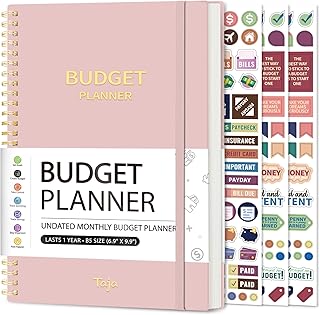
Consider using a budget planner like the Budget Planner – Monthly Budget Book with Expense Tracker Notebook, Undated Bill Organizer & Finance Planner to Take Control of Your Money, Account Book to Manage Your Finances-Pink ($8.99, 4.6 stars). This undated planner lets you log savings goals and track transfers to your MMA without digital clutter.
For those who prefer a cash envelope system within a binder, the NICOOTH Budget Binder Cash Envelopes A6 Money Saving Binder with Zipper Envelopes (Purple) ($6.28, 4.6 stars) helps you allocate physical cash for variable expenses while keeping long-term savings in your digital MMA.

Who Should Use a Money Market Account?
Money market accounts aren’t for everyone. Here’s a breakdown of the ideal candidate profiles.
The Emergency Fund Builder
Your emergency stash needs to be liquid but also earn something. A regular savings account pays near-zero interest, while a CD penalizes early withdrawals. An MMA offers a happy medium.
Expert insight: According to the FDIC, the national average savings rate is often below 0.5% APY, while many MMAs offer 2–5% APY depending on market conditions. That difference adds up on a $10,000 balance.
The Short-Term Goal Saver
Planning a wedding, buying a car, or taking a big trip within 12–18 months? Parking that cash in an MMA lets you earn interest without risking principal—unlike stocks or bonds.
The Large Balance Holder
Many high-yield MMAs require a minimum of $1,000 to $10,000. If you keep a hefty balance, you’ll qualify for top-tier rates. Some accounts offer tiered interest: the more you deposit, the higher your APY.
The Budgeter Who Wants Separation
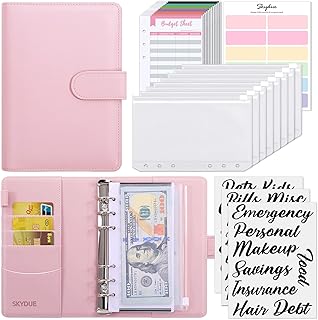
If you struggle to keep “goal money” separate from spending cash, an MMA acts as a distinct bucket. Use a SKYDUE Budget Binder, Money Saving Binder with Zipper Envelopes, Cash Envelopes and Expense Budget Sheets for Budgeting ($8.98, 4.7 stars) to track how much sits in your MMA versus envelopes.
Who Should Not Use a Money Market Account?
MMAs come with trade-offs. Avoid them if:
- You can’t maintain the minimum balance. Many MMAs charge monthly fees if your balance drops below $1,000–$2,500. That fee can wipe out any interest earned.
- You need unlimited withdrawals. Federal Regulation D (now relaxed but still enforced by some banks) limited savings and MMA withdrawals to six per month. Though many banks have dropped this limit, check your institution’s policy.
- You want the highest possible return. For long-term goals (5+ years), a CD ladder or a diversified investment portfolio will likely outperform an MMA.
- You have a very small balance. On $500, even a 5% APY yields just $25 a year—hardly worth the hassle of maintaining minimums.
How to Choose the Best Money Market Account
Not all MMAs are created equal. Evaluate these criteria:
- Annual Percentage Yield (APY) – Look for competitive, consistently high rates. Online banks often offer better rates than brick-and-mortar institutions.
- Minimum balance requirement – Can you comfortably keep that amount every month?
- Monthly fees – Many MMAs waive fees if you meet a minimum balance or link a checking account.
- Access options – Does the account include a debit card? Checks? Mobile check deposit?
- FDIC insurance – Confirm it’s insured up to $250,000.
Top Features to Watch
- Tiered interest rates – Some accounts pay higher APY on balances above $10,000 or $25,000.
- ATM fee reimbursements – Useful if you’ll use the debit card.
- Mobile banking app – Essential for modern budgeting.
Step-by-Step: Opening a Money Market Account
Ready to open one? Follow these steps.
- Research banks and credit unions. Compare rates on sites like Bankrate or NerdWallet.
- Gather documents. You’ll need a government-issued ID, Social Security number, and initial deposit.
- Apply online or in branch. Most applications take 10–15 minutes.
- Fund the account. Transfer from your checking or savings. If you’re using a budgeting binder, update your tracker to reflect the new balance.
- Set up automatic transfers. Treat your MMA like a bill—send a fixed amount each month to build your savings automatically.
Budgeting Book Recommendation
While you set up accounts, a budgeting guide can sharpen your overall financial habits. The Budgeting 101: From Getting Out of Debt and Tracking Expenses to Setting Financial Goals and Building Your Savings, Your Essential Guide to Budgeting (Adams 101 Series) ($9.69, 4.6 stars) covers everything from tracking expenses to managing multiple savings accounts.

Pros and Cons of Money Market Accounts
| Pros | Cons |
|---|---|
| Higher interest than regular savings | Minimum balance requirements may be steep |
| Check-writing and debit card access | Limited monthly withdrawals (if enforced) |
| FDIC insured up to $250,000 | Rates are variable and can drop |
| Ideal for emergency funds and short-term goals | May not beat inflation over long periods |
| Often linked to other bank products for easy transfers | Monthly fees if balance falls below minimum |
Safety and FDIC Insurance
Money market accounts are among the safest places to keep your cash. The FDIC (Federal Deposit Insurance Corporation) covers deposits up to $250,000 per depositor, per bank. Credit union NCUA insurance provides the same protection.
Expert note: If you hold more than $250,000, consider spreading balances across multiple FDIC-insured banks. Alternatively, use a network like CDARS that splits large deposits among member banks.
For deeper guidance on safe cash storage, read our article on Safe Places to Keep Large Sums of Cash: FDIC Insurance and Banking Product Limits.
Using an MMA Alongside Other Banking Products
A well-structured budget uses separate accounts for separate purposes. For example:
- Checking account – Daily spending, bill pay.
- Money market account – Emergency fund, short-term savings.
- High-yield savings account – Long-term savings (down payment, future expenses).
- Certificate of deposit – Funds you won’t need for 6–12 months.
This approach is called “bucket budgeting,” and it prevents you from accidentally spending earmarked money. Learn more in our guide: Using Separate Banking Products to Organize Bills, Goals, and Everyday Spending.
Common Mistakes to Avoid
- Treating an MMA like a checking account. Overusing debit or check-writing can trigger fees or withdrawal limits.
- Ignoring rate changes. MMA rates are variable. If your bank drops rates significantly, consider switching.
- Not reading the fee schedule. Some MMAs charge excessive fees for paper statements, account closure, or inactivity.
- Forgetting to budget for the minimum balance. A $2,500 minimum might be tough if your emergency fund is also your MMA. Plan accordingly.
Real-World Example: Budgeting with an MMA
Imagine Sarah earns $4,000 per month. She budgets:
- $2,000 for fixed expenses (rent, utilities, insurance)
- $800 for variable expenses (groceries, gas, entertainment)
- $600 for savings goals
- $600 for debt repayment
She opens an MMA with a $1,000 minimum and no monthly fees. She keeps her $5,000 emergency fund in the MMA (earning 4% APY) plus an additional $1,000 for an upcoming car repair. She uses a Budget Planner – Monthly Budget Book with Expense Tracker Notebook, Undated Bill Organizer & Finance Planner to Take Control of Your Money, Account Book to Manage Your Finances-Black ($8.99, 4.6 stars) to log her goals and track transfers from checking to her MMA.

By the end of the year, she earns $240 in interest on her $6,000 balance—far more than a basic savings account would yield. Meanwhile, her planner keeps her on track with monthly savings targets.
Frequently Asked Questions
What is the difference between a money market account and a money market fund?
A money market account is a bank deposit product insured by the FDIC. A money market fund is a mutual fund that invests in short-term securities and is not FDIC-insured—though it still carries low risk.
How much money do I need to open a money market account?
Minimums range from $0 to $10,000. Online banks often require $1,000–$2,500 to earn the advertised APY.
Can I lose money in a money market account?
No, not if it’s an FDIC-insured account. Your principal is protected up to the insurance limit. Money market funds, however, can lose value (but rarely do).
Are money market accounts good for a beginner?
Yes, especially if you’ve already built an emergency fund and want to earn more interest. Beginners should first read our Beginner’s Guide to Banking Products: Checking, Savings, CDs, and More.
How many withdrawals can I make from a money market account?
Traditionally limited to six per month under Regulation D, but many banks have removed this limit. Check your bank’s policy to avoid fees.
Should I use a money market account for my emergency fund?
Absolutely—it’s one of the best uses. You earn interest while keeping the money accessible. Just ensure the minimum balance is within your emergency savings amount.
Do money market accounts have monthly fees?
Some do, but many waive fees if you maintain a minimum balance or link another account. Always read the fine print.
Can I write checks from a money market account?
Yes, most money market accounts allow check-writing. However, some banks restrict the number of checks per month.
How does a money market account fit into a zero-based budget?
Treat the MMA as a separate “envelope” in your budget. Allocate funds to it on paper (or your budget binder) and track the balance regularly.
What happens if my MMA balance drops below the minimum?
The bank may charge a monthly maintenance fee or reduce your APY. Some banks will convert the account to a regular savings account.
Final Verdict: Is a Money Market Account Right for You?
Money market accounts are a powerful tool for intermediate savings—not too locked up, not too accessible. They’re ideal for emergency funds, short-term goals, and budgeters who want their cash to work a little harder.
But they’re not a one-size-fits-all solution. If you can’t maintain the minimum balance or need frequent access, a high-yield savings account may serve you better. For long-term growth, consider CDs or investments.
The key is to pair your MMA with a solid budgeting system. Whether you use a digital app or a physical planner like the ones featured above, tracking your savings goals ensures you never lose sight of why you’re saving.
For more on optimizing your banking stack, explore our complete guide on How to Choose the Right Checking Account for Your Everyday Money and High-Yield Savings Accounts: What to Look for and How to Compare Offers.