 Insurance Curator
Saving money sounds simple, but the moment you have more than one goal, everything gets complicated. Should you stash cash for a vacation next summer, or funnel every extra dollar into retirement? The answer isn’t choosing one over the other — it’s learning how to run both tracks at the same time.
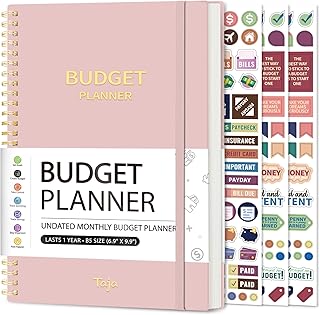
Mastering short-term and long-term saving strategies is the secret to financial peace of mind. This deep-dive will show you exactly how to prioritize, budget, and organize your goals so you never have to feel guilty about spending on today’s joys or tomorrow’s security. We’ll look at real-world examples, expert insights, and even the best tools — like the Budget Planner – Monthly Budget Book with Expense Tracker Notebook, Undated Bill Organizer & Finance Planner to Take Control of Your Money, Account Book to Manage Your Finances-Pink — that can help you track it all.
Understanding the Difference Between Short-term and Long-term Savings
Before you can build a system, you need to know what you’re working with. Short-term and long-term savings serve different purposes, live in different accounts, and require different psychological approaches.
Key Differences at a Glance
| Aspect | Short-term Savings | Long-term Savings |
|---|---|---|
| Time horizon | Under 3 years | 5+ years (often 10–40) |
| Common goals | Emergency fund, vacation, holiday gifts, car repair, down payment (soon) | Retirement, college, home purchase (distant), wealth building |
| Risk tolerance | Very low – you need the money soon | Moderate to high – time smooths volatility |
| Best accounts | High-yield savings, money market, short-term CDs | Stocks, bonds, ETFs, IRAs, 401(k)s, 529 plans |
| Liquidity | High – easy access without penalty | Lower – early withdrawals may incur penalties |
| Funding frequency | Monthly, often from budget surplus | Monthly, often through automated payroll deductions |
Short-term savings are your safety net and your treat fund. Long-term savings are your future self’s paycheck. The biggest mistake people make is treating them the same — either being too conservative with retirement money or too loose with emergency cash.
Why Your Budget Is the Foundation of Any Saving Strategy
You can’t organize your goals if you don’t know where your money is going. Budgeting is the engine that powers both short-term and long-term saving strategies. Without a clear picture of income versus expenses, you’re guessing how much you can stash away.
A great place to start is with a structured system. The Budgeting 101: From Getting Out of Debt and Tracking Expenses to Setting Financial Goals and Building Your Savings, Your Essential Guide to Budgeting (Adams 101 Series) breaks down exactly how to categorize spending, set realistic targets, and allocate leftover cash toward goals.

A budget doesn’t have to be restrictive. Think of it as a decision-making tool. When you allocate $200 to a short-term vacation fund and $300 to a retirement account, you’ve given permission to enjoy both. The key is making those allocations consciously.
Short-term Saving Strategies (Under 3 Years)
Short-term goals need quick access and zero risk. Here’s how to tackle them without derailing your future.
Emergency Fund First
Most experts agree: build a 3–6 month emergency fund before anything else. This is your highest-priority short-term goal because it protects your long-term plans. Without it, a car repair or medical bill could force you to raid your retirement accounts, incurring penalties and lost growth.
- Target amount: 3 to 6 months of essential expenses (rent, food, utilities, insurance).
- Best account: High-yield savings account (HYSA) offering 4%+ APY (rates as of 2025).
- Monthly action: Automate a transfer from checking to your HYSA on payday.
Specific Goals: Vacation, Holidays, Big Purchases
Once your emergency fund is full, you can save for fun stuff. But short-term goals still need a plan. Use separate sub-accounts or physical envelopes to avoid mixing money.
A physical system can be surprisingly effective. Many people swear by cash envelopes for budgeting short-term spending. The NICOOTH Budget Binder Cash Envelopes A6 Money Saving Binder with Zipper envelopes (Purple) helps you allocate cash to categories like “Vacation” or “Gifts” without accidentally overspending.

Another excellent option is the SKYDUE Budget Binder, Money Saving Binder with Zipper Envelopes, Cash Envelopes and Expense Budget Sheets for Budgeting, rated 4.7 stars. It includes pre-printed budget sheets, making it easy to track every dollar.

Expert Tip: Use a Separate High-yield Savings Account
“I recommend opening a separate HYSA for each short-term goal,” says certified financial planner Maria Lopez. “Seeing the progress visually motivates you to keep funding it.” Many banks let you create multiple “buckets” within one account, but a separate account prevents confusion.
Long-term Saving Strategies (5+ Years)
Long-term savings are where compounding does the heavy lifting. The earlier you start, the less you need to contribute each month.
Retirement Accounts: 401(k) and IRA
If your employer offers a 401(k) match, that’s free money. Contribute enough to get the full match before anything else. After that, max out a Roth IRA (if eligible) or a traditional IRA for tax advantages.
- Contribution limits (2025): $23,000 for 401(k), $7,000 for IRA (plus catch-up for those 50+).
- Investment mix: Age-appropriate stock/bond split. In your 20s and 30s, 90% stocks is common.
- Automation: Set up automatic payroll deductions. Out of sight, out of mind.
College Savings: 529 Plans
Parents saving for children’s education should use a 529 plan. Contributions grow tax-free if used for qualified education expenses. Many states offer a state income tax deduction for contributions.
The Power of Dollar-cost Averaging
Long-term investors don’t try to time the market. By investing a fixed amount each month, you buy more shares when prices are low and fewer when they’re high. This smooths out volatility and reduces emotional decision-making.
Internal Link to Related Strategy
To reinforce this habit, read about Pay Yourself First: the Saving Strategy That Makes Saving Automatic. It’s a mindset shift that prioritizes long-term savings before any discretionary spending.
How to Organize Multiple Goals Simultaneously
The biggest challenge isn’t saving — it’s juggling. You have an emergency fund goal, a vacation fund, a retirement fund, and maybe a house down payment. How do you keep them all straight without feeling overwhelmed?
The Priority Ladder
Focus on one goal at a time within a structured system:
- Emergency fund (3 months of expenses) – top priority.
- Employer 401(k) match – free money, don’t leave it on the table.
- Short-term goal A (e.g., vacation) – once emergency fund is done, allocate a fixed monthly amount.
- Long-term retirement – increase contributions gradually.
- Other short-term goals (holidays, car replacement) – use separate envelopes or sub-accounts.
The 50/30/20 Rule Modified
A common budgeting framework: 50% needs, 30% wants, 20% savings/debt. For organized goal planning, split that 20% into:
- 10% long-term (retirement, college)
- 5% short-term (emergency fund, vacation)
- 5% sinking funds (home repairs, car maintenance)
Use a budget planner to track these allocations. The Budget Planner – Monthly Budget Book with Expense Tracker Notebook, Undated Bill Organizer & Finance Planner to Take Control of Your Money, Account Book to Manage Your Finances-Black (also rated 4.6) is an undated version that lets you start any month. It includes sections for each expense category and a bill tracker.

The Bucket Method
Open separate accounts for each major goal:
- Checking: Day-to-day spending.
- High-yield savings (Goal A): Emergency fund.
- High-yield savings (Goal B): Vacation.
- Investment account: Retirement.
- Cash envelope binder: Holiday gifts (using the NICOOTH or SKYDUE binder).
This visual separation prevents you from accidentally spending your retirement savings on a weekend getaway.
Expert Insights on Balancing Short-term Wants vs Long-term Needs
Behavioral economist Dr. James Choi explains: “Humans are wired to value immediate rewards over future ones. That’s why short-term goals feel urgent and long-term goals feel abstract.”
To counter this, use mental accounting — assign labels to your savings. A fund labeled “Surgery” feels different from one labeled “New Camera.” The labels help you honor the purpose.
Another technique is temptation bundling: pair a short-term treat with a long-term action. For example, only allow yourself to watch your favorite show while you review your retirement account. This connects pleasure with discipline.
For more psychology hacks, read Behavioral Saving Strategies: Psychology Tricks to Help You Save More. Understanding your brain’s shortcuts can make saving almost automatic.
Seasonal and Special Considerations
Big expenses don’t follow a monthly schedule. Holidays, summer vacations, and annual insurance premiums can blow up your budget if you’re not prepared.
Build sinking funds within your short-term savings. Divide the annual cost by 12 and set aside that amount each month. For example, if you spend $1,200 on Christmas gifts, save $100 per month starting in January. Use a cash envelope binder like the SKYDUE to physically set that cash aside.
Learn more in Seasonal Saving Strategies: How to Plan for Holidays, Vacations, and Big Purchases. Advanced planning keeps these expenses from eating into your long-term contributions.
If you’re a parent, balancing kids’ needs with retirement can feel impossible. Check out Saving Strategies for Parents: Building Funds for Kids Without Sacrificing Retirement for a framework that doesn’t force you to choose.
Tools and Resources to Keep You on Track
You don’t need a dozen apps. A single physical planner or binder can be more effective because you see your progress daily. Here are the top-rated tools from real users to help organize your short-term and long-term saving strategies.
| Product | Price | Rating | Key Feature |
|---|---|---|---|
| Budget Planner (Pink) | $8.99 | 4.6 | Monthly expense tracker, undated |
| NICOOTH Budget Binder (Purple) | $6.28 | 4.6 | Cash envelopes, zippered binder |
| SKYDUE Budget Binder | $8.98 | 4.7 | Includes budget sheets and envelopes |
| Budget Planner (Black) | $8.99 | 4.6 | Same as pink but black cover |
| Budgeting 101 Book | $9.69 | 4.6 | Comprehensive guide to budgeting basics |
Each of these tools has been recommended by thousands of savers. Choose the one that fits your style: a planner if you love writing, a binder if you prefer cash envelopes, or a book if you need to learn the principles first.
Automate Where Possible
While physical tracking is great for awareness, automation ensures consistency. Set up automatic transfers from checking to savings on payday. For long-term investing, use robo-advisors or target-date funds.
Read How to Automate Your Saving Strategy Using Modern Money Apps for step-by-step instructions on setting up an automated system that works for both short-term and long-term goals.
FAQ: Short-term vs. Long-term Saving Strategies
1. How much should I save for short-term vs. long-term goals?
A common guideline is 20% of your income total savings, with at least 10% going to long-term (retirement) and 5% to short-term (emergency fund, vacation). The remaining 5% can be split among sinking funds. Adjust based on your specific priorities.
2. Should I invest my emergency fund?
No. An emergency fund must be liquid and safe. Invest it in a high-yield savings account or money market account. Investing in stocks risks losing principal exactly when you need it most.
3. Can I use a 401(k) for short-term goals?
Technically, yes, but it’s expensive. Early withdrawals from a 401(k) incur a 10% penalty plus income taxes. A Roth IRA allows you to withdraw contributions (not earnings) penalty-free, but it’s still better to keep retirement savings untouched.
4. What’s the best way to track multiple goals?
Use separate accounts or physical envelopes for each goal. A budget planner like the SKYDUE Budget Binder helps you see all categories at a glance. Or use a spreadsheet to track progress monthly.
5. How do I prioritize when I have limited income?
Focus on the minimum: first, save $1,000 as a starter emergency fund. Then, contribute enough to your 401(k) to get the full employer match. After that, split remaining savings between building a full emergency fund and small short-term goals. Once the emergency fund is complete, shift to long-term and bigger goals.
6. What if I have both credit card debt and savings goals?
Pay off high-interest debt (over 8% APR) before aggressively saving for retirement or non-essential goals. But keep a small emergency fund ($1,000) to avoid taking on more debt when unexpected expenses arise.
Final Thoughts
Organizing your saving goals isn’t about sacrifice — it’s about clarity. When you separate short-term needs from long-term dreams, you stop feeling torn. Your budget becomes a map, not a cage.
Start by defining your top three goals: one short-term (vacation, holiday fund), one long-term (retirement, home), and one protective (emergency fund). Then pick a tool — whether it’s the Budget Planner or the NICOOTH Binder — and commit to tracking for 30 days.
Remember, the best saving strategy is the one you stick with. Balance isn’t impossible — it’s just a decision away.