 Insurance Curator
You land a big client in January, then hear nothing but crickets in February. That feast-or-famine cycle is the reality for millions of freelancers and gig workers. Without a steady paycheck, an emergency fund isn’t a luxury—it’s the only thing standing between you and financial disaster. And most traditional advice (three to six months of expenses) just doesn’t cut it when your income fluctuates wildly.
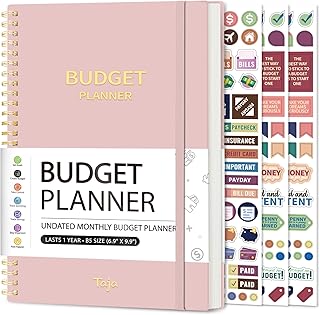
Building a safety net from scratch while managing unpredictable earnings requires a different playbook. This guide will walk you through exactly how to build, calculate, and maintain an emergency fund designed for unstable income. We’ll cover budgeting strategies, the best tools (like the Budget Planner – Monthly Budget Book with Expense Tracker Notebook, Undated Bill Organizer & Finance Planner to Take Control of Your Money, Account Book to Manage Your Finances-Pink), and real-world examples that actually work for gig workers.
Why Freelancers Need a Bigger Emergency Fund
Traditional employees have predictable paychecks. If they lose their job, they can often qualify for unemployment benefits. Freelancers? You get none of that. When a project ends or a client ghost you, the income stops instantly.
Your income volatility demands a larger buffer. Most experts recommend three to six months of expenses for salaried workers. For freelancers and gig workers, aim for 6 to 12 months of essential living costs. Why? Because dry spells can last longer than a month, and replacing a client can take weeks or months.
Add to that the lack of employer-sponsored health insurance, paid sick leave, or retirement matching. Your emergency fund must cover medical deductibles, equipment repairs, taxes, and periods of zero income.
The Real Cost of Not Having an Emergency Fund
Imagine your laptop dies on a Tuesday. You need it to work, but you have no savings. You put the repair on a credit card at 22% APR. Then you take a low-paying rush job just to make the minimum payment. Your health suffers, your rates drop, and you’re trapped in a debt spiral.
That’s the domino effect of being undercapitalized. An emergency fund breaks that cycle. It gives you the power to say no to bad clients and the breathing room to invest in your business.
Step 1: Calculate Your Essential Monthly Expenses
Start with a bare-bones budget. Not your ideal lifestyle—just the absolute minimum to survive and keep your business running.
Essential expenses include:
- Rent or mortgage
- Utilities (electricity, water, internet)
- Groceries and basic toiletries
- Health insurance premiums
- Minimum debt payments
- Business costs (software subscriptions, website hosting, transportation)
- Taxes (yes, set aside a percentage for estimated quarterly taxes)
Non-essential expenses to cut during a crisis:
- Dining out and takeout
- Streaming subscriptions
- Gym memberships
- Travel and entertainment
To calculate your target emergency fund, multiply your essential monthly expenses by 6 to 12. For example, if your bare-bones monthly costs are $3,000, your goal is $18,000 to $36,000.
That number might feel overwhelming. Don’t panic. You’ll get there one micro-step at a time.
Step 2: Use a Budgeting System That Works for Variable Income
Traditional budgeting assumes a fixed monthly paycheck. That doesn’t work for freelancers. Instead, adopt a percentage-based budget or a zero-sum budget that adapts to your actual income each month.
The Percentage Method
Allocate every dollar you earn into categories based on percentages:
- 50% for needs (essential expenses)
- 30% for wants (flexible spending)
- 20% for savings and debt (including your emergency fund)
When you have a high-earning month, you save more. In a low-earning month, you tighten the “wants” category. This prevents the feast-or-famine shock.
The Zero-Sum (Envelope) Method
Take every dollar you earn and assign it a job. Use physical cash envelopes or a digital system to track spending. A tool like the NICOOTH Budget Binder Cash Envelopes A6 Money Saving Binder with Zipper envelopes (Purple) can help you visualize where money goes.

With variable income, you create a minimum income threshold. Calculate the lowest month you’ve earned in the past year. Budget your essentials based on that floor. Any income above that floor gets divided: a percentage into emergency fund, some into sinking funds, and the rest for discretionary spending.
Step 3: Build Your Emergency Fund from $0 (Even When Money Is Tight)
You don’t need a huge lump sum to start. Small, consistent actions add up fast.
Micro-Saving Strategies
- Automate a fixed percentage. If you get paid per project, set up an automatic transfer of 5–10% of each payment to a separate savings account. Even $25 from a $250 invoice adds up.
- Save “windfalls” immediately. Tax refunds, bonuses, holiday gifts, or unexpected extra work—put 100% of that into your fund.
- Use a round-up app. Apps like Qapital or simple manual round-ups on your checking account can collect $50–$100 per month without thinking.
- Sell one unused item per week. Old gear, clothes, or equipment can bring in quick cash for your fund.
The “No-Buy” Challenge
Pick one month per quarter to cut all non-essential spending. No dining out, no subscriptions, no new clothes. Channel that saved money directly into your emergency fund. You’ll be amazed at how much you can free up.
Start with a Micro Emergency Fund
If you’re living paycheck to paycheck, a $1,000 emergency fund is a powerful first step. It covers a minor car repair or a medical copay. The article Micro Emergency Funds: a Starter Safety Net for People Living Paycheck to Paycheck explains how to build that foundational cushion quickly.
Once you hit $1,000, set your sights on one month of expenses, then three months, and finally six to twelve months.
Step 4: Where to Keep Your Emergency Fund
Your emergency fund should be safe, liquid, and slightly separate from your everyday checking account. But you also want it to earn some interest.
Best Account Options
| Account Type | Pros | Cons | Best For |
|---|---|---|---|
| High-yield savings account (HYSA) | 4–5% APY, FDIC insured, easy access | May have withdrawal limits | Most freelancers |
| Money market account | Higher rates, check-writing ability | Min balance requirements | Larger funds (>$10k) |
| No-penalty CD | Slightly higher rate, breakable | Lower liquidity than HYSA | Intermediate-term savings |
| Roth IRA (contributions only) | Tax-free growth, can withdraw contributions | Penalty on earnings if withdrawn early | Advanced savers with long-term goals |
Avoid: Keeping your emergency fund in a low-interest checking account (inflation eats it), investing it in stocks (too volatile), or using a credit card as backup (high interest if you can’t pay immediately).
For a deeper dive, see Where to Keep Your Emergency Fund: Best Accounts for Safety and Access?
Step 5: Tracking Your Progress with a Budget Planner
You can’t manage what you don’t measure. A physical budget planner helps you stay accountable, especially if you’re a visual person. The Budget Planner – Monthly Budget Book with Expense Tracker Notebook, Undated Bill Organizer & Finance Planner to Take Control of Your Money, Account Book to Manage Your Finances-Black is a popular choice (4.6 stars, $8.99).

How to use it for emergency fund building:
- Track every dollar you earn and spend.
- Record your emergency fund balance monthly.
- Set a weekly or monthly saving target (e.g., $200).
- Review your spending categories and cut waste.
Another excellent tool is the SKYDUE Budget Binder, Money Saving Binder with Zipper Envelopes, Cash Envelopes and Expense Budget Sheets for Budgeting (4.7 stars, $8.98). It uses the envelope system, which is perfect for freelancers who want to physically separate funds.

Step 6: When to Tap Your Emergency Fund (and When NOT To)
Your emergency fund is for true emergencies, not predictable expenses. Define an emergency as:
- A sudden loss of a major client (income drop > 50%)
- A medical emergency or accident
- Major car or home repair (e.g., broken furnace)
- Legal fees related to a contract dispute
Do NOT use your fund for:
- Planned annual expenses (holidays, insurance premiums)
- Business investments (new laptop, marketing course)
- Income tax payments (those should be in a separate sinking fund)
- “Nice-to-have” purchases or vacations
If you have to use it, stop all non-essential spending immediately. Then prioritize rebuilding. Read more on Using Your Emergency Fund the Right Way: When to Tap It and When Not to.
Step 7: Rebuilding After a Drawdown
After a crisis, rebuilding your fund is critical. Treat it like a business expense. The moment new income starts flowing, allocate a larger percentage (e.g., 20–30%) toward replenishing your emergency fund until it’s back to your target level.
Tips for faster rebuilding:
- Work a few extra hours or take on a short-term gig.
- Sell assets you no longer need.
- Cut discretionary spending aggressively for 2–3 months.
- Use a side project income to refill the fund.
For a full guide, see Rebuilding an Emergency Fund after a Job Loss or Major Crisis.
How Inflation Affects Your Emergency Fund
Inflation eats away at the purchasing power of cash. If your emergency fund is sitting in a 0.01% savings account, it’s losing value every year. That’s why a high-yield savings account is essential. Even with 3% inflation and 4% interest, you’re still gaining a small net positive.
Action steps:
- Recalculate your monthly expenses annually to account for inflation.
- Increase your target fund by 3–5% each year.
- Keep your fund in an account that tracks current interest rates.
For more, read How Inflation Affects Your Emergency Fund and What to Do About It?.
Expert Insights: The Freelancer’s Mindset
“As a freelancer, you are a business of one. Your emergency fund is your business continuity plan.” — Michelle Cooper, freelance financial coach.
The psychological benefit is huge. Knowing you have six months of runway reduces stress, improves negotiation power, and lets you take smarter risks. You can turn down bad clients, invest in courses, and raise your rates with confidence.
Common mistakes freelancers make:
- Underestimating expenses (forgetting quarterly taxes and health insurance).
- Keeping all money in one account (mixing business and personal).
- Tapping the fund for non-emergencies.
- Not adjusting the target as income grows.
Avoid these by following a system. A physical tool like the Budgeting 101: From Getting Out of Debt and Tracking Expenses to Setting Financial Goals and Building Your Savings, Your Essential Guide to Budgeting (Adams 101 Series) ($9.69, 4.6 stars) can teach you the fundamentals.

Putting It All Together: A Sample Emergency Fund Plan for a Freelance Graphic Designer
Scenario:
- Monthly essential expenses: $3,500 (rent $1,200, utilities $200, groceries $400, insurance $300, transportation $150, business costs $250, taxes $1,000)
- Target fund: 9 months = $31,500
- Current savings: $2,000
Monthly income variation: $3,000–$8,000
Strategy:
- Cut non-essential spending to 20% of income.
- Automate 10% of every invoice to high-yield savings.
- Set minimum monthly saving goal: $300.
- Use a budget binder to track spending.
- Sell unused design equipment for $500 one-time boost.
Timeline:
- Months 1–6: Save $300–$800/month → reach $6,000 (micro fund)
- Months 7–12: Increase savings to $800–$1,500/month → reach $15,000
- Months 13–18: Continue at $1,000–$2,000/month → reach $31,500
Total time: 18 months. Achievable with consistency.
Related Topics to Deepen Your Knowledge
- Emergency Funds Explained: How Much You Really Need and Why
- How to Build an Emergency Fund from Zero When Money Is Tight?
- Emergency Fund vs. Savings for Goals: How to Separate and Prioritize
- How Dual-income Families Should Structure Their Emergency Funds?
Frequently Asked Questions
How much should a freelancer have in an emergency fund?
Aim for 6 to 12 months of essential expenses. Freelancers lack unemployment benefits and paid leave, so a larger buffer is critical. Start with a $1,000 micro fund, then build up to one month, three months, and eventually six to twelve months.
What is the best way to save for an emergency fund with irregular income?
Use a percentage-based system: automatically transfer 10–20% of every payment you receive into a separate high-yield savings account. During high-income months, save more; during low months, reduce discretionary spending but still save something.
Can I use a credit card as an emergency fund?
No. Credit cards have high interest rates and can lead to debt spirals. Only use a card as a bridge if you have the cash to pay it off within the grace period. A true emergency fund should be cash in an accessible, interest-earning account.
Should I keep emergency fund and business savings separate?
Yes. Maintain a personal emergency fund for living expenses and a separate business savings account for irregular business costs (equipment upgrades, tax payments, slow seasons). This prevents confusion and double-dipping.
How do I keep my emergency fund safe from inflation?
Keep it in a high-yield savings account (HYSA) that offers 4–5% APY. Recalculate your expenses annually and increase your target fund by the inflation rate. Avoid investing your emergency fund in stocks or crypto.
How long does it take to build a full emergency fund as a freelancer?
It depends on your income and expenses. With consistent saving of 10–20% of income, most freelancers can build a 6-month fund in 18–24 months. Speed it up by cutting discretionary spending and using windfalls.
What counts as a true emergency for tapping into the fund?
Only use it for situations that threaten your ability to survive or work: sudden job loss, major medical emergency, essential home or car repairs, or legal fees from a contract dispute. Planned expenses and business investments should come from separate sinking funds.
Should I tell my spouse or partner about my emergency fund?
Yes. If you share expenses or are married, transparency is crucial. You can have separate funds but agree on rules for when they’re used. For couples, see How Dual-income Families Should Structure Their Emergency Funds?.
Final Thoughts
Building an emergency fund with unstable income is challenging but absolutely doable. The key is to treat it as a non-negotiable business expense. Start small, automate, and track your progress with a tool like a budget planner or binder. Every dollar you save is a brick in your financial fortress.
The freedom you gain—to turn down bad clients, survive slow months, and invest in your business—is priceless. You’ve got this.