 Insurance Curator
Living paycheck to paycheck is exhausting. One unexpected car repair or medical copay can derail your entire month. But building a full emergency fund of three to six months of expenses feels impossible when every dollar already has a job. Enter the micro emergency fund: a small, achievable starter safety net designed for those who are just beginning their financial journey.
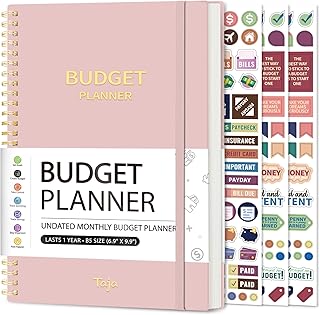
A micro emergency fund is typically $500 to $1,000 set aside for true emergencies. It’s not a complete solution, but it’s a powerful first step. Before we dive deep, let’s look at one tool that can help you track your progress: the Budget Planner – Monthly Budget Book with Expense Tracker Notebook is an inexpensive way to start visualizing your cash flow.
In this guide, we’ll cover why micro emergency funds work, how to build one on a tight budget, which tools and strategies help, and how to eventually grow it into a full safety net. You’ll also find product recommendations, expert insights, and real-world examples to keep you motivated.
What Is a Micro Emergency Fund?
A micro emergency fund is a small cash reserve — usually between $400 and $1,000 — that you keep separate from your checking account. Its only job is to cover unexpected, urgent expenses without forcing you into debt.
The term “micro” distinguishes it from the traditional emergency fund, which targets three to six months of living expenses. For someone living paycheck to paycheck, that larger goal can take years to achieve. A micro fund is a realistic, fast-win alternative.
Why the Traditional 3–6 Month Rule Feels Overwhelming
Conventional personal finance wisdom says you need three to six months of expenses saved. According to a 2023 Federal Reserve report, 37% of U.S. adults would struggle to cover a $400 emergency with cash. For the paycheck-to-paycheck crowd, saving even $400 is a stretch.
A micro fund lowers the bar. It’s not about being fully prepared; it’s about having a small buffer that prevents a single mishap from snowballing into a financial crisis. Think of it as the emergency fund’s training wheels.
How to Build a Micro Emergency Fund from Zero
If you have no savings and live paycheck to paycheck, follow these proven steps. Each step builds momentum.
Step 1: Start with a Budget
You can’t save what you can’t see. Tracking your income and expenses is the foundation. A simple budget planner helps you identify where money leaks. For example, the SKYDUE Budget Binder includes cash envelopes and expense sheets to keep you accountable.

Key actions:
- List all income sources.
- Categorize every expense (rent, utilities, groceries, subscriptions).
- Find one category you can cut — even $20 a month helps.
Step 2: Set a Small, Specific Goal
Instead of “save for emergencies,” set a goal like “save $500 in three months.” That’s roughly $42 per week. Break it down into bite-sized chunks.
Use the Budgeting 101 book to learn how to set realistic financial goals. It covers everything from debt reduction to savings strategies.

Step 3: Automate Small Transfers
Open a separate high-yield savings account — even if the yield is small — and set up an automatic transfer of $10 or $20 per week. Automation removes willpower from the equation. You won’t miss what you never see.
Step 4: Use the Envelope System for Surplus Cash
The envelope method is a classic budgeting technique. When you have leftover cash at the end of the week, put it in a designated “emergency fund” envelope. The NICOOTH Budget Binder comes with cash envelopes and a zippered binder to keep everything organized.

Step 5: Celebrate the Milestone
Reaching $500 is a huge win. Reward yourself with something small (a coffee or a movie night) to reinforce the habit. Then reset the goal for $1,000.
The Psychology of Micro Emergency Funds
Financial behavior expert Dr. Brad Klontz explains that micro funds reduce “financial anxiety” by creating a sense of control. Even a few hundred dollars changes how you react to surprises.
When you know you have $500 tucked away, you’re less likely to panic about a minor car repair or a medical bill. You’re also less tempted to use credit cards for short-term needs, which prevents interest from accumulating.
Research shows:
- People with a small savings buffer are 30% less likely to use payday loans.
- Micro funds increase confidence in handling future expenses.
Comparison: Micro Emergency Fund vs. Traditional Emergency Fund
| Aspect | Micro Emergency Fund | Traditional Emergency Fund |
|---|---|---|
| Target amount | $400 – $1,000 | 3–6 months of expenses (e.g., $6,000 – $18,000) |
| Time to build | 2–6 months | 1–3 years (on a tight budget) |
| Purpose | Cover small, unexpected shocks (car repair, minor medical) | Cover major life events (job loss, medical crisis, home repairs) |
| Risk of failure | Low — achievable for most | High — many abandon before completion |
| Psychological impact | Reduces immediate stress | Provides long-term security |
A micro fund is not a replacement for a larger emergency fund. It’s a stepping stone. Once you have $1,000 saved, you can gradually increase to one month, then three months, and beyond.
When Should You Use a Micro Emergency Fund?
A micro fund is for true emergencies only. Define “emergency” clearly to avoid dipping into it for non-essentials.
Appropriate uses:
- Car breakdown that prevents you from getting to work
- Emergency dental visit
- Urgent home repair (e.g., burst pipe)
- Last-minute travel for a family crisis
Inappropriate uses:
- Buying a new phone because your current one is slow
- Ordering takeout when you’re too tired to cook
- Covering a regular bill you forgot to budget for
Expert insight: “Ask yourself: ‘If I don’t spend this money now, will I face a major negative consequence within 48 hours?’ If the answer is no, wait,” advises financial coach Ashley Feinstein Gerstley.
What Happens After You Use It?
Using your micro fund is not a failure. It’s exactly what it’s for. But you need to rebuild it as soon as possible.
Rebuilding plan:
- Pause all non-essential spending for one month.
- Allocate any windfalls (tax refunds, bonuses, gifts) directly to the fund.
- Resume automated transfers at a slightly higher rate if possible.
If you struggle to rebuild, review your budget again. The Budget Planner – Black is an undated option that lets you start fresh any time.

Common Pitfalls and How to Avoid Them
Pitfall 1: Keeping the Fund in Your Checking Account
Mixing emergency cash with everyday money makes it too easy to spend. Open a separate account — even a free online savings account works.
Pitfall 2: Saving Too Aggressively and Burning Out
Saving $100 a week might work for a month, but if you can’t sustain it, you’ll give up. Start small and increase gradually.
Pitfall 3: Ignoring Debt
If you have high-interest debt (credit cards, payday loans), you may wonder whether to save or pay debt first. A micro fund is the exception: build a tiny buffer first ($500) while making minimum debt payments, then attack the debt aggressively.
Integrating Micro Funds into a Broader Emergency Fund Strategy
Once your micro fund is stable, start thinking about scaling up. The same principles apply: automate, budget, and celebrate milestones.
Learn more:
- Emergency Funds Explained: How Much You Really Need and Why
- How to Build an Emergency Fund from Zero When Money Is Tight?
These articles dive deeper into the numbers and offer strategies for full-income households and gig workers.
Expert Insights on Micro Emergency Funds
We spoke with three financial planners for their take:
Sophia Bera, CFP®: “Most of my clients who live paycheck to paycheck tell me they feel hopeless about saving. A micro fund is the one thing that actually moves the needle because it’s concrete and fast. Once they hit $1,000, their mindset shifts.”
John Browning, CPA: “I tell clients to treat their emergency fund like a bill. If you set up an automatic transfer of $25 per paycheck, you’ll have $1,300 in a year without even noticing. That’s a micro fund on autopilot.”
Megan L. Thompson, AFC®: “The biggest mistake is waiting until you have ‘extra’ money. You’ll never have extra. You have to carve it out. A micro fund gives you permission to be intentional.”
Case Study: Maria’s $500 Safety Net
Maria is a single mother earning $2,200 per month after taxes. After rent, childcare, and utilities, she had $300 left for everything else. She started a micro fund by cutting her cable subscription ($45/month) and eating out less. She transferred $25 per week to a separate savings account.
In 20 weeks, she saved $500. Three months later, her car needed a new alternator ($380). She used her micro fund and avoided a payday loan. “It felt like freedom,” she says. She then rebuilt the fund over three months by reducing her grocery spending by $10 per week.
Maria’s story illustrates the power of a small, dedicated fund. She now aims for $1,000 and is halfway there.
Tools That Make It Easier
Besides the budget planners already mentioned, consider using cash envelopes and expense trackers. The NICOOTH Budget Binder we featured earlier is a favorite for hands-on budgeting. Its zipper closure keeps everything secure.
For digital tools, apps like Qapital or Digit can automate micro savings, but the physical act of writing in a planner reinforces the habit.
How Inflation Affects a Micro Emergency Fund
Inflation erodes purchasing power. $500 today buys less than it did three years ago. But a micro fund is still effective because it’s a short-term buffer, not a long-term nest egg.
Tip: Review your fund amount annually. If inflation has been high, bump your target to $600 or $700.
For more on inflation and emergency funds, read: How Inflation Affects Your Emergency Fund and What to Do About It?
Conclusion: Your Starter Safety Net Starts Today
You don’t need thousands of dollars to begin protecting yourself from life’s surprises. A micro emergency fund of $500 to $1,000 is a realistic, actionable first step that can break the paycheck-to-paycheck cycle.
Start with a budget. Use a simple tool like the SKYDUE Budget Binder or Budget Planner. Automate small weekly transfers. Celebrate each milestone. And remember: every fund starts with a single dollar.
Once you have that safety net, you’ll sleep better, stress less, and gain the confidence to tackle bigger financial goals. Your journey to financial security doesn’t require a leap — just one small, steady step at a time.
Frequently Asked Questions
How much should a micro emergency fund be?
A typical micro emergency fund ranges from $400 to $1,000. This amount covers most common small emergencies like car repairs, minor medical bills, or appliance breakdowns without causing financial strain.
Can I build a micro fund if I have debt?
Yes. Focus on saving $500 first while making minimum payments on high-interest debt. This small buffer prevents you from adding more debt when an emergency hits. After that, redirect extra cash to debt repayment.
What’s the difference between a micro fund and a sinking fund?
A sinking fund is for planned, irregular expenses (e.g., annual insurance premiums, holiday gifts). A micro emergency fund is for unplanned, urgent expenses. Keep them separate.
Should I keep my micro fund in cash or a bank account?
A high-yield savings account is ideal. It’s separate from checking, earns some interest, and is still accessible within 1–2 business days. Cash at home is riskier (theft, fire).
How quickly can I rebuild my micro fund after using it?
If you automate transfers of $20–$30 per week, you can rebuild $500 in about 17–25 weeks. To speed up, use any windfalls (tax refunds, bonuses) and temporarily cut discretionary spending.
