 Insurance Curator
You’re tired of wondering where your paycheck went. You want a system that actually sticks, not another spreadsheet you abandon by February. The beginner’s budgeting blueprint you’re about to read is built on a proven 30-day framework—one that turns financial confusion into clear control.
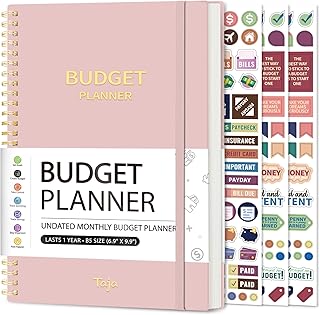
This isn’t a generic “spend less than you earn” lecture. It’s a step‑by‑step plan that accounts for real‑life hiccups, uses tools like a Budget Planner – Monthly Budget Book with Expense Tracker Notebook (rated 4.6 stars, only $8.99) to keep you accountable, and respects the fact that budgeting is a habit, not a one‑time event.
Let’s dive into the four‑week blueprint that will change your relationship with money for good.
Why a 30‑Day Blueprint Works for Beginners
A month gives you enough time to see a full cycle of income and expenses. It’s long enough to break old spending patterns and short enough to stay motivated. Research shows that habit formation takes roughly 21 to 66 days; 30 days hits the sweet spot.
You’ll start with awareness (Week 1), move to structure (Week 2), automate saving (Week 3), and finally fine‑tune for long‑term success (Week 4). Each week builds on the previous one, so you never feel overwhelmed.
Week 1: Awareness – Track Every Penny Without Judgment
Most beginners skip this step because they think they already know where their money goes. They’re wrong. Hand‑to‑hand combat with your own spending data is the most eye‑opening financial exercise you can do.
Step 1: Gather Your Numbers
Pull up your bank statements, credit card bills, and cash withdrawals for the last 30 days. Write down every transaction in a notebook, a free spreadsheet, or a dedicated budget binder like the NICOOTH Budget Binder Cash Envelopes A6 ($6.28, 4.6 stars). This binder has zipper envelopes and pre‑printed sheets so you can physically see where your cash disappears.

Step 2: Categorize Your Spending
Group each item into broad buckets:
- Housing (rent/mortgage, utilities)
- Transportation (gas, public transit, car payment)
- Food (groceries, dining out, coffee runs)
- Debt payments (credit cards, student loans)
- Savings & investments
- Entertainment (streaming services, hobbies, nights out)
- Miscellaneous (subscriptions, gifts, random purchases)
Don’t judge yourself yet. The goal is clarity, not guilt.
Step 3: Find Your “Money Leaks”
Look at the small, recurring charges that add up. A $5 latte every workday = $100/month. A $15 unused streaming subscription = $180/year. Highlight three leaks you can plug immediately.
Pro tip: If you discover you’re spending 40% or more of your take‑home pay on housing, you’re in the danger zone. Aim for 25–30% if possible. This is a key insight often missed in “quick tips” articles.
Step 4: Calculate Your True Income
Use your net (after‑tax) monthly income. If you’re paid bi‑weekly, multiply by 2.17 to get a monthly average. If your income fluctuates, take the average of the last three months. For help with irregular pay, check out our guide on Budgeting on an Irregular Income: How to Plan When Your Paychecks Fluctuate.
By the end of Week 1, you’ll have a complete picture of your cash flow—the foundation of every smart budget.
Week 2: Structure – Choose Your Budgeting Method
Now that you know your numbers, it’s time to pick a budget strategy that fits your personality. There is no one‑size‑fits‑all. Below is a comparison of the three most effective methods for beginners.
| Method | Best For | How It Works | Example |
|---|---|---|---|
| Zero‑Based Budgeting | People who want exact control | Income minus expenses (including savings) equals $0 | If you earn $4,000, you assign every dollar to a category until $0 remains |
| Envelope System | Visual spenders (cash users) | You put cash into envelopes for variable categories (groceries, entertainment) | When the “dining out” envelope is empty, no more restaurant meals |
| 50/30/20 Rule | Minimal effort / steady income | 50% needs, 30% wants, 20% savings & debt | Earn $3,000/month → $1,500 needs, $900 wants, $600 savings |
Detailed breakdown of each method:
Zero‑Based Budgeting forces you to give every dollar a job. It’s rigorous but extremely effective for paying off debt quickly. For a deep dive, read Zero-based Budgeting Explained: a Simple Method to Tell Every Dollar Where to Go.
The Envelope System is making a comeback because it creates a physical pain point when you overspend. Use a budget binder like the SKYDUE Budget Binder with Zipper Envelopes ($8.98, 4.7 stars) to organize your cash categories.

Want to know how envelopes stack up against digital apps? See Envelope Budgeting vs. Budgeting Apps: Which System Actually Works Better?
The 50/30/20 Rule is great if you don’t want to micromanage. But it requires honest categorization—many people fudge the “needs” column.
Step by Step: Implement Your Chosen Method
- Write down your income (from Week 1).
- List your fixed expenses (rent, insurance, minimum debt payments).
- Allocate variable spending (groceries, fun money) according to the method you chose.
- Prioritize savings as a non‑negotiable line item, not an afterthought.
Expert insight: “Most beginners fail because they set unrealistic limits. If you’ve been spending $600 a month on dining out, don’t cut it to $100 overnight. Reduce to $400 for the first month, then $300 the next.” – Certified Financial Counselor
Week 3: Automate & Save – Build a Buffer
A budget doesn’t work if it requires daily willpower. Automation is the cheat code. By the end of Week 3, you should have your bills, savings, and debt payments on autopilot.
Step 1: Pay Yourself First
Set up an automatic transfer to a separate savings account on payday. Even $25 per paycheck builds a $650 emergency fund in a year. Increase the amount incrementally.
Step 2: Create a “No‑Fail” Bill Payment System
Use your bank’s bill pay or schedule auto‑pay for fixed expenses like rent and utilities. This prevents late fees and protects your credit score.
Step 3: Build a Small Emergency Fund
Experts recommend 3–6 months of expenses, but start with one week’s worth of spending as a buffer. This covers unexpected car repairs or medical bills without derailing your budget.
Example: If your weekly spending is $500, your first goal is $500 in a separate account. Then extend to one month.
Step 4: Use the Right Tools
A high‑quality budget planner keeps you on track. The Budget Planner – Monthly Budget Book with Expense Tracker Notebook (Black version) ($8.99, 4.6 stars) is undated, so you can start anytime.

If you prefer a book that teaches the “why” behind budgeting, pick up Budgeting 101: From Getting Out of Debt and Tracking Expenses to Setting Financial Goals and Building Your Savings ($9.69, 4.6 stars). It’s a comprehensive guide that covers everything we’re discussing here.

Week 4: Fine‑Tune & Future‑Proof
The first month is a learning experience. Week 4 is where you optimize and prepare for the long haul.
Step 1: Do a Budget Autopsy
Compare your planned spending from Week 2 with your actual spending from Weeks 1–3. Where did you overshoot? Did you forget a category (like annual subscriptions or pet care)? Adjust your budget accordingly.
Common adjustments:
- Increase grocery allowance if you consistently under‑budgeted.
- Reduce entertainment if you keep overspending.
- Add a “miscellaneous” buffer of 5–10% for surprises.
Step 2: Set a 3‑Month Financial Goal
A goal keeps you motivated. Examples:
- “I will save $1,000 emergency fund by Month 3.”
- “I will pay off one credit card (balance $1,200) by Month 4.”
Write it down and put it in your budget binder.
Step 3: Talk to Your Partner (If Applicable)
Money is the #1 cause of couple arguments. If you share finances, schedule a monthly “money date” to review the budget together. For detailed strategies, read Couples Budgeting Guide: How to Combine Money Without Constant Fights.
Step 4: Plan for Fun
A sustainable budget includes joy. Values‑based budgeting helps you spend guilt‑free on what matters to you. Learn more in Values-based Budgeting: How to Spend Guilt-free on What You Love.
Common Pitfalls and How to Avoid Them
Even with a blueprint, beginners stumble. Here are the top three problems and solutions:
Pitfall 1: Trying to Track Every Penny Forever
You don’t need to track every coffee forever. After two months of awareness, you can switch to a “high‑level” check‑in once a week.
Fix: Use the 50/30/20 rule after you’ve built the habit, or rely on automated savings.
Pitfall 2: Giving Up After One Overspend Month
Your budget is a flexible plan, not prison. If you overspend, simply adjust the next month.
Remember: A broken budget is fixable. Read How to Fix a Broken Budget: Signs It’s Not Working and What to Change? for a step‑by‑step recovery plan.
Pitfall 3: Not Accounting for Annual or Irregular Expenses
Car insurance, holiday gifts, and vet visits will wreck your monthly budget if you don’t plan.
Solution: Divide annual expenses by 12 and set aside that amount each month in a sinking fund.
Advanced Tips for Month 2 and Beyond
Once you’ve completed the 30‑day blueprint, level up:
- Check your net worth monthly (assets minus debts).
- Increase savings rate by 1% every quarter.
- Explore investing after you have a 3–6 month emergency fund.
- If you feel broke despite a high income, you may need an advanced approach. See Advanced Budgeting Techniques for High Earners Who Still Feel Broke.
For young adults just starting out, read Budgeting for Beginners in Their 20s: Money Moves to Avoid Lifetime Regret.
Final Takeaway
Taking control of your money doesn’t require a finance degree—only a structured plan and a willingness to adjust. This 30‑day blueprint gives you the awareness, structure, automation, and resilience to succeed.
Start your journey today. Pick up a Budget Planner or a Budget Binder to make tracking physical and real. The first month is the hardest; after that, budgeting becomes second nature.
You’ve got this.
Frequently Asked Questions
What’s the first step to starting a budget?
The first step is to track every expense for at least one week. Write down every coffee, grocery item, and bill. You need accurate data before you can create a realistic budget.
How much should I save each month?
Aim for at least 20% of your net income. If that’s impossible, start with 5% and increase it by 1% every month until you reach 20%.
Should I use cash or a budgeting app?
Both work. Cash (envelope system) creates a physical limit, while apps offer convenience. Compare them in Envelope Budgeting vs. Budgeting Apps.
What’s the best budgeting method for couples?
Couples often succeed with the 50/30/20 rule because it’s simple. But you must have a joint money conversation. See our Couples Budgeting Guide.
How do I budget with an irregular income?
Use your lowest monthly income from the past six months as your base. Put any surplus into savings. Full strategies are in Budgeting on an Irregular Income.
Is zero‑based budgeting hard?
It requires attention to detail, but many find it freeing. Read Zero-based Budgeting Explained for a step‑by‑step guide.