 Insurance Curator
If you’ve ever compared life insurance policies in the UK, you’ve probably noticed that whole of life insurance carries a heftier price tag than term cover. It’s natural to ask, “Why pay more now for something that seems similar?”. The answer lies in what whole of life can deliver over decades—guaranteed payouts, cash value growth, and powerful estate planning advantages. When structured correctly, paying higher premiums today can produce far greater long-term value for your family and your legacy.
Before diving in, you might find it helpful to explore the full spectrum of options in our Life Insurance in the UK Explained: Term vs Whole of Life vs Over 50s at a Glance piece. It sets the stage for understanding why whole of life stands apart.

What Is Whole of Life Insurance?
Whole of life insurance is a permanent policy that covers you for your entire lifetime, no matter when you die. Unlike term insurance—which pays out only if you pass away within a fixed period—whole of life guarantees a lump sum to your beneficiaries whenever death occurs.
Key features include:
- Guaranteed payout – Your family will receive the sum assured as long as premiums are paid.
- Cash value accumulation – Part of your premium builds a savings element that grows tax-efficiently.
- Level or increasing premiums – You can lock in a fixed cost or allow it to rise with inflation.
- Estate planning tool – Proceeds can help cover inheritance tax (IHT) or provide immediate liquidity.
Policies are typically written in trust to keep the payout outside your estate, which can be crucial for IHT mitigation. For more on the technical side, see our Life Insurance Jargon Buster: Key UK Policy Terms Translated into Plain English.
The Cost vs Value Debate
Whole of life premiums are significantly higher than term insurance because the insurer must pay out eventually. A healthy 40-year-old in London might pay £50–£80 per month for a £200,000 whole of life policy, while a 20-year term for the same sum could cost just £15–£25. The difference can feel steep—but value isn’t measured only in monthly outlay.
Why the higher cost can be worth it:
| Factor | Whole of Life | Term Insurance |
|---|---|---|
| Payout certainty | Guaranteed at any age | Only if death occurs during the term |
| Cash value growth | Yes (over time) | No |
| IHT planning | Excellent for trusts | Limited |
| Premium cost | Higher | Lower |
| Long-term financial benefit | Can exceed total premiums paid | Premiums are typically lost if no claim |
In cities like Manchester, Birmingham, or Glasgow, premiums vary slightly due to regional health trends, but the principle remains: whole of life builds a legacy that term cover cannot match. For example, a £150,000 whole of life policy taken out at age 35 and held to age 85 could return £150,000 tax-free to beneficiaries, while total premiums paid might be only £30,000–£40,000. That’s real wealth creation.
When Does Whole of Life Make Sense?
Whole of life isn’t for everyone, but it shines in specific scenarios. Consider it if you:
- Have a permanent need – For example, covering funeral costs or leaving a guaranteed inheritance.
- Face inheritance tax (IHT) – The payout can be written into trust to pay IHT bills, protecting your estate for heirs.
- Want cash value as a savings vehicle – Over 15–20 years, the policy can build a meaningful reserve you can access or borrow against.
- Are a high-net-worth individual – Wealthy families often use whole of life to pass money tax-efficiently across generations. As the book Money. Wealth. Life Insurance. explains, the affluent frequently use life insurance as a tax-free personal bank.
- Prefer predictability over lower cost – Knowing your loved ones will receive a payout no matter when you die brings peace of mind.
For a detailed comparison with other types, read our guide on Term Life Insurance in the UK: Who It Suits, How It Works, and Typical Costs and Over 50s Life Insurance in the UK: Guaranteed Acceptance, but Is It Good Value?.
Whole of Life vs Other Policies: A Quick Comparison
| Policy Type | Payout Timing | Typical Premium Level | Cash Value | Best For |
|---|---|---|---|---|
| Whole of Life | At death, whenever it occurs | High | Yes | Permanent need, estate planning, wealth building |
| Level Term | Only if death occurs within fixed term | Low | No | Short-term protection (e.g., mortgage, young family) |
| Decreasing Term | Only if death occurs within fixed term (sum decreases) | Very low | No | Repayment mortgage cover |
| Over 50s | At death, guaranteed acceptance | Low to moderate | Usually no | Funerals, small inheritance |
You can dive deeper into the differences between Level Term vs Decreasing Term Life Insurance: Which Structure Fits Your Financial Plan? and Family Life Insurance Policies in the UK: How to Protect Partners and Children Properly.
Real-World Example: A Case Study in the UK
Take Sarah, a 45-year-old solicitor based in Edinburgh. She wants to ensure her two children receive £250,000 when she dies, regardless of when that happens. She also wants to pass on her £500,000 estate without a large IHT bill.
Option A: Term Insurance – A 20-year term for £250,000 costs £25/month. If she dies after age 65, the policy has expired, and her children get nothing from it.
Option B: Whole of Life – The same sum costs £90/month. Over 40 years, total premiums are about £43,200. Her children receive £250,000 tax-free. The policy’s cash value after 20 years is around £35,000, which she could access if needed. In addition, she writes the policy into trust to cover IHT, saving her estate thousands.
The higher monthly cost clearly pays off in the long run. For more insight on how underwriting affects such decisions, see How Underwriting Works for UK Life Insurance: From Application to Final Decision.
Books to Deepen Your Understanding
To fully grasp how whole of life can supercharge your finances, consider these highly rated resources.
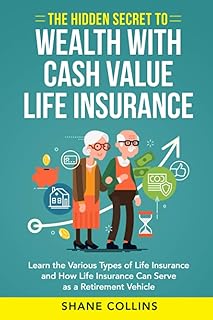
The Hidden Secret to Wealth with Cash Value Life Insurance – This book explains how cash value policies can serve as a retirement vehicle, mirroring strategies used by the wealthy. It’s a practical guide for UK readers looking beyond basic cover.

How the Wealthy Would Grow YOUR Money – With a perfect 5-star rating, this book reveals how the affluent secretly use life insurance to protect their family, build wealth, and retire tax-free. A must-read for anyone serious about whole of life’s long-term potential.
For a broader look at insurance and protection strategies, check our article on Life Insurance vs Income Protection vs Critical Illness: Choosing the Right Safety Net.
Final Thoughts
Whole of life insurance requires a bigger upfront commitment, but for many UK residents—especially those in cities like London, Manchester, or Bristol—it delivers unmatched long-term value. Whether you’re planning to protect your family, mitigate inheritance tax, or build a tax-efficient cash reserve, the extra pounds you pay each month can create a lasting financial legacy.
Before committing, speak with a qualified whole-of-life specialist who can model premiums and benefits tailored to your age, health, and goals. And if you’re still weighing options, revisit our Joint Life Insurance vs Two Single Policies: Which Strategy Really Saves You Money? guide to ensure you choose the right structure. With the right advice, paying more now can absolutely make long-term sense.