 Insurance Curator
 If you’ve ever typed “life insurance quotes online” into a search engine, you know the flood of instant numbers that appears. Low prices, policy options, and promises of coverage in minutes. But how much can you trust those numbers? The short answer is: online life insurance quotes are a solid starting point, but they are rarely the final price you will pay. This article dives deep into why that is, how quotes are calculated, and what you can do to get the most accurate estimate for term life insurance.
Understanding the gap between an instant quote and your actual premium can save you hundreds of dollars and prevent surprises at the medical exam stage. Whether you’re a healthy 30-year-old or someone managing a chronic condition, the accuracy of online quotes depends on a mix of data, assumptions, and the underwriting process.
How Online Life Insurance Quotes Actually Work
When you request life insurance quotes online, you are essentially providing a snapshot of your personal information. Insurers feed that snapshot into a predictive algorithm that estimates your risk class. The algorithm uses actuarial tables, historical claims data, and pricing rules to generate a premium.
Key factors that influence the algorithm include:
- Age
- Gender
- Height and weight (BMI)
- Tobacco use
- Health conditions (diabetes, high blood pressure, etc.)
- Family medical history
- Occupation and hobbies (e.g., skydiving)
- Desired coverage amount and term length
Most online quote engines pull from multiple carriers and display rates for the “preferred plus” or “standard” health class. If you don’t select any specific health details, the system defaults to the best available class. This is why the initial number you see can be misleadingly low.
Real-world example: A 35-year-old non-smoking male in excellent health might see a $30/month quote for a 20-year term policy. If he later reveals he has controlled high cholesterol, the rate could jump to $45/month. The online quote was accurate only under perfect assumptions.
Why Online Life Insurance Quotes Are Often Inaccurate
Several factors cause a mismatch between the quote you receive online and the final premium you are offered.
1. The “Preferred Plus” Assumption
Many quote engines assume you qualify for the best rate tier. In reality, only a small percentage of applicants receive that top tier. Most individuals fall into “preferred” or “standard” categories, which can add 20–50% to the premium.
2. No Medical Exam Yet
Instant quotes are generated without any lab work. You can hide a diagnosis or inaccurate height/weight online, but the medical exam that follows (for most term life policies) will reveal the truth. Insurers rely on blood tests, urine samples, and prescription database checks to verify your health.
3. Incomplete Health Information
Online forms typically ask about major conditions but may not capture nuances like “borderline high blood pressure” or “occasional anxiety medication.” These small details can shift your risk class.
4. Rate Changes by Carrier
Different insurers have different underwriting guidelines. One company may be more lenient with Type 2 diabetes, while another may penalize it heavily. Online aggregators often show rates from multiple carriers, but they may not highlight which carrier offers the best fit for your specific health profile.
5. Temporary or Promotional Pricing
Some online quotes include “new customer discounts” or special rates that apply only to certain states or age brackets. Always read the fine print and compare apples to apples.
Instant Quotes vs. Final Premiums: A Side-by-Side Look
| Stage | What You See | Typical Accuracy |
|---|---|---|
| Instant quote (no details) | Lowest possible rate for perfect health | 30–50% chance of being correct |
| Quote after full health questionnaire | Adjusted for reported conditions | 70–80% chance of being within range |
| Final offer after medical exam | Exact premium based on lab results | 95–100% |
The difference between stage 1 and stage 3 can be as much as $50–100 per month for a $500,000 term life policy.
Example: A 40-year-old female requesting $250,000 in term coverage for 20 years.
- Instant quote (best class): $22/month
- Quote after disclosing mild asthma: $28/month
- Final offer after exam (asthma well-controlled, normal BMI): $26/month
Even when the disclosure is honest, final underwriting can improve or worsen the rate depending on your blood work.
How to Get the Most Accurate Life Insurance Quotes Online
If you want your online life insurance quotes to be as close to your real premium as possible, follow these expert tips.
✅ Be Honest and Complete
Do not “forget” to mention a speeding ticket or occasional cigar use. Underwriters can check motor vehicle records and cotinine levels. Being transparent upfront saves time and avoids rate rescission.
✅ Use Multiple Quote Engines
Different aggregators work with different carrier panels. Use at least three to see a broad range. Some recommended sites include Best Sites to Compare Life Insurance Quotes Online for a curated list.
✅ Get a Quote with a Medical Exam Option
Some companies offer “no-exam” policies that cost more. If you want true accuracy, apply for a fully underwritten term life policy that requires a paramedical exam. The exam takes 20 minutes and locks in your final rate.
✅ Check Your Medical Records Before Applying
Order a copy of your medical records and prescription history. Correct any errors before the insurer sees them. Mistakes on file can inflate your premium.
✅ Consider Accelerated Underwriting
Many top carriers now offer accelerated underwriting programs that use prescription databases and electronic health records to skip the exam for low-risk applicants. If you qualify, the quote you receive online is far more likely to be final.
✅ Compare Term and Whole Life Separately
If you are researching multiple types of coverage, use separate tools. For a deep dive on the differences, check out Life Insurance Quotes Online: Term vs. Whole Life Comparison.
Expert Insights: What Underwriters Look For
To understand why online quotes can shift, you need to know the underwriting process inside out.
Dr. Andrea Moore, a former life insurance medical director, explains: “The instant quote is a marketing tool, not a guarantee. Underwriters look at three core pillars: mortality risk, financial risk, and anti‑selection. Online forms capture only the first pillar, and even then, incompletely.”
The three main rating classes are:
- Preferred Plus – Exceptionally healthy, no family history of early death, no risky hobbies.
- Preferred – Very good health, maybe minor controlled conditions.
- Standard – Average health, some risk factors like cholesterol or BMI slightly elevated.
Only about 10–15% of applicants qualify for Preferred Plus. Yet that is the default for many online quotes.
Pro tip: If you have a health condition, look for carriers that specialize in that condition. For example, some insurers are known for favorable rates on Type 1 diabetes or hepatitis C. You can find comparisons in guides like How to Get Life Insurance Quotes Online Without Giving Personal Info?, though you’ll ultimately need to share details for a binding quote.
The Role of Term Life Insurance in Online Quotes
Our content pillar is “life insurance quotes online,” and the context is term life insurance. Term policies are the simplest and most affordable way to get coverage for a specific period — typically 10, 20, or 30 years. Because term life has no cash value, carriers price it largely on mortality risk, making online quotes more straightforward than for whole life.
Why term life quotes are generally more reliable than whole life quotes:
| Factor | Term Life | Whole Life |
|---|---|---|
| Complexity | Simple | Complex (cash value, dividends) |
| Pricing drivers | Age, health, term length | Age, health, cash value assumptions, interest rates |
| Online quote accuracy | High (80–90%) | Moderate (60–70%) |
If you are shopping for term coverage, you can trust online quotes more than for permanent policies. However, the same caveats about health classification still apply.
Recommended Resources to Master Life Insurance Quotes
To deepen your understanding of life insurance quotes online, consider the following books and guides. Each one offers unique value — from basic explanations to advanced wealth strategies.
📘 Life Insurance Made Simple: A Clear and Practical Guide for Every Stage of Life
This book demystifies both term and whole life insurance with plain‑language explanations. It covers how to compare quotes, what to look for in a policy, and common pitfalls. Rated 4.8 out of 5 stars.

📘 Life Insurance 101: The Basics of Life Insurance Explained
A compact primer perfect for first‑time buyers. It walks through the different types of coverage and explains why online quotes vary. At just $14.95, it’s an affordable starting point.

📘 Money. Wealth. Life Insurance.: How the Wealthy Use Life Insurance as a Tax-Free Personal Bank
For those interested in the advanced use of life insurance for wealth building, this book shows how cash‑value policies can supercharge savings. While not directly about term quotes, it’s invaluable context for understanding the broader landscape.

📘 The Digital Life Insurance Agent: How to Market Life Insurance Online and Sell Over the Phone
If you are an agent or aspiring to sell life insurance, this guide covers quoting software, lead generation, and phone sales techniques. It’s a practical resource for professionals.
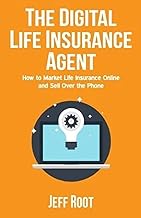
Comparison Table of Recommended Books
| Book | Price | Rating | Best For | Buy Link |
|---|---|---|---|---|
| Life Insurance Made Simple | $34.99 | 4.8/5 | Beginners & families | |
| Life Insurance 101 | $14.95 | 4.1/5 | First-time buyers | |
| Money. Wealth. Life Insurance. | $8.95 | 4.6/5 | Wealth builders | |
| The Digital Life Insurance Agent | $15.30 | 4.5/5 | Agents & marketers | |
Common Myths About Online Life Insurance Quotes
Let’s bust a few myths that often confuse shoppers.
Myth 1: “I can get a final price without any personal info.”
False. Truly accurate quotes require at minimum your age, gender, height/weight, and tobacco use. Without these, the number is a guesstimate.
Myth 2: “The lowest quote is always the best deal.”
Not necessarily. A low price may come from a carrier with strict underwriting. If you don’t qualify, you’ll be reclassified at a higher rate. Consider the company’s financial strength and customer service too.
Myth 3: “Online quotes are binding.”
No. They are preliminary. Only after you submit a formal application and (usually) take a medical exam does the insurer issue a binding offer. You can walk away if the final premium is higher than expected.
Myth 4: “Term life quotes are always cheaper online.”
Many online aggregators offer competitive rates, but working with an independent agent can also yield comparable or better prices. The key is to compare multiple sources.
Practical Steps: From Online Quote to Final Policy
Here’s a step-by-step roadmap to ensure the quote you see becomes the policy you sign.
- Gather your information – List your height, weight, medications, and family history. Have your driver’s license handy.
- Use a reliable quote tool – Start with a one-stop comparison site like the one referenced in How to Get Instant Life Insurance Quotes Online?.
- Select “Term Life” and your target coverage – Be realistic about the amount needed (e.g., 10–12x your annual income).
- Choose 2–3 preferred health classes – Instead of accepting the default “preferred plus,” select “standard” or “preferred” to see a more conservative estimate.
- Apply with two top carriers – Once you have quotes, apply with the two most affordable that also have strong financial ratings (A.M. Best A or better).
- Complete the medical exam – Schedule it at home or work. Fast for 8–12 hours before blood draw.
- Review the final offer – Compare the final premium to your initial online quote. The gap is typically $5–$20 per month for most healthy applicants.
Frequently Asked Questions
1. Are online life insurance quotes accurate enough to budget with?
They give a directional estimate, but you should budget 20–30% higher than the lowest quote you see. Once you have a final offer after medical underwriting, you can rely on that number.
2. Why did my online quote go up after I disclosed my health conditions?
The quote engine likely assumed a best‑class rating. When you reveal conditions like high cholesterol or a past surgery, the algorithm adjusts to a lower rating class (e.g., from Preferred Plus to Standard), which raises the premium.
3. Can I get an accurate quote without a medical exam?
Some carriers offer no‑exam term policies that use prescription databases and MIB checks. The quotes for these policies are often more accurate because the underwriting is based on real data, not assumptions. However, the premiums may be higher than fully underwritten policies.
4. How long does it take to go from online quote to final decision?
With accelerated underwriting, you can get a decision in 24–48 hours. For a full paramedical exam, expect 2–6 weeks. The online quote itself takes only 2–5 minutes.
5. Should I trust a quote from a single insurance company’s website?
Not entirely. A single carrier’s quote shows you only their rates. Independent agents or aggregators give you a broader picture. Always compare at least three carriers.
Final Thoughts
Online life insurance quotes are a powerful tool for comparing prices and understanding what you might pay. But they are not a guarantee. The accuracy improves dramatically when you provide honest, complete information and choose to apply with carriers that offer accelerated or fully underwritten term insurance.
Remember: the difference of $10 per month adds up to $2,400 over a 20‑year term. Spending a little extra time to get an accurate quote now can save you thousands over the life of the policy.
For the best results, use a combination of online aggregators, independent agents, and trusted educational resources like the books listed above. Start your search today — your family’s financial security depends on getting the right coverage at the right price.