 Insurance Curator
 When you think about life insurance, you probably picture a safety net for your loved ones. But what if that same policy could also grow your wealth, provide tax-advantaged savings, and stay with you for as long as you live? That’s exactly what whole life insurance offers. Unlike term life insurance, which covers you for a set period and expires, whole life insurance guarantees both a death benefit and a cash value that accumulates over time. It’s a financial tool that combines protection with forced savings, and for many families, it becomes the foundation of a long-term financial plan.
In this deep dive, we’ll explore every benefit of whole life insurance—from guaranteed growth to lifetime coverage—and show you how it stacks up against term life. Whether you’re new to insurance or looking to optimize an existing portfolio, this guide will help you decide if whole life fits your goals. We’ll also highlight expert resources like Life Insurance Made Simple: A Clear and Practical Guide for Every Stage of Life to deepen your understanding.
What Is Whole Life Insurance?
Whole life insurance is a type of permanent life insurance that lasts your entire lifetime—as long as you pay the premiums. Each payment builds cash value at a guaranteed interest rate, and the death benefit remains fixed and tax-free for your beneficiaries. Unlike term life, which only pays if you die during the policy term, whole life guarantees a payout no matter when you pass away.
The policy’s cash value grows on a tax-deferred basis. You can borrow against it, withdraw it, or even use it to pay future premiums. This unique feature makes whole life insurance more than just protection; it becomes a savings vehicle with a guaranteed floor.
Key Components of a Whole Life Policy
- Death Benefit: A fixed amount paid to beneficiaries, tax-free.
- Cash Value: Accumulates at a guaranteed rate (typically 2–4% annually) plus potential dividends.
- Level Premiums: Fixed monthly or annual payments that never increase with age.
- Dividends: Some mutual companies pay dividends, which can be taken as cash, used to buy additional coverage, or reduce premiums.
These components work together to provide stability in an uncertain world. Even if investment markets fluctuate, your whole life policy’s cash value never decreases.
Guaranteed Growth: How Your Money Works for You
One of the most compelling whole life insurance benefits is the guaranteed growth of your cash value. While term life insurance has no savings component, whole life builds equity from day one. Let’s break down how this growth happens.
The Mechanics of Cash Value Accumulation
When you pay a whole life premium, part of that money covers the cost of insurance and administrative fees. The remainder goes into the policy’s cash reserve, which earns a guaranteed interest rate set by the insurer. Over time, this cash value compounds tax-deferred, meaning you don’t pay taxes on the growth until you withdraw it.
Many policies also earn non-guaranteed dividends from the company’s profits. These dividends can supercharge your returns. According to industry data, top-rated mutual insurers have paid dividends consistently for over 100 years, making whole life one of the most reliable long-term savings vehicles.
For a deeper look at how cash value accumulates, check out our guide on How Cash Value Accumulates in Whole Life Insurance Policies?.
Guaranteed vs. Non-Guaranteed Growth
| Aspect | Guaranteed | Non-Guaranteed (Dividends) |
|---|---|---|
| Interest rate | Fixed by contract (e.g., 2.5%) | Variable based on company performance |
| Safety | 100% protected from market loss | Historically paid but not contractually promised |
| Tax treatment | Tax-deferred | Tax-deferred when left in policy |
The guaranteed portion alone gives you confidence that your cash value will grow every year, regardless of economic conditions. This contrasts sharply with term life insurance, where you pay premiums for coverage you may never use, and you walk away with nothing at the end of the term.
Lifetime Coverage: Protection That Never Expires
Term life insurance is temporary. A 20-year term policy ends when you turn 55, 60, or 65—just when your financial obligations might be highest. Whole life insurance covers you for life, ensuring that your final expenses, outstanding debts, or estate taxes are never a burden on your family.
Why Lifetime Coverage Matters
- Final Expenses: Funeral costs, medical bills, and estate settlement fees can drain an estate. Whole life guarantees funds are available.
- Estate Planning: Life insurance proceeds are generally income-tax-free and can provide liquidity to pay estate taxes without forcing heirs to sell assets.
- Elderly Dependents: If you have a special-needs child or a spouse who relies on your income, term life might expire before you do. Whole life ensures lifelong support.
- Legacy Building: Permanent coverage lets you leave a tax-free inheritance, even if you outlive all your retirement savings.
Term life insurance leaves you unprotected after the policy ends—assuming you even renew. Whole life’s lifetime coverage gives you peace of mind that you’re never “too old” to have protection.
Whole Life Insurance vs. Term Life Insurance: A Side-by-Side Comparison
To truly appreciate whole life benefits, you need to see how it compares with term life. Below is an exhaustive breakdown.
| Feature | Whole Life Insurance | Term Life Insurance |
|---|---|---|
| Duration | Lifetime (as long as premiums paid) | 10, 20, 30 years (then expires) |
| Cash Value | Accumulates at guaranteed rate + dividends | None |
| Premiums | Level for life | Low initially, may increase on renewal |
| Death Benefit | Fixed, guaranteed | Fixed, but no payout if you outlive term |
| Borrowing Against Policy | Yes, via policy loans | No |
| Tax Benefits | Tax-deferred growth; tax-free loans/withdrawals up to basis | Only the death benefit is tax-free |
| Cost | Higher monthly premiums | Lower premiums for a given face amount |
| Investment Potential | Low but guaranteed | None |
When to Choose Whole Life
- You want a guaranteed death benefit that never disappears.
- You need a forced savings mechanism with tax advantages.
- You anticipate needing loans or emergency funds later in life.
- You’re planning an estate or leaving a legacy.
When to Choose Term Life
- You have temporary needs (mortgage, young children).
- You want maximum coverage for the lowest premium.
- You are on a tight budget and can invest the difference on your own.
The classic financial advice is “buy term and invest the difference,” but that only works if you actually invest. Most people don’t. Whole life insurance guarantees that you save and grow money consistently. For a deeper dive, see our article Whole Life Insurance vs. Term Life Insurance: a Side-by-side Comparison.
Borrowing Against Whole Life Insurance: How Policy Loans Work
One of the most underrated whole life insurance benefits is the ability to borrow against your cash value. Policy loans are a flexible, low-cost way to access funds for emergencies, education, or business opportunities.
How It Works
- You can borrow up to 90–95% of your cash value.
- Interest rates are set by the insurer—typically 5–8%, but you pay that interest to yourself (the unpaid interest reduces the death benefit).
- The loan does not require a credit check, and there is no repayment schedule.
- If you die with an outstanding loan, the unpaid balance is subtracted from the death benefit.
Policy loans are non-recourse, meaning you can walk away without penalty—though your beneficiaries would receive less. This feature makes whole life an excellent “personal bank.” For more details, read Borrowing Against Whole Life Insurance: How Policy Loans Work.
Example
Imagine you have $50,000 in cash value. You need $20,000 for a home renovation. You take a policy loan at 6% interest. Over five years, you pay $20,000 back (or not). If you don’t repay, the death benefit reduces by $20,000 plus accrued interest. Meanwhile, your cash value continues to grow on the remaining $30,000. This flexibility is unmatched by term life insurance.
Can You Lower Your Whole Life Insurance Premiums? Strategies to Save?
Whole life premiums are typically higher than term, but there are legitimate ways to lower them without sacrificing coverage.
Practical Strategies
- Choose a lower face amount: You don’t need a million dollars if your needs are smaller. Start with what you can afford.
- Pay annually instead of monthly: Many insurers offer discounts of 5–10% for annual payments.
- Select a mutual insurer with dividends: Dividends can be used to reduce premiums or buy paid-up additions.
- Re-evaluate your policy every 5–10 years: As your cash value grows, you may be able to reduce premium outlay by using accumulated value.
- Consider a hybrid policy: Some whole life products allow flexible premiums after the initial period.
For a full discussion, read our post Can You Lower Your Whole Life Insurance Premiums? Strategies to Save?.
Expert Insights on Using Whole Life for Wealth Building
Whole life insurance isn’t just for protection—it’s a cornerstone of wealth for many high-net-worth individuals. Authors like those behind Money, Wealth, Life Insurance explain how the wealthy use cash value policies as tax-free personal banks.

A highly rated resource is Life Insurance Made Simple: A Clear and Practical Guide for Every Stage of Life (4.8 stars, $34.99). It breaks down complex concepts into actionable advice.
Another excellent primer is Life Insurance 101: The Basics of Life Insurance Explained (4.1 stars, $14.95). It’s perfect for someone just starting their research.

For a textbook-level understanding, consider Life Insurance, 15th Ed. (4.2 stars, $150.00), which covers actuarial science and advanced policy design.
Recommended Resources Comparison
| Product | Price | Rating | Best For | Buy at Amazon |
|---|---|---|---|---|
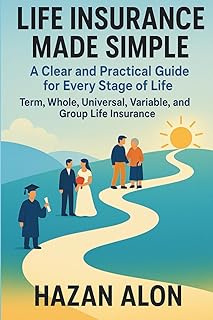 |
$34.99 | 4.8 | Beginners & families | Buy Now |
|
$14.95 | 4.1 | Quick overview | Buy Now |
 |
$150.00 | 4.2 | Professionals & students | Buy Now |
These books can turn you from a novice into an informed buyer. Use them to verify agent recommendations and understand the fine print.
Frequently Asked Questions
Do whole life insurance policies pay dividends every year?
Not all policies pay dividends. Only mutual insurance companies (owned by policyholders) distribute dividends. Stock companies may offer lower premiums but no dividends. Dividends are not guaranteed, but many top mutual insurers have paid them for over a century.
Can I lose money in whole life insurance?
You cannot lose the guaranteed cash value, which grows at the contract rate. However, if you surrender the policy early, you may receive less than you paid due to high front-end fees. Whole life is a long-term commitment best kept for at least 10–15 years.
Is whole life insurance a good investment?
It’s not an investment in the traditional sense—it’s insurance with a savings component. But for those who need permanent coverage and want forced savings with guaranteed returns, it can be an excellent part of a diversified financial plan.
How does whole life compare to index universal life?
Index universal life (IUL) offers potential for higher returns linked to a stock index, but the growth is not guaranteed. Whole life offers guaranteed growth but lower upside. IUL premiums can also be flexible, while whole life premiums are fixed.
Can I use whole life insurance for retirement?
Yes. Many people use policy loans or withdrawals to supplement retirement income. Because loans are tax-free up to your cost basis, you can access cash value without triggering income taxes. That makes whole life a unique retirement funding tool.
Conclusion: Secure Your Future with Whole Life Insurance
Whole life insurance benefits go far beyond a simple death benefit. You get guaranteed growth that withstands market downturns, lifetime coverage that never expires, and a cash value you can borrow against when life throws curveballs. While term life insurance is cheaper in the short run, whole life offers lasting financial stability—especially if you use it strategically for savings, loans, and estate planning.
The key is to educate yourself before buying. Pick up a trusted guide like Life Insurance Made Simple to learn the nuances. Then work with a licensed agent who understands your goals. With the right whole life policy, you can protect your family today while building a financial legacy that grows for a lifetime.
Ready to explore whole life insurance? Start with the resources above, and use our internal guides to dive deeper.