 Insurance Curator
When you open a checking or savings account, you often agree to terms that include a handful of “hidden” products you never explicitly asked for. Overdraft protection, lines of credit, and so-called courtesy pay can seem like safety nets—but they often come with steep fees and interest rates that quietly erode your budget. Understanding exactly how these products work is the first step to taking control of your money.
Using a dedicated budgeting system—like a physical Budget Planner – Monthly Budget Book with Expense Tracker Notebook, Undated Bill Organizer & Finance Planner to Take Control of Your Money, Account Book to Manage Your Finances-Pink—can help you track every fee, every transfer, and every balance. But before you can protect your budget, you need to know what these hidden banking products actually are.
What Is Overdraft Protection?
Overdraft protection is a service offered by most banks that allows a transaction to go through even when you don’t have enough money in your account. Instead of declining the payment, the bank covers the difference—but typically charges a fee for the privilege.
How Overdraft Protection Works
- The bank covers the shortfall up to a preset limit.
- You are charged an overdraft fee (often $30–$35 per transaction).
- Some banks also charge a sustained overdraft fee if the negative balance isn’t corrected within a few days.
- Overdraft protection can be linked to a savings account, credit card, or a line of credit.
Banks market overdraft protection as a convenience. In reality, it often masks deeper budgeting issues. If you’re frequently hitting overdraft, your spending plan likely needs adjustment.
The Real Cost to Your Budget
A single overdraft fee can wipe out the interest you earned on a high-yield savings account for an entire month. For someone on a tight budget, these fees quickly snowball. According to the Consumer Financial Protection Bureau, overdraft fees cost Americans billions each year.
Expert Insight: “Overdraft protection is not a budgeting tool; it’s a profit center for banks. If you rely on it regularly, you’re losing the battle against hidden fees.” – Finance educator Michelle Singletary
Lines of Credit: The Silent Budget Killer
A line of credit (LOC) is a flexible loan that lets you borrow up to a certain limit and pay interest only on the amount you use. Banks often offer these as an overdraft backup, but they also sell standalone personal LOCs and home equity lines of credit (HELOCs).
How a Line of Credit Ties Into Banking Products
When linked to a checking account, an overdraft line of credit automatically transfers funds to cover a shortfall. Unlike a standard overdraft fee, you pay interest—often at a rate of 12%–18% APR. That might sound cheaper than a $35 fee, but if you carry the balance for weeks, the interest can add up quickly.
Why a Line of Credit Can Derail Your Budget
- Easy access to credit makes it tempting to spend beyond your means.
- Monthly interest charges become a “hidden” expense in your bank statements.
- Some LOCs have annual fees or maintenance fees.
- If you use a HELOC for everyday spending, you put your home at risk.
Budgeting becomes nearly impossible when a line of credit is active because you no longer see the real cost of your purchases. A cash envelope system or a simple Budget Binder Cash Envelopes A6 Money Saving Binder with Zipper envelopes (Purple) forces you to use only the money you have—eliminating the temptation to borrow.
Other Hidden Banking Products You Should Know About
Beyond overdraft protection and lines of credit, banks quietly enroll customers in several other products that affect budgets.
| Product | How It Works | Typical Cost |
|---|---|---|
| Courtesy Pay | Bank covers a transaction that would overdraw your account, even if you didn’t opt in. | $30–$35 per transaction |
| Savings Sweep | Automatically transfers money from savings to checking to prevent an overdraft. | Usually free, but some banks charge a fee per transfer |
| Cash Reserve | A small line of credit (e.g., $500) linked to your checking account. | Interest + possible monthly fee |
| Skip-a-Payment Programs | Allows you to skip a loan payment for a fee. | $30–$50 per skip, plus added interest |
Courtesy Pay: The Most Insidious
Courtesy pay is often the default setting on many checking accounts. You never asked for it, yet the bank allows your debit card or check to go through even when you have insufficient funds. The result? A cascade of fees that can turn a $5 coffee into a $40 mistake.
Federal regulations require banks to get your opt-in for overdraft on ATM and one-time debit card transactions, but many still apply courtesy pay to checks and automated bill payments without explicit consent. Always check your account agreement—and if you don’t want it, opt out.
How These Products Impact Your Budget (And What to Do)
Hidden banking products directly undermine your budgeting efforts. When you don’t know a $35 fee is coming, your careful expense tracking becomes inaccurate. Over time, these small leaks drain your savings and keep you in a cycle of paycheck-to-paycheck living.
The Budget Cycle With Hidden Products
- You plan spending using a budget.
- An unexpected expense (or miscalculation) causes a small overdraft.
- The bank charges an overdraft fee, making the shortage larger.
- You use a line of credit to cover the shortfall, accruing interest.
- Next month, you have less money because of the interest and fees.
- The cycle repeats.
The only way to break this cycle is to stop relying on these products and switch to proactive budgeting tools. A physical SKYDUE Budget Binder, Money Saving Binder with Zipper Envelopes, Cash Envelopes and Expense Budget Sheets for Budgeting gives you a tangible way to see exactly how much money you have left for each category.
Expert Tips for Avoiding Hidden Banking Fees While Budgeting
- Opt out of overdraft protection entirely. Ask your bank to decline any transaction that exceeds your balance.
- Link a free savings account only if your bank charges no transfer fees. A savings sweep can be a low-cost backup.
- Negotiate fees. If you get hit with an overdraft fee, call your bank and ask for a one-time waiver. Many will oblige if you’re a good customer.
- Track every fee in your budget. Use a dedicated column or envelope to record banking fees. By raising your awareness, you’ll be more motivated to avoid them.
- Use separate bank accounts for bills, goals, and spending. This strategy helps you compartmentalize money so you never accidentally overspend from the wrong bucket. Read our guide to Using Separate Banking Products to Organize Bills, Goals, and Everyday Spending for a step-by-step approach.
A truly bulletproof budget requires understanding every bank product on your account. Check out our How to Evaluate Banking Fees and Avoid Paying for Basic Services? guide to learn exactly what to look for in your monthly statements.
The Best Budgeting Tools to Stay Ahead of Hidden Products
You can’t manage what you don’t measure. Using a dedicated budget planner helps you track income, expenses, and—most importantly—any banking fees that sneak in.
Recommended Products (Based on Real User Ratings)
1. Budget Planner – Monthly Budget Book (Pink)
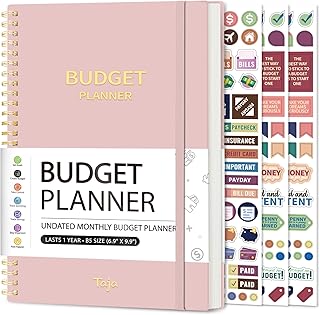
Price: $8.99 | Rating: 4.6/5
This undated planner includes sections for tracking monthly bills, expenses, and savings goals. Its compact size fits in a purse so you can record transactions on the go—helping you catch unexpected fees before they spiral.
- 12-month undated layout
- Expense tracker pages with categories
- Bill organizer with due dates
- Goal-setting worksheets
2. NICOOTH Budget Binder with Cash Envelopes (Purple)

Price: $6.28 | Rating: 4.6/5
The cash envelope system is one of the most effective ways to prevent overdrafts. When you run out of cash in an envelope, you stop spending. No more hidden fees from using a debit card with insufficient funds.
- A6 binder with 12 zipper envelopes
- Budget tracking sheets included
- Compact and portable
- Great for households transitioning to cash-only budgeting
3. SKYDUE Budget Binder (Blue)

Price: $8.98 | Rating: 4.7/5
This binder comes with a zipper closure, pre-printed expense sheets, and 12 cash envelopes. Users love the clear layout that makes it easy to visualize where every dollar goes.
- Pre-printed budget categories
- Zipper closure for security
- Durable polypropylene covers
- Monthly and yearly tracking
4. Budget Planner – Monthly Budget Book (Black)

Price: $8.99 | Rating: 4.6/5
The black version of the popular budget planner offers the same features as the pink edition. It’s perfect for those who prefer a neutral design while still getting the same powerful tracking capabilities.
- Same proven structure as the pink version
- Professional look for work or home
- Durable laminated cover
5. Book: Budgeting 101 (Adams 101 Series)

Price: $9.69 | Rating: 4.6/5
This book covers the basics of creating a budget, tracking expenses, and avoiding common pitfalls like hidden banking fees. It’s an excellent companion to any physical planner, especially if you’re new to intentional budgeting.
- Step-by-step budgeting methods
- Tips for managing debt and saving
- Real-world examples of fee traps
Frequently Asked Questions
What is overdraft protection, and should I use it?
Overdraft protection is a service that covers transactions when your account balance is too low. While it prevents declined payments, it usually comes with high fees (often $30–$35 per occurrence). For most people, it’s cheaper to opt out and handle any shortages manually.
How do banks make money from lines of credit?
Banks charge interest on the amount you borrow, plus sometimes annual or maintenance fees. If the line is linked to your checking account, you may also pay transfer fees. The interest rates can be higher than credit cards, making it an expensive way to cover everyday spending.
Can hidden banking products affect my credit score?
Yes. Overdraft protection itself doesn’t appear on credit reports, but if you link a line of credit and you carry a high balance, your credit utilization increases, which can lower your score. Additionally, unpaid overdraft fees that go to collections will damage your credit.
What’s the difference between courtesy pay and overdraft protection?
Courtesy pay is the bank’s default practice of covering a transaction even if you haven’t signed up for any protection. Overdraft protection is a formal program you usually have to opt into. Both can result in fees, but courtesy pay often catches customers by surprise.
How can I avoid hidden banking fees while budgeting?
The best strategy is to choose a bank that offers fee-free checking or reimburses ATM fees. Opt out of all overdraft services, and use a cash envelope system or a budget planner to stick to your spending limits. Review your account statements every month for unexpected charges.
Take Control Before the Bank Does
Hidden banking products like overdraft protection, lines of credit, and courtesy pay are designed to make transactions convenient—but they also make budgeting harder. Every fee you pay is a dollar that could have gone toward savings, debt repayment, or a financial goal.
By arming yourself with the right knowledge and the right tools—like a reliable Budget Planner – Monthly Budget Book with Expense Tracker Notebook or a cash envelope binder—you can build a budget that keeps you in the driver’s seat. Remember: the best way to handle hidden banking products is to never need them in the first place.
Start today by opting out of overdraft protection, switching to a cash-based budgeting system, and learning more about Mobile-first Banking Products: Features That Actually Make Life Easier to see how modern banking can still work for you without the hidden costs.