 Insurance Curator
When you’re working hard to stick to a budget, every dollar you save matters. But where you park those dollars can make a huge difference in how fast your money grows. A high-yield savings account (HYSA) offers significantly higher interest rates than traditional savings accounts, turning your disciplined budgeting into real financial gains.
In this comprehensive guide, we’ll explore exactly what to look for in a high-yield savings account and how to compare offers like a pro. Along the way, you’ll discover how to integrate an HYSA into your overall budgeting strategy and why tools like a Budget Planner – Monthly Budget Book with Expense Tracker Notebook can help you stay on track. Let’s dive in.
What Exactly Is a High-Yield Savings Account?
A high-yield savings account is a type of savings account that pays a much higher annual percentage yield (APY) than a standard savings account. While traditional brick-and-mortar banks often offer APYs below 0.10%, many online HYSAs currently offer rates between 4% and 5% APY – sometimes even higher.
These accounts are typically FDIC-insured, meaning your deposits are protected up to $250,000 per depositor, per bank. They function like regular savings accounts but are usually offered by online banks, credit unions, or neobanks that have lower overhead costs and pass the savings on to you.
The primary difference? Higher interest income without added risk. Your money remains liquid, accessible, and safe, while earning ten to fifty times more than it would in a standard account.
Why High-Yield Savings Accounts Matter for Budgeters
If you’re already following a budget, you know the importance of separating your money into categories: bills, goals, spending money, and savings. A high-yield savings account aligns perfectly with the “savings” or “emergency fund” category because it rewards you for not touching that money too soon.
- Emergency fund growth: Keeping three to six months of expenses in an HYSA means your safety net grows even while it sits idle.
- Sinking funds: Planning for a vacation, a new car, or holiday gifts? Park those monthly contributions in an HYSA and watch the interest pile up.
- Inflation protection: While no savings account fully beats inflation, a 4-5% APY comes much closer than 0.01%.
For budgeters, an HYSA is not just an account – it’s a wealth-building tool that works in the background. And to manage those savings goals effectively, pairing your HYSA with a physical budgeting system can be a game-changer. Consider using a product like the SKYDUE Budget Binder, Money Saving Binder with Zipper Envelopes to track every dollar allocated to your HYSA.
Key Features to Look for When Choosing an HYSA
Not all high-yield savings accounts are created equal. To find the best offer for your situation, pay close attention to these seven critical features.
Annual Percentage Yield (APY) – The Non-Negotiable
The APY is the single most important factor because it directly determines how much interest you earn. Compare APYs from multiple banks before committing. Keep in mind that APYs are variable and can change with the federal funds rate. Some banks offer a “teaser rate” that drops after a few months, so always check the fine print.
When comparing APYs, look for accounts that consistently offer competitive rates rather than flashy introductory promotions. A difference of 0.5% on a $10,000 balance equates to $50 extra per year – real money that adds up.
Compounding Frequency – Let Time Work for You
Compounding is the process where your interest earns interest. The more frequently interest compounds, the faster your balance grows. Most HYSAs compound daily or monthly. Daily compounding yields slightly more than monthly, but the difference is marginal for small balances.
Look for accounts that compound interest daily and credit it monthly. Some banks compound and credit daily, which is even better. This information is usually found in the account’s terms or disclosures.
Minimum Deposit and Balance Requirements
Many high-yield savings accounts have no minimum deposit to open and no minimum balance to maintain. However, a few institutions require $100, $500, or even $1,000 to open. Others may charge a fee if your balance drops below a certain threshold.
If you’re just starting your emergency fund, look for an account with a $0 minimum opening deposit. This ensures you can start earning high interest immediately, even with a small initial contribution.
Monthly Maintenance Fees and How to Waive Them
Fees can eat into your interest earnings. The best HYSAs charge no monthly maintenance fees at all. If a bank does charge a fee, they typically waive it if you maintain a minimum balance or set up recurring transfers.
Always read the fee schedule. Avoid accounts with monthly fees unless you are certain you can meet the waiver requirements. Otherwise, you might end up losing more in fees than you earn in interest.
FDIC Insurance – Your Safety Net
The Federal Deposit Insurance Corporation (FDIC) insures deposits up to $250,000 per depositor, per bank, per ownership category. This protection means that even if the bank fails, your money is safe.
Always verify that the bank or credit union is FDIC-insured (or NCUA-insured for credit unions). Most reputable online banks are insured, but it’s worth double-checking before you deposit large sums. For more on this, read our guide on Safe Places to Keep Large Sums of Cash: FDIC Insurance and Banking Product Limits.
Accessibility and Transfer Speed
An HYSA should be easy to access when you need the money, but not so easy that you’re tempted to spend impulsively. Most online banks let you transfer funds to an external checking account within one to three business days. Some offer instant transfers to a linked checking account at the same institution.
Check whether the bank supports mobile check deposit, ATM access (though savings accounts usually have limited withdrawals), and external account linking. The best accounts allow you to set up automatic transfers to make saving effortless.
Mobile App and Digital Experience
Since the vast majority of HYSAs are offered by online banks, a robust mobile app is essential. Look for features such as:
- Mobile check deposit
- Push notifications for deposits and withdrawals
- User-friendly dashboard showing interest earned
- Ability to rename accounts for goal tracking (e.g., “Emergency Fund” or “Vacation Fund”)
A well-designed app simplifies the process of moving money between your checking and savings accounts, which is crucial for budgeters who manage multiple categories.
Customer Service and Reputation
Even though you may rarely need support, when things go wrong, you want helpful customer service. Check online reviews for response times and resolution quality. Many top online banks offer 24/7 phone support, live chat, and extensive FAQs.
You can also check a bank’s reputation through the Better Business Bureau or consumer finance websites. A bank with a history of freezing accounts or poor communication is not worth the slight APY premium.
How to Compare High-Yield Savings Account Offers: A Step-by-Step Guide
Comparing HYSAs doesn’t have to be overwhelming. Follow this systematic approach to find the best account for your situation.
Step 1: List Your Priorities
Rank the features above based on what matters most to you. For example:
- APY (highest priority)
- No monthly fees and no minimum balance
- Excellent mobile app
- Fast transfer times
Step 2: Gather Offers from Multiple Banks
Start with a shortlist of 3-5 reputable online banks. Use comparison websites, but always verify the current APY on the bank’s official page because rates change frequently.
| Bank | APY | Min. Deposit | Monthly Fee | Compounding | FDIC Insured |
|---|---|---|---|---|---|
| Bank A | 4.50% | $0 | $0 | Daily | Yes |
| Bank B | 4.75% | $100 | $0 | Daily | Yes |
| Bank C | 5.00% | $500 | $10 (waived with $5,000 balance) | Daily | Yes |
In the table above, Bank C offers the highest APY but requires a larger initial deposit and a minimum balance to avoid fees. If you don’t have $5,000, Bank A or B would be better choices.
Step 3: Read the Fine Print
Look for details about:
- How long the introductory APY lasts (if any)
- Whether the rate is tiered (higher balances earn more)
- Limits on withdrawals (federal Regulation D is no longer enforced, but some banks still limit savings withdrawals to six per month)
- Any hidden fees such as excessive withdrawal fees, paper statement fees, or dormant account fees
Step 4: Check Transfer Speed and Linking
Open an account only if you can easily link it to your primary checking account. Some banks take days to verify micro-deposits; others do it instantly via login credentials. Faster linking means you can start earning interest sooner.
Step 5: Test the App and Support
Before funding the account, sign up for the app (many allow you to view the dashboard without depositing). Navigate around, check the interest tracker, and call customer service with a simple question. How you feel about the experience will matter over the long term.
Integrating HYSA Into Your Budgeting System
A high-yield savings account is most effective when it’s part of a broader budgeting strategy. Here’s how to weave it into your daily financial life.
Emergency Fund Allocation
Financial experts recommend keeping three to six months of living expenses in a liquid, safe account. Your HYSA is the perfect home for this fund. Calculate your monthly expenses, multiply by the number of months you want to cover, and set that as your target balance.
Automate a weekly or bi-weekly transfer from your checking account into the HYSA until you reach your goal. The interest earned will help you get there faster.
Sinking Funds for Goals
Sinking funds are money set aside for specific future expenses like a vacation, car repair, or down payment. Open multiple savings accounts at the same bank (most HYSAs allow sub-accounts) or use a single account with a spreadsheet to track allocations.
For budgeters who prefer a tactile system, using a Budget Binder Cash Envelopes A6 Money Saving Binder to categorize cash and then moving the savings portion into your HYSA each month can build discipline.
Automating Transfers
The easiest way to save consistently is to automate. Set up a recurring transfer from your checking account to your HYSA on payday. Even $50 per week adds up to $2,600 in a year, and with a 4.5% APY, you’ll earn over $100 in interest.
Automation removes the temptation to skip a month. It also aligns perfectly with the “pay yourself first” budgeting philosophy.
Tracking Progress with Budgeting Planners
While your HYSA does the heavy lifting of earning interest, a paper planner can help you stay accountable. The Budget Planner – Monthly Budget Book with Expense Tracker Notebook – Black lets you write down your savings goals, track transfers, and review your progress monthly. Combining digital banking with analog tracking often yields better financial habits.
Recommended Budgeting Tools to Manage Your Savings Goals
To get the most out of your high-yield savings strategy, consider pairing it with these popular budgeting tools. They help you visualize your progress and stay motivated.
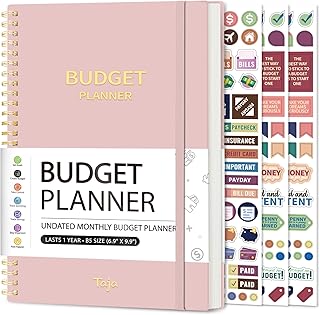
Budget Planner – Monthly Budget Book with Expense Tracker Notebook, Pink – $8.99 – Rating 4.6/5
This undated planner gives you 12 months of tracking sheets, bill organizers, and goal templates. Perfect for budgeters who want a simple yet comprehensive way to monitor income, expenses, and savings transfers.

NICOOTHBudget Binder Cash Envelopes A6 Money Saving Binder (Purple) – $6.28 – Rating 4.6/5
A compact A6 binder with zipper envelopes for cash budgeting. Use it to allocate spending categories like groceries, dining, and entertainment. Any left-over cash at month-end can be transferred to your HYSA.

SKYDUE Budget Binder, Money Saving Binder with Zipper Envelopes – $8.98 – Rating 4.7/5
This binder includes expense budget sheets and cash envelopes plus a zippered compartment for coins. The high rating reflects its durability and design. Ideal for anyone starting the envelope method alongside an HYSA.

Budgeting 101: From Getting Out of Debt and Tracking Expenses to Setting Financial Goals and Building Your Savings – $9.69 – Rating 4.6/5
A comprehensive guide that teaches you the fundamentals of budgeting, including how to set up sinking funds and emergency savings. A great companion to your HYSA journey.
Frequently Asked Questions About High-Yield Savings Accounts
Is there a catch with high-yield savings accounts?
No major catch, but you should be aware that APYs are variable and can drop when the Federal Reserve cuts rates. Some accounts have minimum balance requirements or monthly fees if you don’t meet them. Always read the terms before opening.
How often does the APY change?
Most banks adjust their APY in response to changes in the federal funds rate. This can happen at any time, but many banks notify customers of rate changes via email or in-app alerts. Some banks offer a “guaranteed rate” for a promotional period, after which the variable rate applies.
Can I lose money in an HYSA?
No, as long as the bank is FDIC-insured and you stay within the $250,000 insurance limit, you cannot lose your principal. Even if the bank fails, the FDIC will reimburse you. However, if the APY is lower than inflation, your purchasing power may erode over time – but that’s true for any savings account.
What’s the difference between a high-yield savings and a money market account?
Money market accounts often offer similar interest rates but may come with check-writing privileges and a debit card. However, they sometimes require higher minimum balances. For a deeper dive, see our article on Money Market Accounts Explained: Who Should Use Them and Why.
How much should I keep in an HYSA?
A good rule of thumb is 3–6 months of essential living expenses. Beyond that, consider other investment vehicles like certificates of deposit (CDs) or index funds. Learn more in Certificates of Deposit vs. Savings Accounts: Which Banking Product Fits Your Goal?.
Can I use an HYSA for everyday spending?
Technically yes, but it’s not advisable because savings accounts are not designed for frequent transactions. Some banks limit withdrawals to six per month. Instead, keep your spending money in a checking account and reserve the HYSA for savings. Read How to Choose the Right Checking Account for Your Everyday Money for guidance.
Bringing It All Together
A high-yield savings account is a powerful ally for anyone serious about budgeting. It rewards you for saving, keeps your money safe, and integrates seamlessly with your financial system. By knowing exactly what features to evaluate – APY, fees, accessibility, and FDIC insurance – you can confidently compare offers and choose the account that fits your life.
Don’t forget the human side of budgeting. Tools like planners and binders keep you engaged and motivated. Whether you prefer the tactile feel of a Budgeting 101 book or the structure of a cash envelope system, the key is to find a routine that works for you.
Start today: research the top HYSAs, open an account, and set up an automatic transfer. Your future self will thank you – both for the discipline and for the extra interest earned along the way.