 Insurance Curator
You’ve heard the whispers: “Checking your credit score drops it.” “Carrying a balance is good for your credit.” “Paying off a collection wipes the slate clean.” These aren’t just harmless myths — they are financial traps that keep millions of people cycling through bad credit scores, high interest rates, and denied loans. The truth is, your credit score is simpler than the rumors suggest, and small, consistent habits — like using a budget planner to track every dollar — can quietly build the foundation for a stronger score.
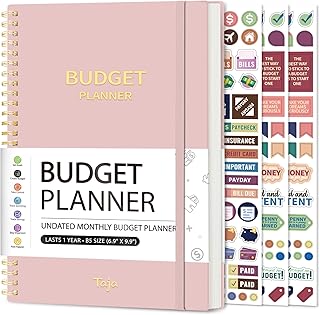
Take control of your finances today with a reliable tool like the Budget Planner – Monthly Budget Book with Expense Tracker Notebook, Undated Bill Organizer & Finance Planner to Take Control of Your Money, Account Book to Manage Your Finances-Pink. It’s a $8.99 investment that helps you see exactly where your money goes, so you never miss a payment — the number one driver of a healthy credit score.
Below, we’ll dismantle the most damaging credit score myths one by one. By the end, you’ll have a clear, myth-free roadmap to lift your score — and your financial future.
Myth #1: Checking Your Own Credit Score Hurts It
This is the grandfather of all credit myths. It keeps people from ever looking at their credit report — the very thing they need to monitor to improve. Here’s the truth: checking your own credit score is a “soft inquiry” and has zero impact on your score.
- Soft inquiries — checking your own score, pre‑approved offers, employer background checks — do not affect your score.
- Hard inquiries — when you apply for a loan or credit card — may temporarily drop your score by a few points.
Expert insight: According to FICO, multiple hard inquiries in a short period (for a mortgage or auto loan) are usually treated as a single inquiry, minimizing damage. But you can check your score every month without fear. In fact, the Consumer Financial Protection Bureau recommends reviewing your credit report annually at AnnualCreditReport.com to catch errors.
Action step: Check your score for free using a service like Credit Karma or through your credit card issuer. Never pay for a score you can get for free.
Myth #2: You Need to Carry a Balance to Build Credit
This myth costs Americans billions in unnecessary interest every year. The idea is that if you pay your card off in full each month, the credit bureaus don’t see any “activity.” That’s false.
- What actually builds credit: On‑time payments, low credit utilization (the percentage of your limit you use), and a long credit history.
- What carrying a balance does: It costs you interest — and if you carry more than 30% of your limit, it hurts your score by raising your utilization ratio.
Real example: Sarah pays her $1,000 limit card in full every month. Her utilization is reported as 0% or a very low amount (depending on when the card issuer reports). Her score climbs because she pays on time. Her friend Tom carries a $500 balance month to month, paying interest, and his utilization stays at 50% — that drags his score down.
Expert insight: The credit scoring models don’t reward you for paying interest. They reward you for low balances and on‑time payments. Pay your statement balance in full before the due date. If you can’t, pay as much as possible — never the minimum.
Myth #3: Closing Old Credit Card Accounts Helps Your Score
When people try to “clean up” their credit, they often close cards they no longer use. That’s a mistake.
- What happens when you close a card: You lose that card’s credit limit, which increases your overall utilization. You also shorten your average account age, which can lower your score.
- What to do instead: Keep old accounts open, even if you don’t use them. Use each one once every few months for a small purchase to keep them active (and set up autopay to avoid missing payments).
Data point: The length of your credit history makes up 15% of your FICO Score. Closing a card that’s 10 years old while your newest card is 1 year old can drop your average age dramatically.
Exception: If the card has an annual fee and you don’t use it, consider downgrading to a no‑fee version instead of closing.
Myth #4: Paying Off a Collection Removes It from Your Credit Report Immediately
This myth feels logical — “I paid my debt, so it’s gone.” But credit bureaus report accurate history, not current status.
- What actually happens: When you pay a collection, the account status changes to “paid collection.” The negative mark stays on your report for seven years from the original delinquency date.
- Does paying help? Yes — but only in a limited way. Newer scoring models (FICO 9, VantageScore 3.0) ignore paid collections, but older models still count them. Lenders using older models may still see a paid collection as negative.
Expert insight: Negotiate a “pay‑for‑delete” agreement in writing before you pay. Some collection agencies agree to remove the account entirely after payment. It’s not guaranteed, but it’s worth asking.
Real‑world scenario: You owe $500 to a medical collection. Instead of paying it blindly, write a letter: “I will pay the full $500 if you agree to delete this account from all three credit bureaus within 30 days.” Many agencies will accept.
Myth #5: Your Income Affects Your Credit Score
This is a common confusion because income and credit approval are linked — but credit scores don’t consider how much you earn.
- What credit scores look at: Payment history, amounts owed, length of history, new credit, and credit mix.
- What they ignore: Your salary, job title, bank account balances, net worth, and assets.
Why the myth persists: When you apply for a loan, lenders ask for your income to determine if you can afford the payments. But the credit score itself is purely a measure of how you’ve managed borrowed money, not how much you have.
Action step: Focus on managing the credit you have. A high income doesn’t magically raise your score, but a low income doesn’t cap it either. Millionaires can have bad credit; students with part‑time jobs can have excellent credit if they pay bills on time.
Myth #6: Co‑Signing Doesn’t Affect Your Credit (or “It Only Helps the Other Person”)
People co‑sign loans for friends or family thinking it’s a harmless favor. In reality, you are 100% responsible for that debt, and it appears on your credit report exactly as if you took out the loan yourself.
- Positive scenario: The primary borrower pays on time. Your credit benefits from the on‑time payment history.
- Negative scenario: They miss a payment. Your score drops. They default. You’re on the hook for the full amount, and the collection activity shows up on your report.
Expert insight: Never co‑sign unless you are financially and emotionally prepared to pay the entire debt yourself. The Federal Trade Commission warns that co‑signers are asked to pay in about 75% of cases where the primary borrower defaults.
Alternative: Instead of co‑signing, gift the person a small amount to help them build credit with a secured card (which doesn’t involve your credit score).
Myth #7: Credit Repair Companies Can “Fix” Your Credit Overnight
You’ve seen the ads: “Erase bad credit instantly — 100% guaranteed.” These companies charge hundreds of dollars for things you can do yourself for free.
- What they actually do: They dispute negative items on your credit report — which you can do yourself by mail or online. If the dispute succeeds, the item is removed. But if the information is accurate, it stays for the legal reporting period.
- The risk: Many credit repair companies use shady tactics (like creating a new credit identity or “credit profile number”) that are technically fraud — and can get you into legal trouble.
Real data: The Credit Repair Organizations Act (CROA) requires them to give you a three‑day right to cancel and prohibits upfront fees. Yet many operate illegally. You are better off saving the $500‑$1,000 and using a budget binder to organize your finances while you dispute errors yourself.
Product recommendation: The NICOOTHBudget Binder Cash Envelopes A6 Money Saving Binder with Zipper envelopes (Purple) is a $6.28 tool that helps you allocate cash to bills, debt payments, and savings — so you never miss a due date and avoid the debt cycle that drives you to seek “quick fixes.”

Myth #8: Only Credit Cards and Loans Affect Your Credit Score
Many people believe that if they don’t have a credit card, their score is a blank slate. Others think that paying rent and utilities builds credit automatically. The reality is more nuanced.
- Traditional models (FICO 8/9): Rent and utility payments are not reported to credit bureaus unless you miss them and they go to collections. On‑time rent rarely helps.
- Newer models (VantageScore 4.0, FICO Score XD): Some include positive rent and utility data — but these are not widely used by lenders yet.
- What you can do: Use a service like Experian Boost or UltraFICO to add positive banking and utility data to your credit file. But for most lenders, the core credit cards, loans, and mortgages still dominate.
Internal link: For a deeper dive, read our article on Rent, Utilities, and Subscriptions: What Really Counts Toward Your Credit Score.
Myth #9: Bankruptcy Ruins Your Credit Forever
It’s true that bankruptcy is a severe blow — your score can drop 150‑240 points. But “forever” is a myth.
- How long it stays: Chapter 7 bankruptcy remains on your report for 10 years; Chapter 13 for 7 years.
- What recovery looks like: Many people start rebuilding immediately after discharge. Within 2‑3 years of consistent on‑time payments (secured card, small installment loan), scores can reach 650+, sometimes 700+.
Expert insight: The FICO model gives less weight to older negative items. A bankruptcy from 8 years ago has a smaller impact than a recent late payment. Lenders also see a fresh start — you can’t re‑file for Chapter 7 for 8 years, so you’re a lower risk.
Action step: After bankruptcy, focus on building new positive credit. Use a secured credit card with a small deposit, pay it in full each month, and keep utilization under 10%.
For a full recovery strategy, see How to Recover Your Credit Score after Bankruptcy or Serious Delinquency?.
Myth #10: You Need a Perfect Credit Score to Get Approved for Anything
You don’t need an 850 to get a mortgage, car loan, or even the best credit cards. In fact, anything above 760 typically qualifies you for the best interest rates.
- What scores lenders use: For a conventional mortgage, FICO scores of 620+ can qualify (with higher down payments or interest rates). For auto loans, 600+ with a decent down payment often works. Even for premium rewards credit cards, 700‑740 is often enough.
- The real barrier: Not a low score, but a thin file (few accounts) or recent negative items (collections, late payments).
Example: A person with a 680 score and a single credit card with 3 years of on‑time payments may get a better rate than someone with a 720 score but two recent late payments.
Action step: Don’t obsess over perfection. Aim for consistent on‑time payments and keep utilization below 30%. Use a budgeting tool like the SKYDUE Budget Binder, Money Saving Binder with Zipper Envelopes, Cash Envelopes and Expense Budget Sheets for Budgeting ($8.98, rating 4.7) to plan your monthly spending so you never miss a due date.

How Budgeting Tools Help You Escape Credit Score Myths
Each myth above leads to a bad financial habit: not checking your score, carrying balances, closing old accounts, ignoring rent reporting, or falling for quick fixes. The common denominator? Lack of visibility and control.
When you use a structured budgeting system, you gain the clarity to:
- Pay every bill on time — the single most important factor in your credit score (35% of FICO).
- Track credit utilization — know exactly how much of your limit you’re using.
- Plan debt payments — allocate extra cash to high‑interest balances first.
- Avoid late fees that turn into collections and tank your score.
The Budgeting 101: From Getting Out of Debt and Tracking Expenses to Setting Financial Goals and Building Your Savings, Your Essential Guide to Budgeting (Adams 101 Series) ($9.69, rating 4.6) is an excellent companion book that explains the psychology of money and shows step‑by‑step how to create a budget that sticks.

Related Articles for Deeper Learning
To master your credit score from every angle, explore these articles from the same content cluster:
- Credit Scores Demystified: What They Are and Why They Matter
- How to Check Your Credit Score and Report Without Hurting It?
- Proven Ways to Improve Your Credit Score in 90 Days
- How Credit Utilization Works and Why It Can Make or Break Your Score?
- Building Credit from Scratch: Strategies for Students and Newcomers
- How Late Payments, Collections, and Defaults Actually Impact Credit Scores?
- Using Credit Cards Wisely to Build Credit Without Going into Debt
- Rent, Utilities, and Subscriptions: What Really Counts Toward Your Credit Score
Frequently Asked Questions
Does checking my credit score lower it?
No. Checking your own score is a soft inquiry and does not affect your credit score at all. Only hard inquiries (from applying for credit) may cause a small, temporary dip.
Is it true that carrying a balance helps your credit?
No. Carrying a balance only costs you interest. Your credit score is built on paying on time and keeping your utilization low — not on carrying debt.
How long does a paid collection stay on my credit report?
A paid collection remains for seven years from the original delinquency date, though newer scoring models ignore paid collections.
Can I immediately remove a paid collection?
Only if you negotiate a “pay‑for‑delete” agreement with the collection agency before paying. Without that, the account will stay as “paid collection.”
Does my income affect my credit score?
No. Your credit score only reflects your history of borrowing and repaying debt. Income is considered by lenders when deciding whether to approve a loan, but it does not appear on your credit report.
How long does bankruptcy stay on my credit report?
Chapter 7 stays 10 years; Chapter 13 stays 7 years. You can begin rebuilding credit immediately after discharge.
Do I need a perfect 850 score to get the best rates?
No. Anything above 760 typically qualifies for the best interest rates. Many people with scores in the 700–760 range still get excellent terms.
Can I build credit without a credit card?
Yes. You can use a secured card, credit‑builder loans (like Self or Chime), or have a credit‑worthy person add you as an authorized user.
Your Turn: Stop Believing, Start Building
Credit score myths are more than misinformation — they’re barriers that keep you from taking action. The most powerful step you can take today is to check your own score (free, no harm), stop carrying balances, and start using a budget planner that puts you in control.
The Budget Planner – Monthly Budget Book with Expense Tracker Notebook, Undated Bill Organizer & Finance Planner to Take Control of Your Money, Account Book to Manage Your Finances-Black ($8.99, rating 4.6) is the same powerful tool as the pink version but in a classic black cover. It’s undated, so you can start anytime — and every month you track your spending builds the discipline that leads to a higher credit score.

Don’t let myths hold your credit hostage. Pick up a budgeting tool, learn the facts, and watch your score rise — without paying a cent in unnecessary fees or interest.
