 Insurance Curator
Think your money is already working hard? If it’s sitting in a standard checking account earning 0.01% APY, it’s actually losing value to inflation. High-yield savings accounts (HYSAs) flip that script by offering interest rates ten to twenty times higher than the national average. When paired with a solid budgeting system, an HYSA becomes the engine that turns your monthly surplus into real financial growth.
This isn’t just about parking cash. It’s about building a systematic saving strategy where every dollar you set aside earns passive income. Whether you’re saving for an emergency fund, a down payment, or a dream vacation, using a high-yield savings account inside your budget transforms discipline into wealth. Before diving in, if you’re new to the concept, check out our guide on Smart Saving Strategies to Grow Your Money on Any Income.
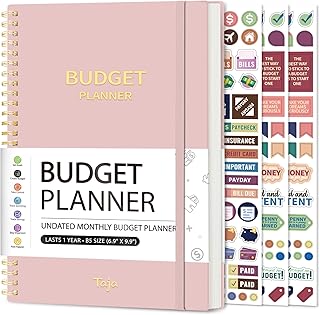
Even the best budgeting plan needs a tracking tool. A simple but powerful tool like the Budget Planner – Monthly Budget Book with Expense Tracker Notebook can help you visualize where your money goes each month, so you know exactly how much to funnel into your HYSA.
What Is a High-yield Savings Account?
A high-yield savings account is a deposit account that pays a significantly higher annual percentage yield (APY) than a traditional savings account. Most HYSAs are offered by online banks, credit unions, or neobanks. Because these institutions have lower overhead costs, they pass the savings to you in the form of better interest rates.
Key features of HYSAs include:
- APY ranges from 4% to 5%+ (compared to 0.1% at many brick-and-mortar banks)
- FDIC insured up to $250,000 per depositor, per institution
- No monthly fees at most online banks
- Easy access via ACH transfers, but typically no check-writing or debit card
- Variable rates that can change with the market
The trade-off? You may not get instant access like you would with a checking account, and rates are not locked in. However, for funds you don’t need to touch daily, it’s the safest, most liquid way to earn interest.
Why Pair HYSA with Budgeting?
Budgeting and saving are two sides of the same coin. A budget tells your money where to go, ensuring you have a surplus to save. An HYSA multiplies that surplus. Together, they create a virtuous cycle: the more you budget, the more you save; the more you save in an HYSA, the faster your money grows.
Without a budget, it’s easy to dip into your savings for non-essentials. With a budget, you have a clear category for “savings” — and that category should point directly to an HYSA. Budgeting also helps you identify waste you can redirect to your high-yield account. For example, cutting a $50 subscription equals $600 a year that could earn $30 at 5% APY. Small wins compound.
To get started, you need a method to track income and expenses. Many people prefer a physical Budget Binder Cash Envelopes A6 Money Saving Binder with Zipper envelopes to enforce discipline before transferring to a digital account.

The Best Ways to Integrate HYSA into Your Budgeting System
Every budgeting method can be adapted to include a high-yield savings account. Here are three powerful approaches.
The Envelope System Goes Digital
The classic envelope system involves allocating cash into physical envelopes for different spending categories. With an HYSA, you can create a virtual “savings envelope” that earns interest. When you set aside money for emergency funds, upcoming vacations, or large purchases, transfer it to your HYSA rather than leaving it in checking.
For those who prefer tactile budgeting, a dedicated SKYDUE Budget Binder with Zipper Envelopes and Cash Envelopes can help you manage cash envelopes for daily spending while your long-term stash grows in the HYSA. The key is to transfer any remaining cash envelope surplus into the HYSA at the end of each week or month.

Zero-based Budgeting with a Separate HYSA
Zero-based budgeting means every dollar you earn is assigned a job — including saving. After covering all expenses, you designate a category for “savings” and transfer that exact amount to your HYSA. This ensures you don’t overspend because your savings line is as non-negotiable as rent.
Many zero-based budgeters open multiple HYSAs for different goals: one for emergencies, one for a new car, one for holidays. This separation prevents you from raiding your emergency fund for a vacation. Online banks often allow you to open multiple sub-accounts or savings “buckets” easily.
The Pay Yourself First Method
This strategy flips the script: instead of saving what’s left, you save first. Automate a transfer to your HYSA the day your paycheck arrives. Then live off what remains. This is perhaps the most effective way to build wealth because it removes the temptation to spend.
We have a detailed guide on Pay Yourself First: the Saving Strategy That Makes Saving Automatic. The key is to set the automatic transfer to an HYSA, not a checking account. That way, you earn interest on your savings from day one.
How to Choose the Right HYSA for Your Goals
Not all HYSAs are equal. Here are the factors to compare:
| Factor | What to Look For | Why It Matters |
|---|---|---|
| APY | 4.00% or higher | Higher yield means more growth |
| Minimum balance | $0 or very low | Avoid locking up funds |
| Monthly fees | $0 | Fees eat into your interest |
| Withdrawal limits | No limit (some banks impose 6/month per federal reg, though many have lifted it) | Access when you need it |
| Account features | Sub-accounts, buckets, linked checking | Better organization |
| Customer support | 24/7 chat or phone | Resolve issues fast |
For short-term goals (1–3 years), prioritize high APY and no fees. For emergency funds, also consider ease of transfer — you want to pull money quickly if needed. For long-term saving, an HYSA is still better than a mattress, but consider laddering into CDs or other instruments for higher rates.
Automating Your Savings – The Key to Consistency
You can’t rely on willpower alone. The most effective way to use an HYSA in your saving strategy is to automate. Most online banks allow you to set up recurring transfers from your checking account. Schedule them for payday.
Think of it like a bill you pay to your future self. If you automate $200 per paycheck into a 5% APY HYSA, that’s $5,200 deposited annually and about $143 in interest at the end of the year (assuming no additional deposits). Over five years, compounding boosts that significantly.
To deepen automation, check out How to Automate Your Saving Strategy Using Modern Money Apps?. Apps like Qapital, Digit, and even your bank’s own “round-up” feature can feed spare change into an HYSA, making saving effortless.
Real-world Example: From Budget to HYSA
Meet Sarah. She earns $4,000 per month after taxes. Using the Budget Planner – Monthly Budget Book with Expense Tracker Notebook – Black, she tracks her spending and finds she can save $500 monthly.

She sets up an automatic transfer of $500 from her checking to a 5% APY HYSA on the 1st of each month. Over 12 months, she deposits $6,000 and earns about $137 in interest. Without the HYSA, that $6,000 would have earned less than $10 in a traditional account.
Six months later, she has an emergency fund of $3,000+ in interest. She then opens a second HYSA for a vacation and starts automating $200 per month into that one. The budgeting habit, combined with the high-yield account, accelerates her progress without extra effort.
Behavioral Strategies to Maximize HYSA Usage
Psychology plays a huge role in saving. Using an HYSA leverages the “mental accounting” effect — money in a labeled savings account feels less accessible than cash in checking, so we avoid spending it.
Try these tactics:
- Name your accounts — “Emergency Fund,” “Hawaii Trip,” “New Laptop.” Seeing the goal reinforces the habit.
- Visualize growth — Check your HYSA balance monthly. Watching the interest credits arrive is motivating.
- Reward yourself — When you hit a savings milestone, move a small amount to a “fun” account (but not out of savings).
For more tips, read Behavioral Saving Strategies: Psychology Tricks to Help You Save More.
Common Mistakes to Avoid with HYSA and Budgeting
Even a great tool can be misused. Avoid these pitfalls:
- Treating the HYSA as a spending account – If you’re constantly withdrawing for daily expenses, you lose the interest and may incur transfer fees.
- Opening too many HYSAs – It’s okay to have three for distinct goals, but juggling ten can cause confusion. Use a bank that offers sub-accounts.
- Ignoring rate changes – HYSA rates are variable. If your bank drops its APY below 3%, shop around and switch.
- Saving without a budget – Without a budget, you might not have consistent funds to send to your HYSA, or you might overspend and pull money back out.
- Forgetting to reassess goals – As your income or expenses change, adjust your automatic transfer amounts.
Tools to Track Your Budget and Savings
A budget tracker is essential to know how much you can funnel into your HYSA. Here are five excellent products from Amazon that complement a high-yield savings strategy.
Budget Planner – Monthly Budget Book with Expense Tracker Notebook (Pink)
Price: $8.99 | Rating: 4.6
This undated planner helps you track income, expenses, and savings goals. Use it to record your monthly budget, then transfer the surplus to your HYSA. The compact size fits in most bags. It’s a great companion for anyone starting a budgeting-to-savings pipeline.
NICOOTH Budget Binder Cash Envelopes A6 (Purple)
Price: $6.28 | Rating: 4.6
This binder comes with zipper envelopes to organize cash for different categories. For those who prefer the envelope system, it’s perfect. At month’s end, consolidate leftover cash and deposit it into your HYSA. The binder itself is reusable and durable.
SKYDUE Budget Binder with Zipper Envelopes (Blue)
Price: $8.98 | Rating: 4.7
Similar to the NICOOTH but slightly larger and with more compartments. The included budget sheets help you track cash flows. Use it as your physical ledger while your HYSA grows digitally.
Budget Planner – Monthly Budget Book (Black)
Price: $8.99 | Rating: 4.6
The black version of the same planner. Choose this if you prefer a neutral look. It offers the same monthly and weekly tracking pages to manage your budget goals. Pair with your HYSA statements to reconcile savings.
Budgeting 101: From Getting Out of Debt to Building Your Savings (Book)

Price: $9.69 | Rating: 4.6
This book by Michele Cagan is an excellent resource for understanding budgeting fundamentals. It covers setting financial goals, tracking expenses, and building savings — all skills that directly support your HYSA strategy. A great read for anyone wanting a deeper knowledge base.
Frequently Asked Questions
What is a high-yield savings account and how does it differ from a regular savings account?
A high-yield savings account offers a much higher APY (often 4-5%) compared to a traditional savings account (0.1% or less). It’s typically offered by online banks with lower overhead, so they pass the savings to you. Funds remain FDIC insured and easily accessible, though some accounts may have monthly withdrawal limits or no debit card access.
Can I use a high-yield savings account for short-term goals?
Absolutely. HYSAs are ideal for short-term saving (1-5 years) because the interest outpaces inflation better than a regular account. Just ensure you have no early withdrawal penalties — most HYSAs are penalty-free. Use separate sub-accounts to earmark funds for different goals like a vacation, car down payment, or holiday gifts.
How do I integrate an HYSA into a zero-based budget?
In a zero-based budget, assign a specific dollar amount to a “savings” category. That amount should be transferred to your HYSA either manually or automatically each pay period. Treat it as a fixed expense. Then, during the month, you only spend what’s left — your savings is off-limits.
Is it safe to keep a large amount of money in an HYSA?
Yes, as long as the bank is FDIC insured and your balance stays under $250,000 per depositor. If you have more than that, consider splitting it across multiple institutions. HYSAs are one of the safest places for cash reserves.
What is the best way to automate transfers to a high-yield savings account?
Set up a recurring transfer from your checking account to your HYSA on payday. Most online banks offer free ACH transfers. Choose the amount you want to save (e.g., 10% of your income or a fixed dollar amount) and schedule it. You can also use apps like Digit or Qapital to automate round-ups or rule-based transfers into an HYSA.
How often do HYSA interest rates change?
Rates are variable and can change at any time based on the federal funds rate. Many online banks adjust rates shortly after the Fed makes a move. If your rate drops significantly, consider switching to another bank. Always check current APY before opening an account.
Can I have multiple high-yield savings accounts?
Yes. Many savers open separate HYSAs for different goals — an emergency fund, a travel fund, a home down payment fund. Some banks (like Ally and Marcus) allow you to create “buckets” within one account, making organization easier. Just be aware of any minimum balance requirements per account.
Do I need a budget to make an HYSA worthwhile?
Not strictly, but a budget significantly increases the effectiveness. Without a budget, you might not consistently deposit money, or you could withdraw impulsively. Budgeting ensures you have a clear plan for your savings and helps you build the habit. For a head start, pick up Budgeting 101: From Getting Out of Debt and Tracking Expenses to Setting Financial Goals and Building Your Savings.
Conclusion
A high-yield savings account isn’t a magic bullet, but it is a powerful lever in your saving strategy. When combined with a solid budgeting system — whether you prefer the envelope method, zero-based budgeting, or paying yourself first — it transforms your hard-earned cash into an active asset. The interest might seem modest initially, but over months and years, it adds up to significant gains.
Start small. Open an HYSA at an online bank with no fees and a rate above 4%. Set up an automatic transfer of even $50 per month. Use a physical budget planner like the SKYDUE Budget Binder or the Budget Planner in Pink to track your progress. Over time, you’ll see the balance grow not just from your deposits, but from the interest those deposits earn.
For more guidance, explore related saving strategies. If you’re a parent, check out Saving Strategies for Parents: Building Funds for Kids Without Sacrificing Retirement. For those just starting, read Saving Strategies for Beginners Who’ve Never Saved Consistently Before. And during periods of high inflation, our guide on Saving Strategies for Inflationary Times: Protecting Your Cash’s Buying Power will help you adapt.
Your money can work harder — it just needs the right system. High-yield savings accounts are that system. Start today.